

Before the army, Bohdan grew up, lived, and developed in Yaremche. Since childhood, he attended sports clubs, tourism, mountaineering, and more. With breaks for studies in Kyiv, he continued to work in the tourism sector back home.
The biggest project he is proud of is the “Yavirnyk” polonyna (mountain pasture). This is a farm in the mountains where guests could come and live in wooden cabins for a few days, immersing themselves in the daily life of shepherds to disconnect from the city.
When Bohdan was about to turn 25, he started looking for a unit because he felt he could no longer just have fun. The guy found one quite quickly. His two brothers, Oleksa and Maximilian, were already serving in the “Bureviy” brigade. He joined his own and thus ended up in a special purpose aerial reconnaissance company, which later evolved into the “Condor” battalion of unmanned systems.
After his first rotation and working with reconnaissance drones, Bohdan transferred to the company of strike unmanned aerial systems.
Recently I talked with a friend, and I liked his philosophy. He says: “I like sitting at a position and imagining that here I am, and 20 kilometers away there is the exact same me, except he is a rusnya (Russian soldier). And we are competing. As long as I win this competition, I am better. I want to outplay him.”
I have the same thought: on the other side, there are the exact same ‘Cheri’ and ‘Red’ sitting there. They want the exact same thing: to kill us. The difference is that we are on the side of good. The thought that there are equally zealous dudes over there with a different idea, rather than some ephemeral evil, gives me inspiration. As long as you are alive, you are winning this competition.
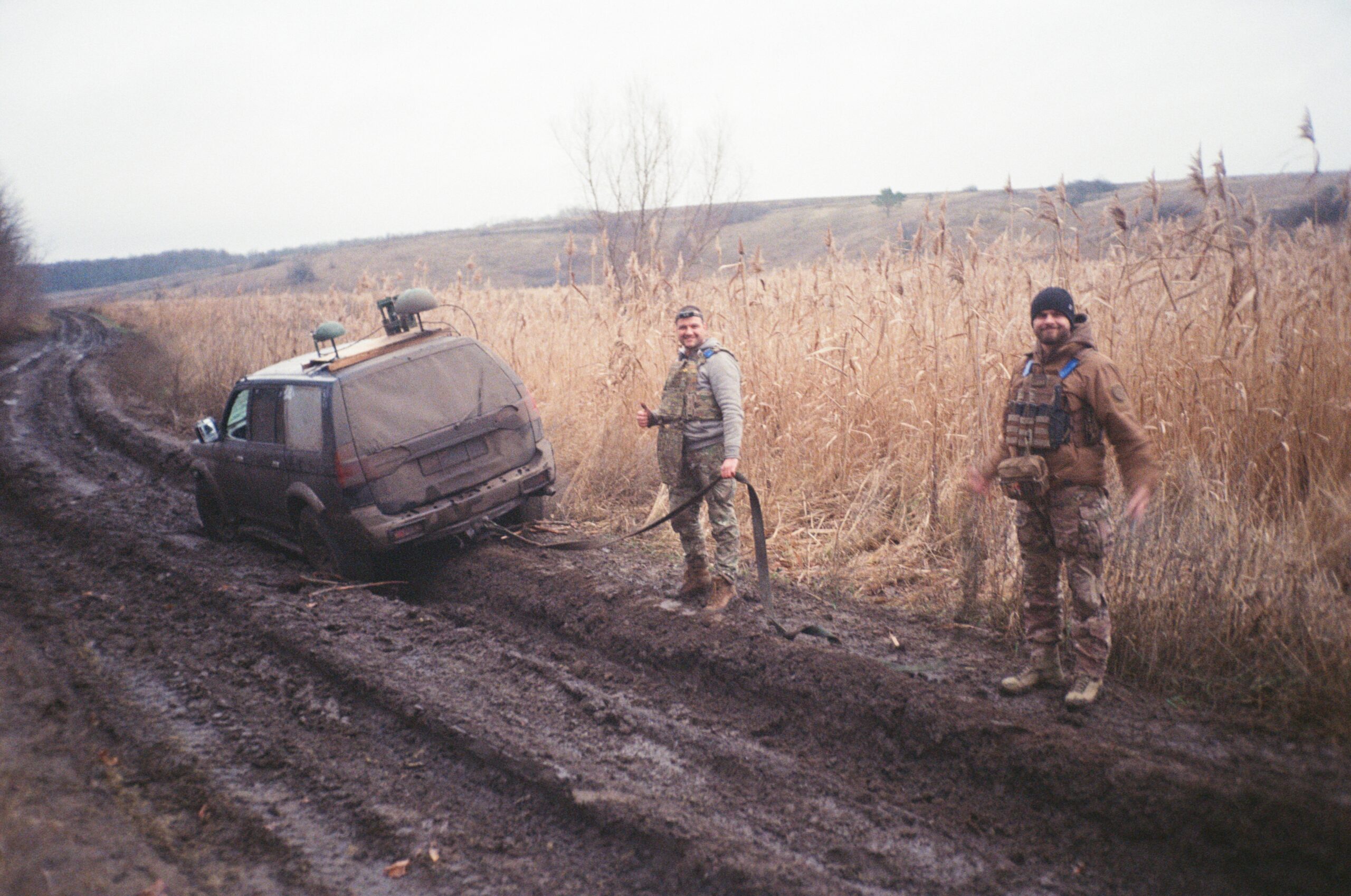
Autumn 2025. This is the Kupyansk campaign. We had only been in Kupyansk for a year and a half as a brigade. It’s the left bank of the Oskil river, it was very “fun” there. It’s not very pleasant to get stuck in a field, in the mud, in broad daylight, but the guys are smiling, although in reality everyone was a little nervous. In the photo, we are already pulling out our old clunker. They wanted to write it off three times already, but it’s very resilient.
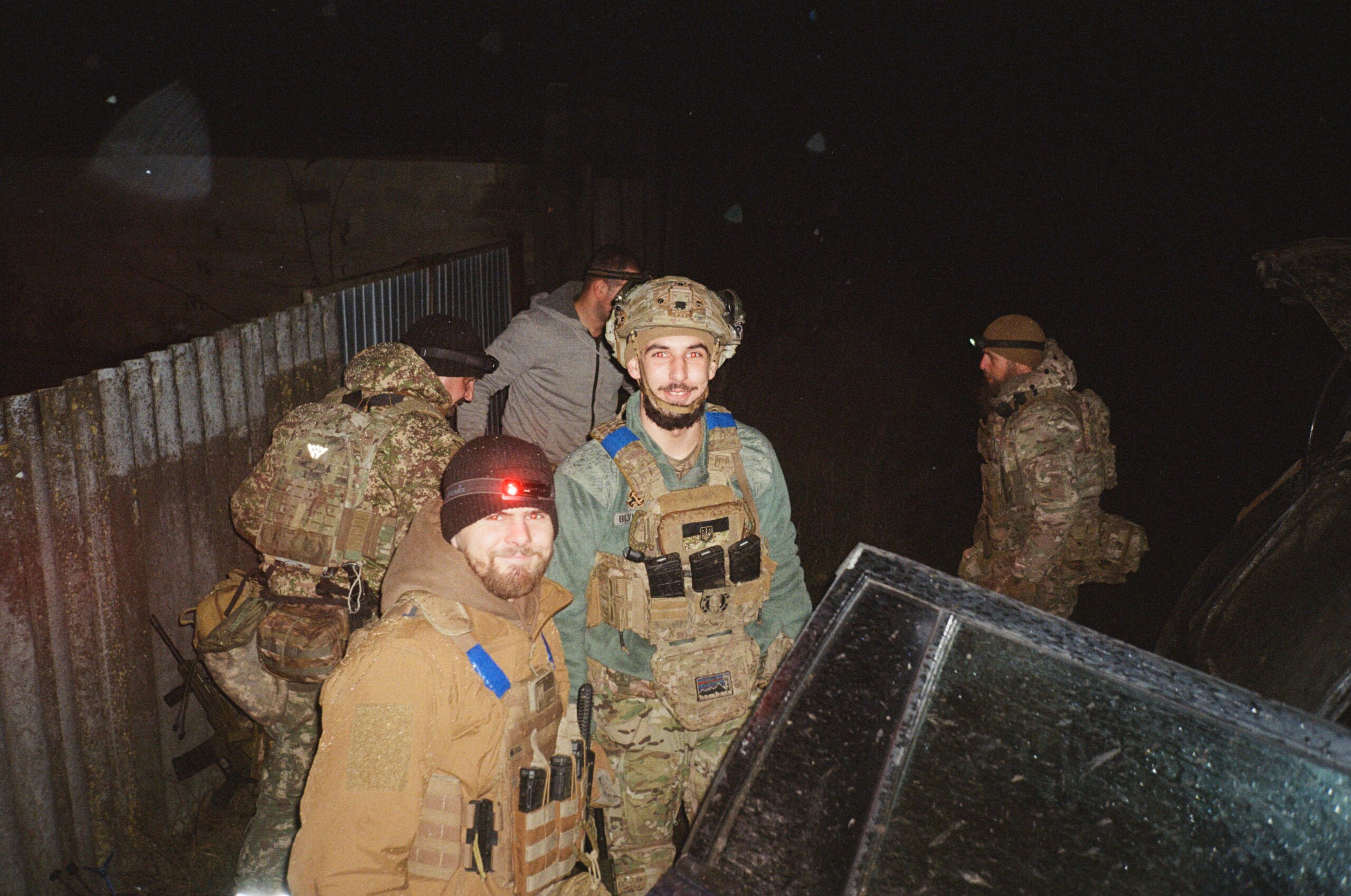
This is my crew. On the left is Max, our aviation technician. On the right is Dima, call sign Red. He is my constant partner. For the entire two years that I’ve been in the military, Dima and I have been together. We didn’t know each other before, but we met in our first unit. We started working in a crew and transferred together to another strike drone company. And we live together even now: through the wall, in one room, sleeping head-to-toe.
This is my crew. On the left is Max, our aviation technician. On the right is Dima, call sign Red. He is my constant partner. For the entire two years that I’ve been in the military, Dima and I have been together. We didn’t know each other before, but we met in our first unit. We started working in a crew and transferred together to another strike drone company. And we live together even now: through the wall, in one room, sleeping head-to-toe.
Outskirts of Kupyansk, December 2025, dawn. We were going to retrieve a “Vampire” drone that fell into the river after being shot down by an enemy interceptor. We were accompanied by a dog named Siriak. He came to us in the deep grey twilight, so that’s what we named him. Siriak was a really cool dog: he survived the hits of two KABs (guided aerial bombs), but unfortunately, he did not survive the third. So I keep this photo in memory of him.
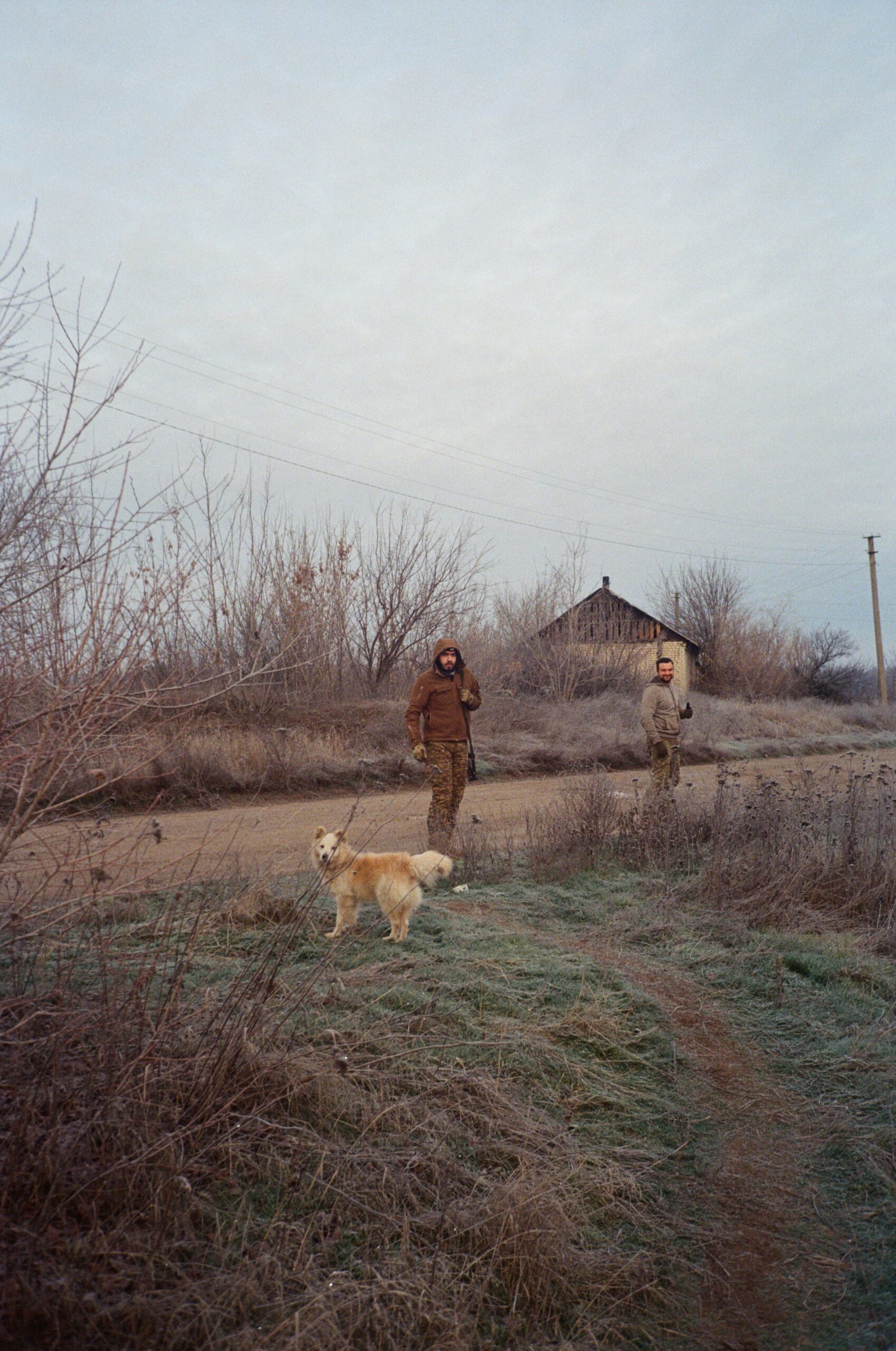
Outskirts of Kupyansk, December 2025, dawn. We were going to retrieve a “Vampire” drone that fell into the river after being shot down by an enemy interceptor. We were accompanied by a dog named Siriak. He came to us in the deep grey twilight, so that’s what we named him. Siriak was a really cool dog: he survived the hits of two KABs (guided aerial bombs), but unfortunately, he did not survive the third. So I keep this photo in memory of him.
When, in your opinion, did your youth begin, and how long will it last?
Someone told me that youth is when you don’t yet know exactly what you can do, but you are very confident that you can do anything. Everyone I know is romantic young men and women, because they firmly believe that they can do anything. And what’s most amazing is that they prove it with their actions. As long as I am sincerely surprised by this and fall in love with it, I will not grow old. I wish the same for everyone.
When, in your opinion, did your youth begin, and how long will it last?
Someone told me that youth is when you don’t yet know exactly what you can do, but you are very confident that you can do anything. Everyone I know is romantic young men and women, because they firmly believe that they can do anything. And what’s most amazing is that they prove it with their actions. As long as I am sincerely surprised by this and fall in love with it, I will not grow old. I wish the same for everyone.
This is one of our positions on the outskirts of Kupyansk. In the photo is what’s left of the barn, the aftermath of two KABs (guided aerial bombs) hitting. You can see how the roof was blown off, and only the frame of the gates behind remains. It was very loud.
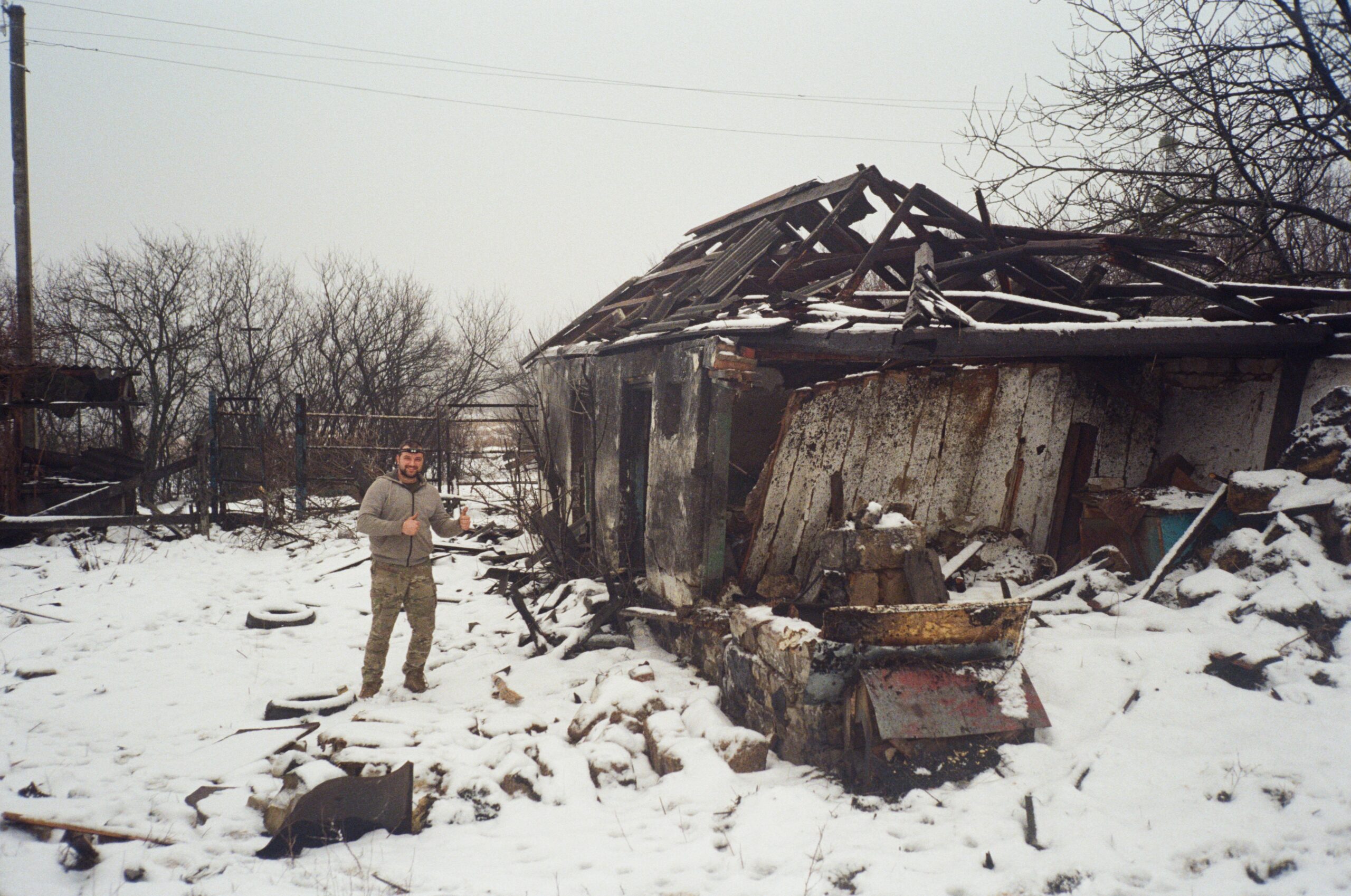
This is one of our positions on the outskirts of Kupyansk. In the photo is what’s left of the barn, the aftermath of two KABs (guided aerial bombs) hitting. You can see how the roof was blown off, and only the frame of the gates behind remains. It was very loud.
Here I am near the entrance to the “Cartel”, or rather, what’s left of it. On the left, you can see the pine branches that Red and I brought to the position for New Year’s.
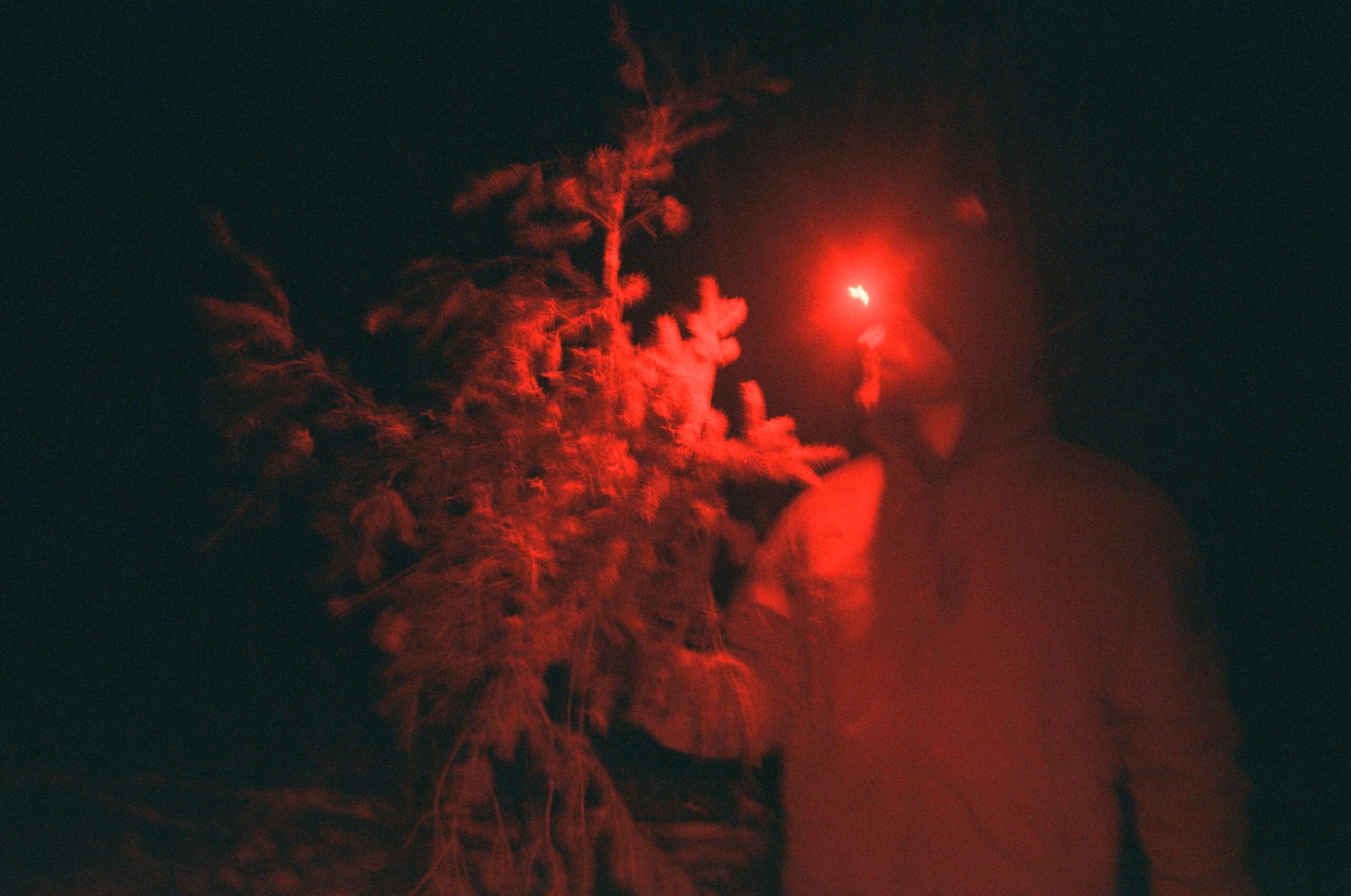
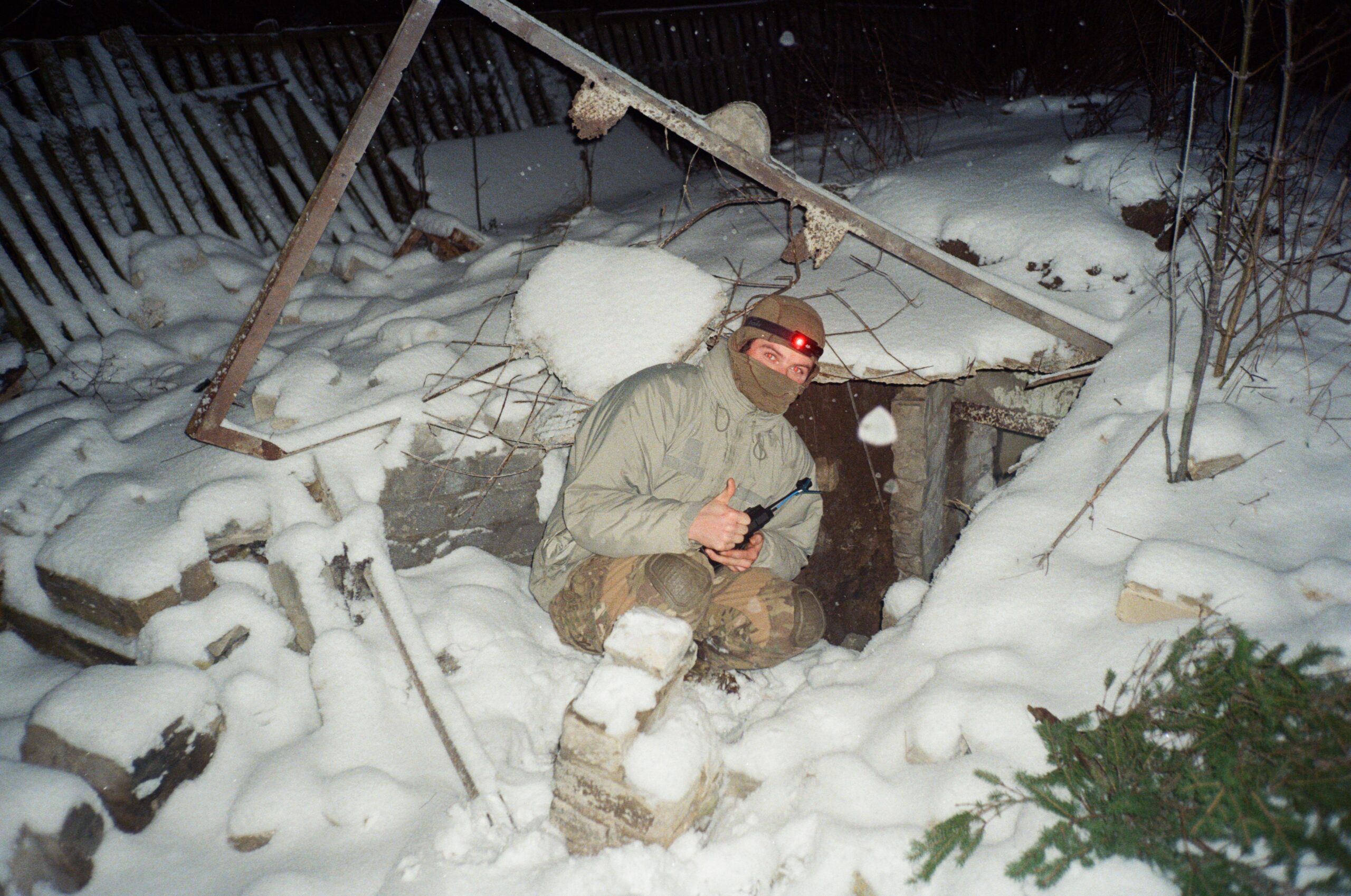
Here I am near the entrance to the “Cartel”, or rather, what’s left of it. On the left, you can see the pine branches that Red and I brought to the position for New Year’s.
This is a very funny photo. There is no floor, but there is an opportunity to swim. As they say, “the floor is lava,” but here our floor is water. This was in February. I woke up first in the morning and started waking up the guys. We tried to scoop out the water with buckets, but it was pointless. We wrapped makeshift galoshes out of cellophane and tape and tried to walk around, but the water was ice-cold, to the point that it made our bones ache. Even under these conditions—sitting on an EcoFlow, with the remote control and screen on the right—we still flew missions. We even destroyed some Russian shelter. A few hours later they brought us a pump, which came in handy two more times after that. The third time it didn’t help because there was just too much water. Then it started raining, it got warmer, the snow began to melt, and we were flooded. The position was gone within two hours.
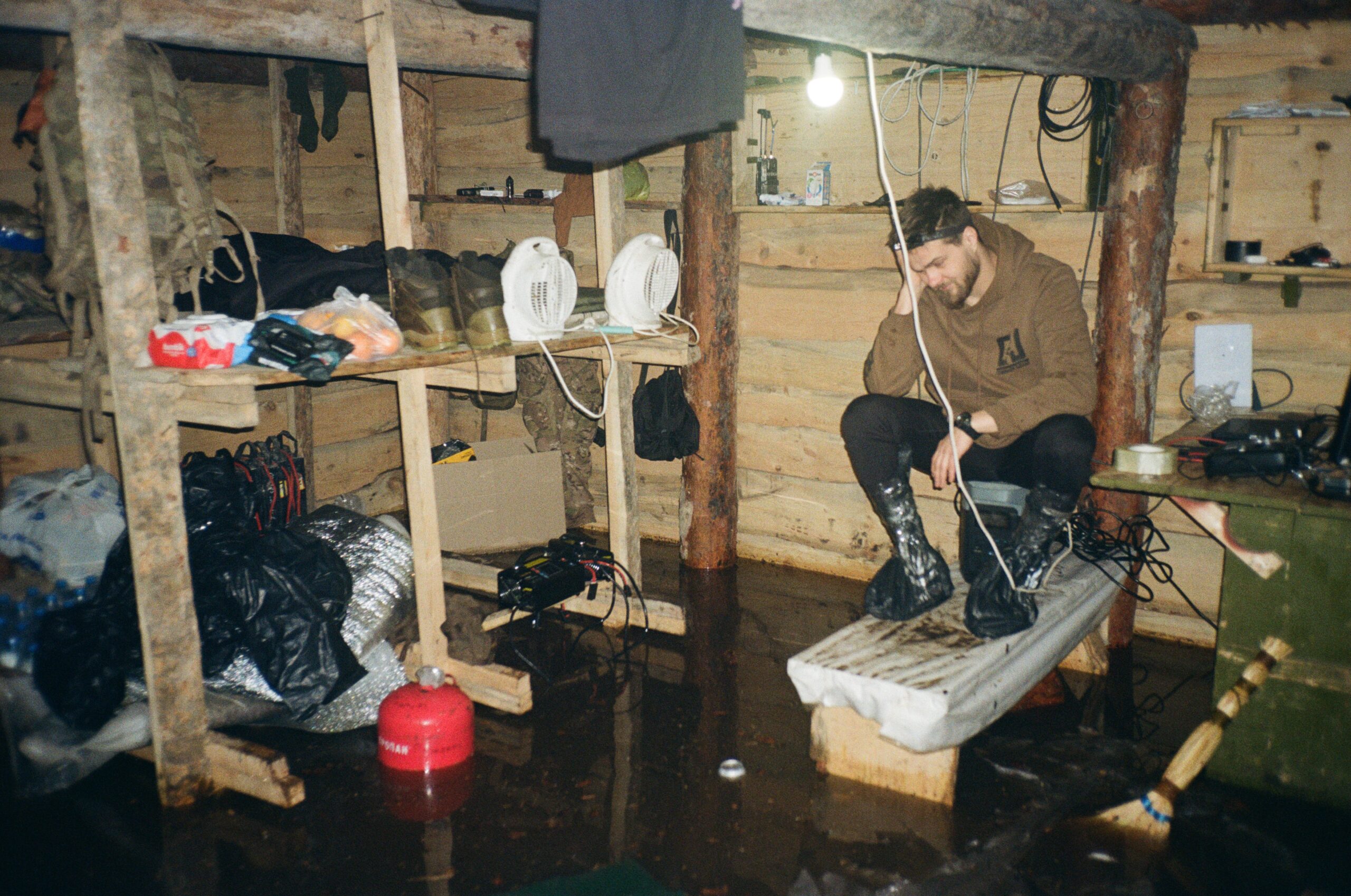
This is a very funny photo. There is no floor, but there is an opportunity to swim. As they say, “the floor is lava,” but here our floor is water. This was in February. I woke up first in the morning and started waking up the guys. We tried to scoop out the water with buckets, but it was pointless. We wrapped makeshift galoshes out of cellophane and tape and tried to walk around, but the water was ice-cold, to the point that it made our bones ache. Even under these conditions—sitting on an EcoFlow, with the remote control and screen on the right—we still flew missions. We even destroyed some Russian shelter. A few hours later they brought us a pump, which came in handy two more times after that. The third time it didn’t help because there was just too much water. Then it started raining, it got warmer, the snow began to melt, and we were flooded. The position was gone within two hours.
This is Dima in the car during our evacuation. This was our last position on the outskirts of Kupyansk; just half an hour after we arrived, three FPV drones hit us. The next morning, there was a dense fog like this—we got very lucky with the weather. We drove in with the car, loaded everything up, and drove out without any trouble. I took this photo two minutes after finding out that a guy had died at a neighboring position. I didn’t know him, but the feeling was intense because it was a senseless death—he walked up to an unexploded FPV drone.
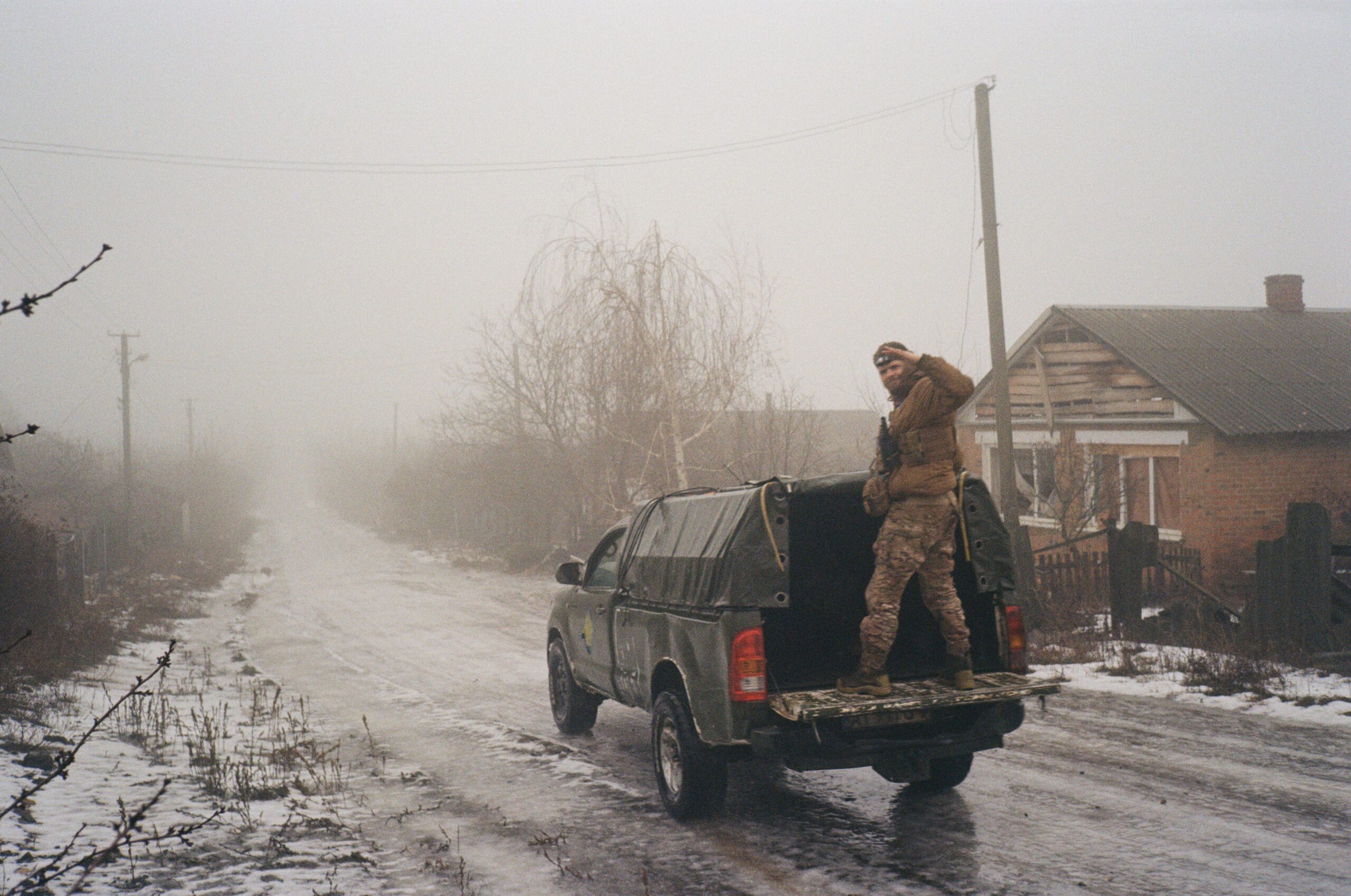
This is Dima in the car during our evacuation. This was our last position on the outskirts of Kupyansk; just half an hour after we arrived, three FPV drones hit us. The next morning, there was a dense fog like this—we got very lucky with the weather. We drove in with the car, loaded everything up, and drove out without any trouble. I took this photo two minutes after finding out that a guy had died at a neighboring position. I didn’t know him, but the feeling was intense because it was a senseless death—he walked up to an unexploded FPV drone.
Back then, our company commander came to pick us up. It was so slippery that one of the armored vehicles slid off into the brush, leaving its front end behind. We took this little photo as a keepsake.
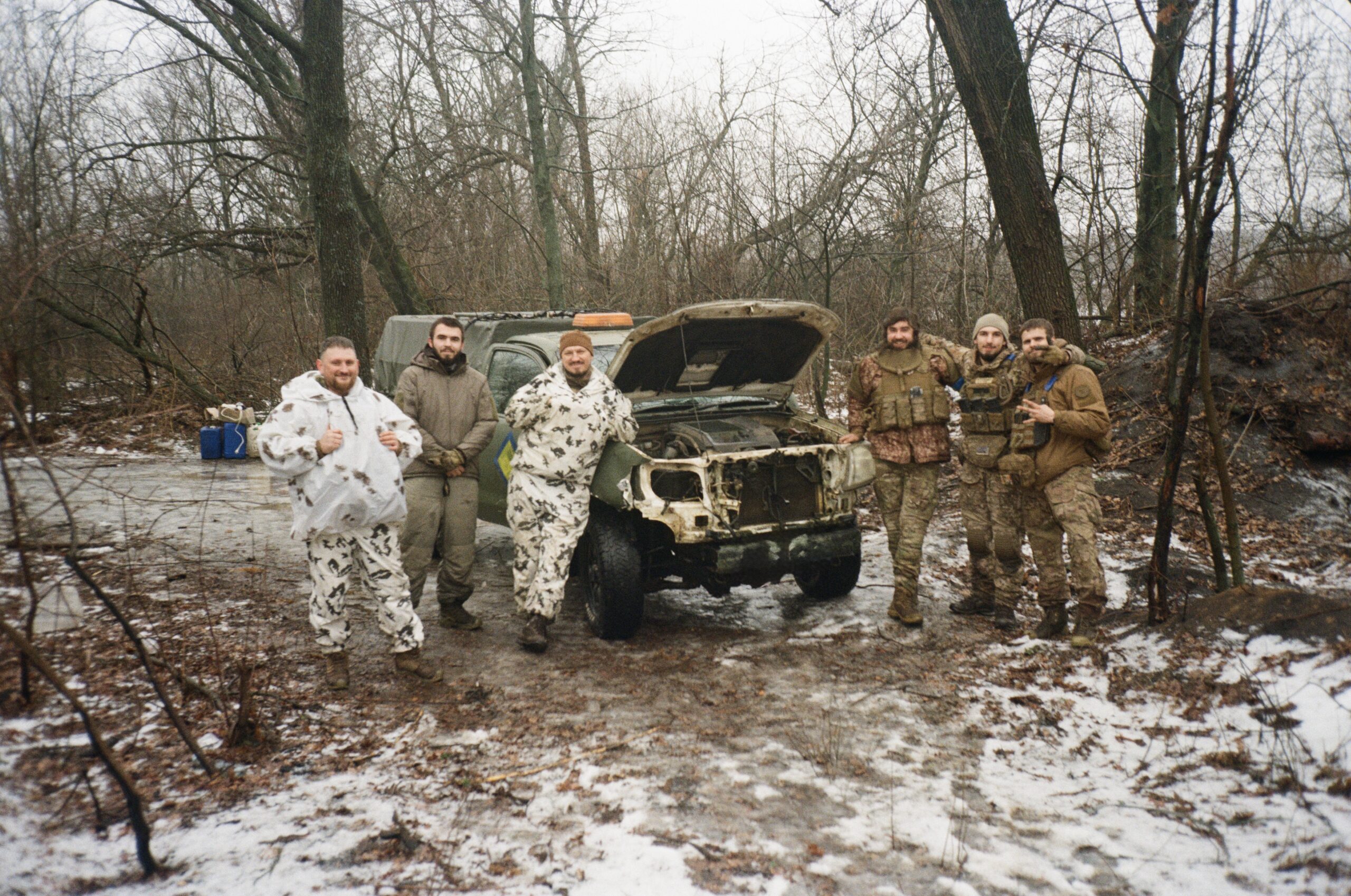
Back then, our company commander came to pick us up. It was so slippery that one of the armored vehicles slid off into the brush, leaving its front end behind. We took this little photo as a keepsake.
I wanted to capture Malyi (The Kid) on camera because I knew he would be discharging from service. We became really good friends. He is from the Ternopil region. He has his own fields there, a combine harvester. The guy has everything he needs. An eligible bachelor. I took this photo of him, printed it out, and gave it to him as a keepsake.
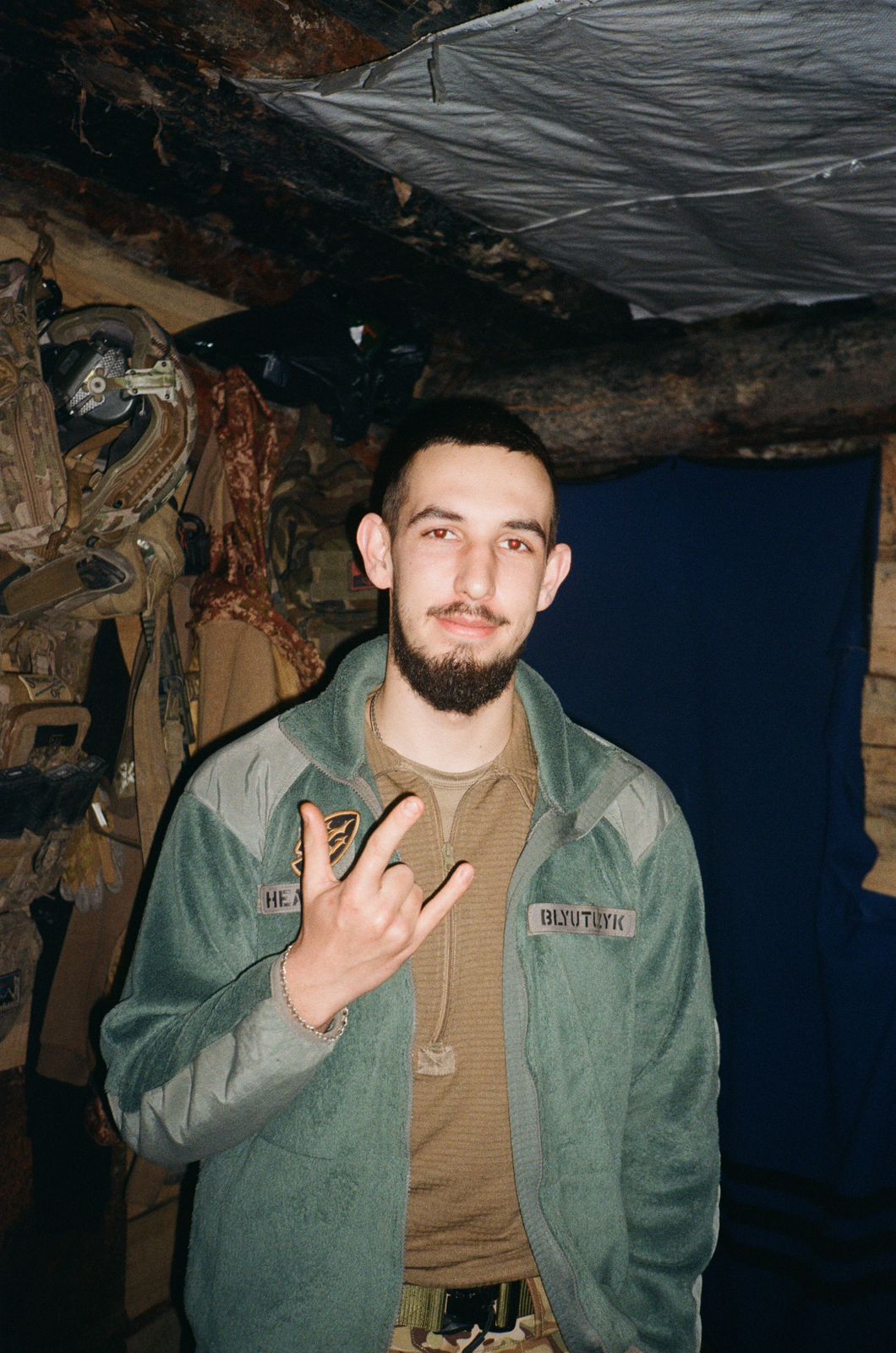
I wanted to capture Malyi (The Kid) on camera because I knew he would be discharging from service. We became really good friends. He is from the Ternopil region. He has his own fields there, a combine harvester. The guy has everything he needs. An eligible bachelor. I took this photo of him, printed it out, and gave it to him as a keepsake.
February 2025. One of my first photos on film. I had just bought the camera back then. We went out into a field to test something. I hadn’t even been on combat missions yet. The vehicle in the photo is a “Roshelka” (a Roshel armored vehicle built on a Ford F-550 chassis); it had absolutely no brakes. Well, technically they were there, but stopping it was virtually impossible. I asked to take the wheel and drove it a little: it plows ahead like a tank, completely impossible to brake. Mind you, that was before I had actually driven a real tank.
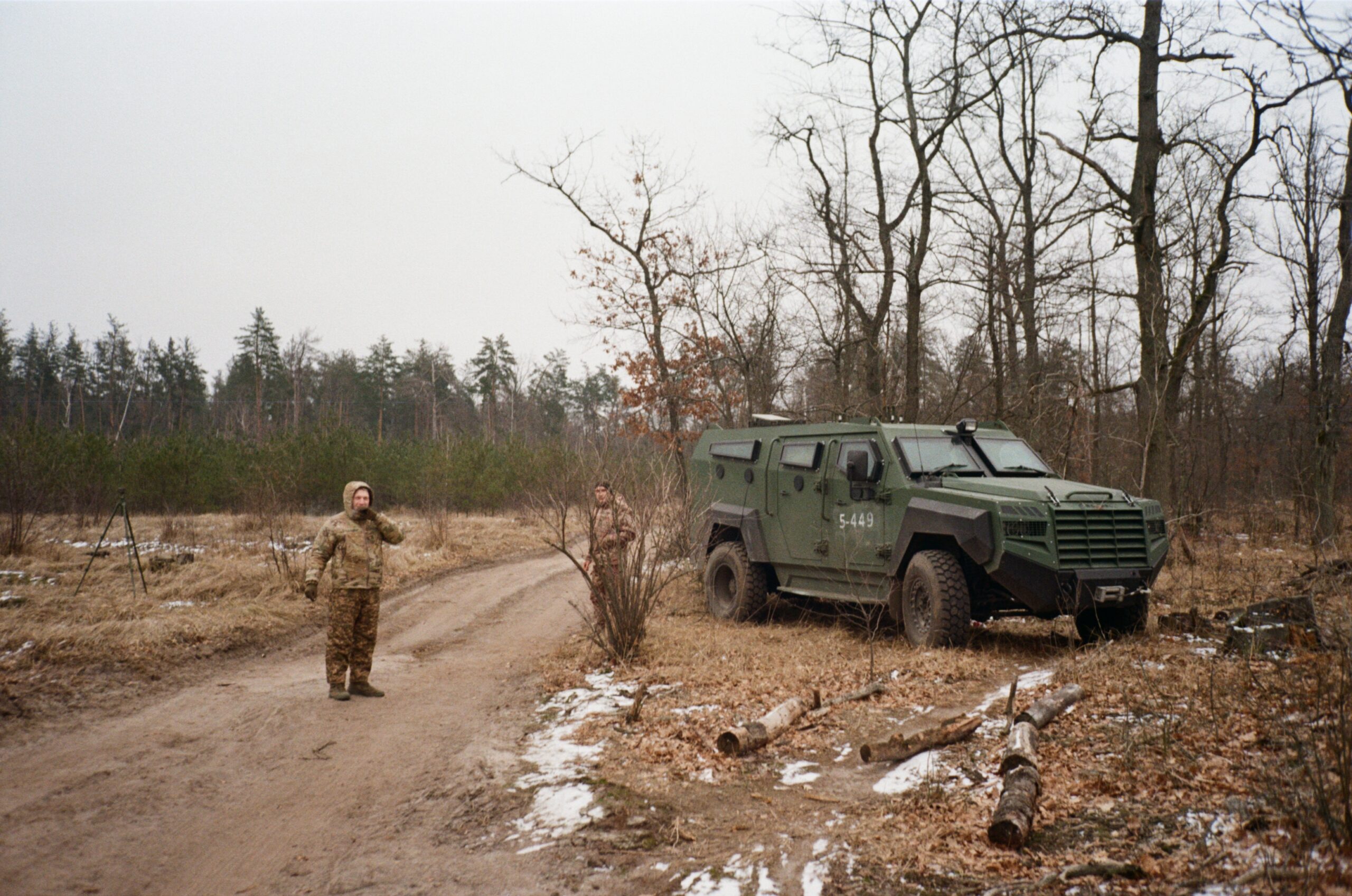
February 2025. One of my first photos on film. I had just bought the camera back then. We went out into a field to test something. I hadn’t even been on combat missions yet. The vehicle in the photo is a “Roshelka” (a Roshel armored vehicle built on a Ford F-550 chassis); it had absolutely no brakes. Well, technically they were there, but stopping it was virtually impossible. I asked to take the wheel and drove it a little: it plows ahead like a tank, completely impossible to brake. Mind you, that was before I had actually driven a real tank.
This is Bilyi (White), my first partner on Mavics. Back then, we were training our infantry to conduct sorties: showing them what they looked like from above, and terrorizing them with drone drops. This was Bilyi’s and my very first task: we were still rookies, green, and didn’t know a thing.
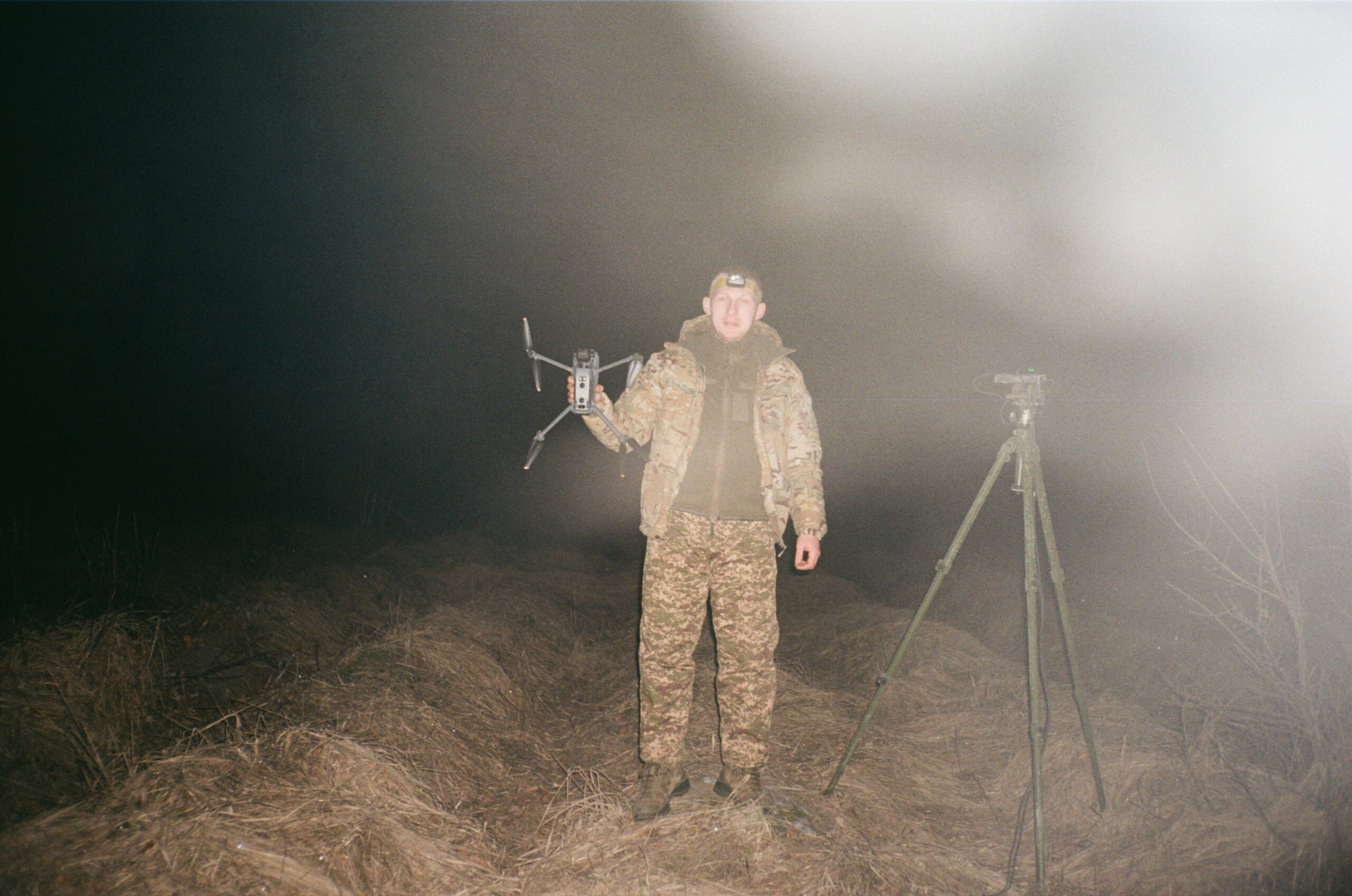
This is Bilyi (White), my first partner on Mavics. Back then, we were training our infantry to conduct sorties: showing them what they looked like from above, and terrorizing them with drone drops. This was Bilyi’s and my very first task: we were still rookies, green, and didn’t know a thing.
This is Ranger and Naida. He was a clerk in the reconnaissance unit. Naida is a dog that was found on the street. She attached herself to the guys from the crew and would come to our command post to get some food.
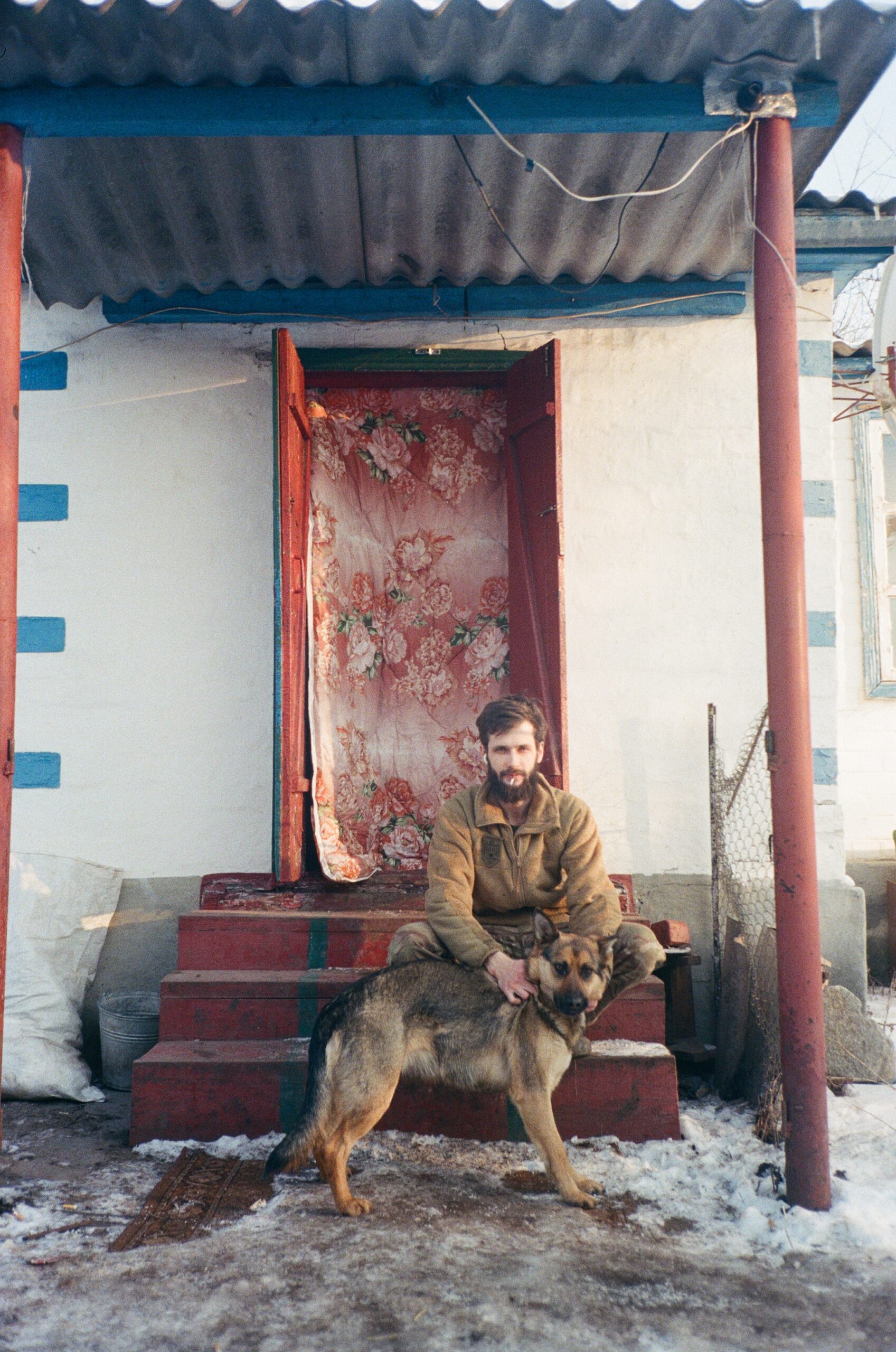
This is Ranger and Naida. He was a clerk in the reconnaissance unit. Naida is a dog that was found on the street. She attached herself to the guys from the crew and would come to our command post to get some food.
Spring 2025. This is Valik. His call sign is also Malyi (The Kid). In the photo, he is showing the aftermath of a Mavic drone hitting his hand. That’s why three of his fingers are bandaged. This was one of our closest positions to the FLOT (Forward Line of Own Troops / frontline). Back then, we were still working on drone drops.
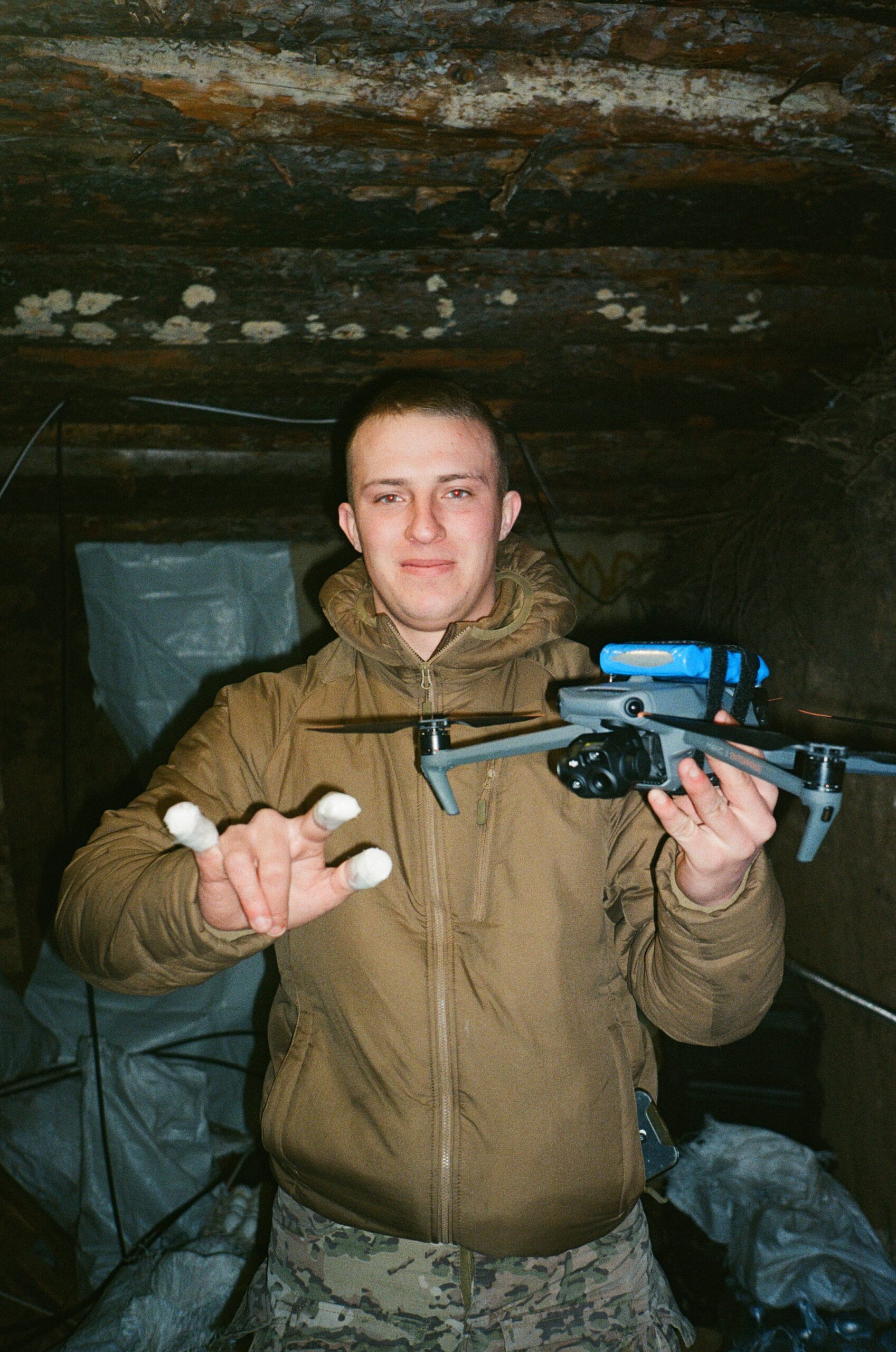
Spring 2025. This is Valik. His call sign is also Malyi (The Kid). In the photo, he is showing the aftermath of a Mavic drone hitting his hand. That’s why three of his fingers are bandaged. This was one of our closest positions to the FLOT (Forward Line of Own Troops / frontline). Back then, we were still working on drone drops.
This is Dima. Next to him is all the equipment from the position. That night, they called us and said we had been compromised, so we needed to pack up and leave. In about an hour and a half to two hours, we gathered everything: the EcoFlows, drones, antenna cables, and the generator. This was our first major quest like this with Dima. At that point, we had only been on combat missions for a month.
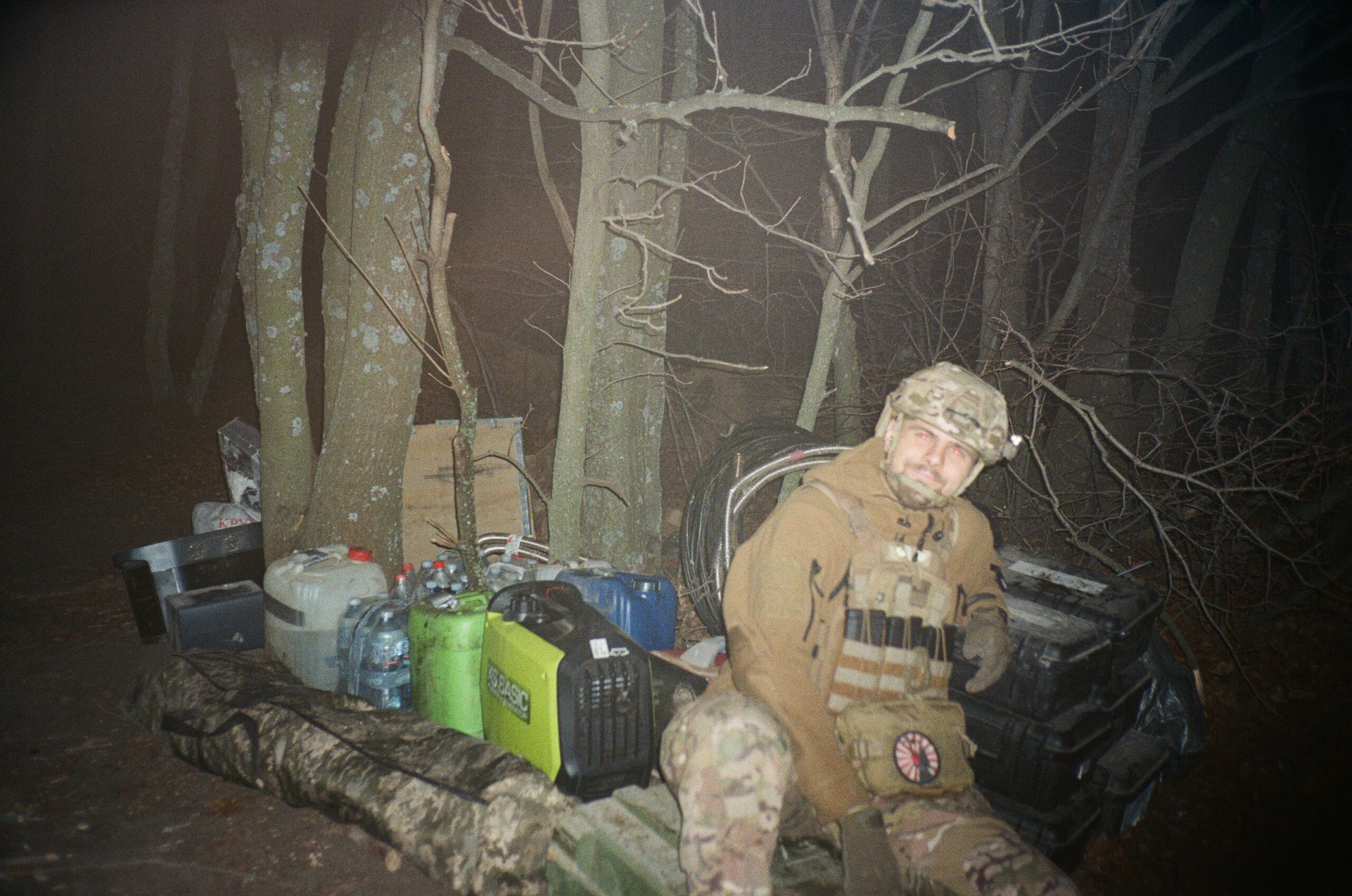
This is Dima. Next to him is all the equipment from the position. That night, they called us and said we had been compromised, so we needed to pack up and leave. In about an hour and a half to two hours, we gathered everything: the EcoFlows, drones, antenna cables, and the generator. This was our first major quest like this with Dima. At that point, we had only been on combat missions for a month.
This is Alabama, a very charismatic and flashy dude. He is an instructor, showing how to work with drops on a Mavic. This class was somewhere near Chuhuiv: we were practicing drone drops with fresh recruits, and Alabama was showing us how to handle the ammunition.
I remember how my eyes lit up because I love explosives and respect them immensely. You shouldn’t treat them lightly, but you shouldn’t fear them either—you need to approach working with them calmly and with a cool head. If you haven’t worked with something before, don’t be ashamed to say: “I don’t know, guys, explain it to me.” Alabama is one of those people who will tell you ten times and patiently break it down until you say: “Roger, I got it.” And this is one of those moments where he is explaining the exact same thing yet again. Anyone else would be sick of it, but not him. He loves teaching people, and I wanted to take this photo of him as a keepsake.
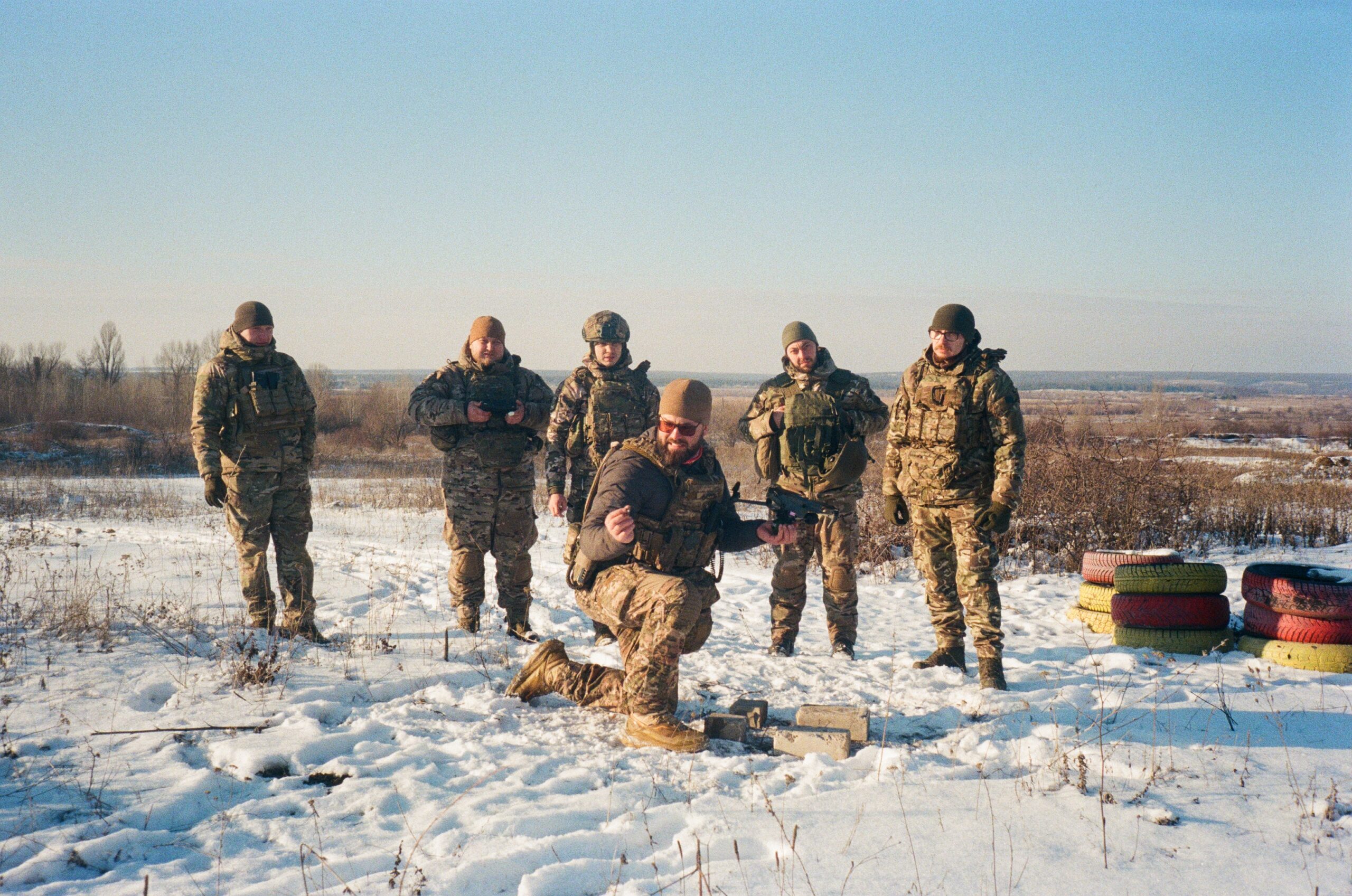
This is Alabama, a very charismatic and flashy dude. He is an instructor, showing how to work with drops on a Mavic. This class was somewhere near Chuhuiv: we were practicing drone drops with fresh recruits, and Alabama was showing us how to handle the ammunition.
I remember how my eyes lit up because I love explosives and respect them immensely. You shouldn’t treat them lightly, but you shouldn’t fear them either—you need to approach working with them calmly and with a cool head. If you haven’t worked with something before, don’t be ashamed to say: “I don’t know, guys, explain it to me.” Alabama is one of those people who will tell you ten times and patiently break it down until you say: “Roger, I got it.” And this is one of those moments where he is explaining the exact same thing yet again. Anyone else would be sick of it, but not him. He loves teaching people, and I wanted to take this photo of him as a keepsake.
This is Dima with his mom. They surprised him by coming for just one day to Balakliya, where we were living at the time. They hadn’t seen each other for half a year. It was a very sweet moment. That was the first time I saw Dima in a family setting like that, where he wasn’t some badass soldier, but just his mother’s son. It was heartwarming that he wasn’t ashamed of it, and that I was invited into this circle to spend time with them. I love their family.
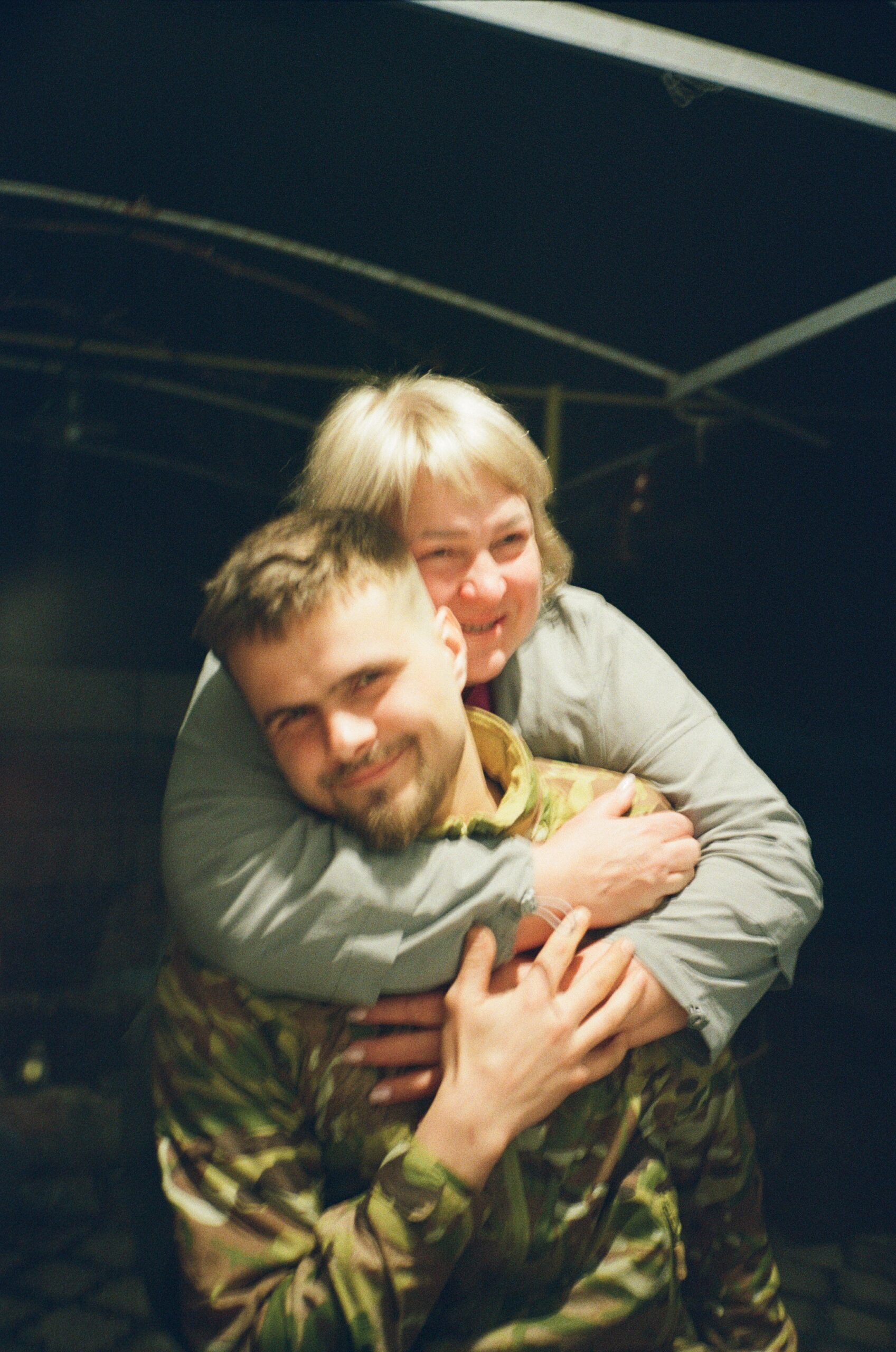
This is Dima with his mom. They surprised him by coming for just one day to Balakliya, where we were living at the time. They hadn’t seen each other for half a year. It was a very sweet moment. That was the first time I saw Dima in a family setting like that, where he wasn’t some badass soldier, but just his mother’s son. It was heartwarming that he wasn’t ashamed of it, and that I was invited into this circle to spend time with them. I love their family.
This is my first platoon leader—Karna, a very cool young guy. He is originally from somewhere near the Russian border in the Kharkiv region. His home was destroyed. After completing his mandatory military service, he signed a contract and stayed with the “Bureviy” brigade. He has been discharged now and wants to rest for a bit, because he is also quite young. He is about 23 or 24 years old. Karna taught me a lot; he is my first commander, although formally that wasn’t the case, and he forbade me from saying so. He was the one who showed me how combat missions work.
When I first arrived at this position, a heavy drone from a neighboring unit flew over us—I jumped into the dugout and hit the ground. Karna calmly asked, “What, scared? Is it your first time?” I told him yes. Then he said I’d have to get used to it. I’m sure no one taught him to do this, but after missions, he would always ask what we liked, what wasn’t clear, and what was scary. It felt really good because I didn’t think anyone would ask things like that.
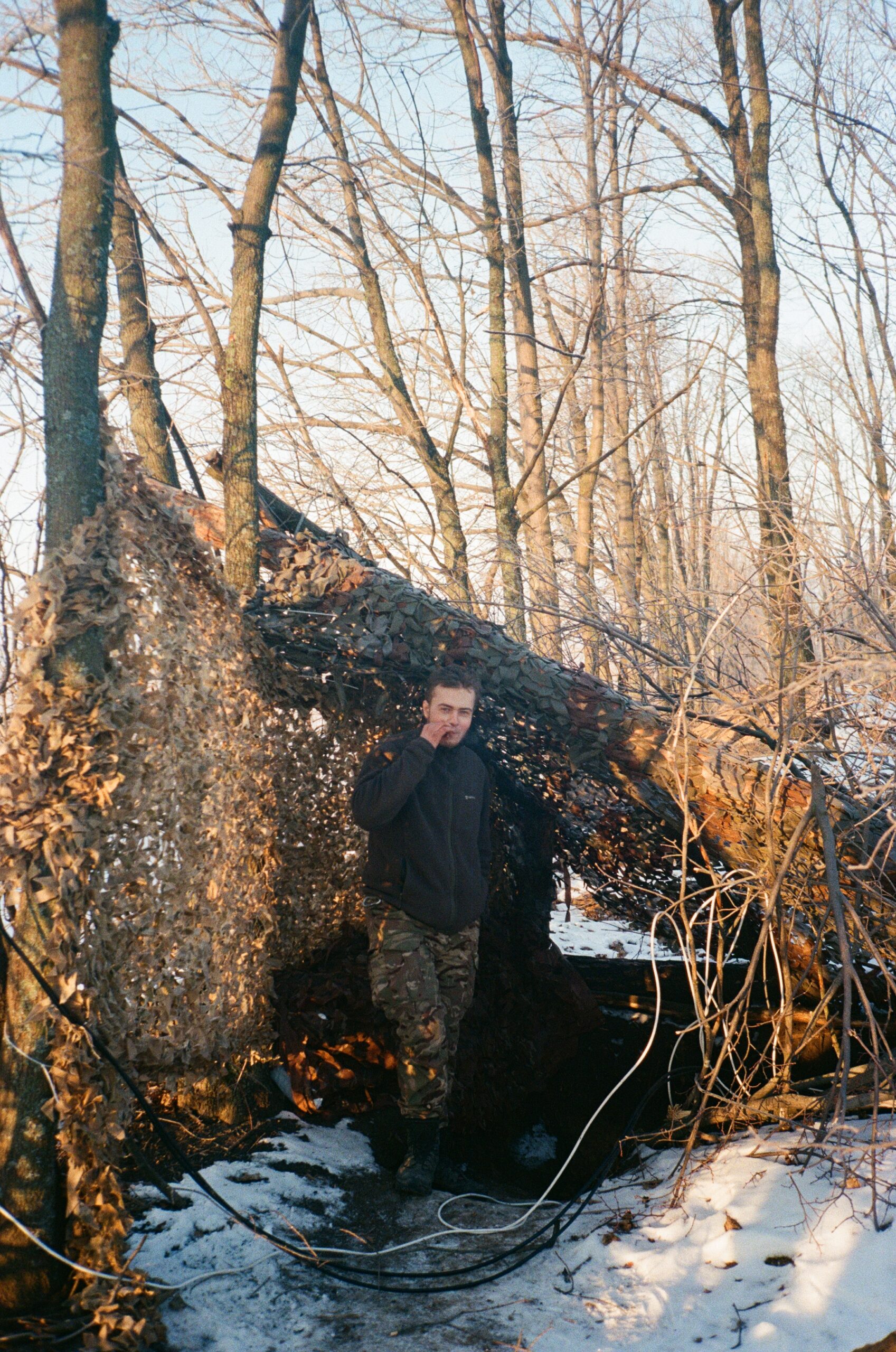
This is my first platoon leader—Karna, a very cool young guy. He is originally from somewhere near the Russian border in the Kharkiv region. His home was destroyed. After completing his mandatory military service, he signed a contract and stayed with the “Bureviy” brigade. He has been discharged now and wants to rest for a bit, because he is also quite young. He is about 23 or 24 years old. Karna taught me a lot; he is my first commander, although formally that wasn’t the case, and he forbade me from saying so. He was the one who showed me how combat missions work.
When I first arrived at this position, a heavy drone from a neighboring unit flew over us—I jumped into the dugout and hit the ground. Karna calmly asked, “What, scared? Is it your first time?” I told him yes. Then he said I’d have to get used to it. I’m sure no one taught him to do this, but after missions, he would always ask what we liked, what wasn’t clear, and what was scary. It felt really good because I didn’t think anyone would ask things like that.
I was setting up an antenna at a new position. Karna said that this is what an initiation into aerial reconnaissance looks like, and he took a picture of me. Interestingly, my brothers have the exact same photos. So, as it turns out, it is also a family tradition.

I was setting up an antenna at a new position. Karna said that this is what an initiation into aerial reconnaissance looks like, and he took a picture of me. Interestingly, my brothers have the exact same photos. So, as it turns out, it is also a family tradition.
February 2025. In my head, I called this photo “On the Edge.” These are dragon’s teeth, engineering barrier lines of defense. Just 1.5 kilometers away, at the end of this field, is the occupiers’ forward position. It was cool to walk out there sometimes and look east. Now I realize how much the war has changed with the expansion of the kill zone. You can’t just stroll around like that anymore, the way we did two years ago.
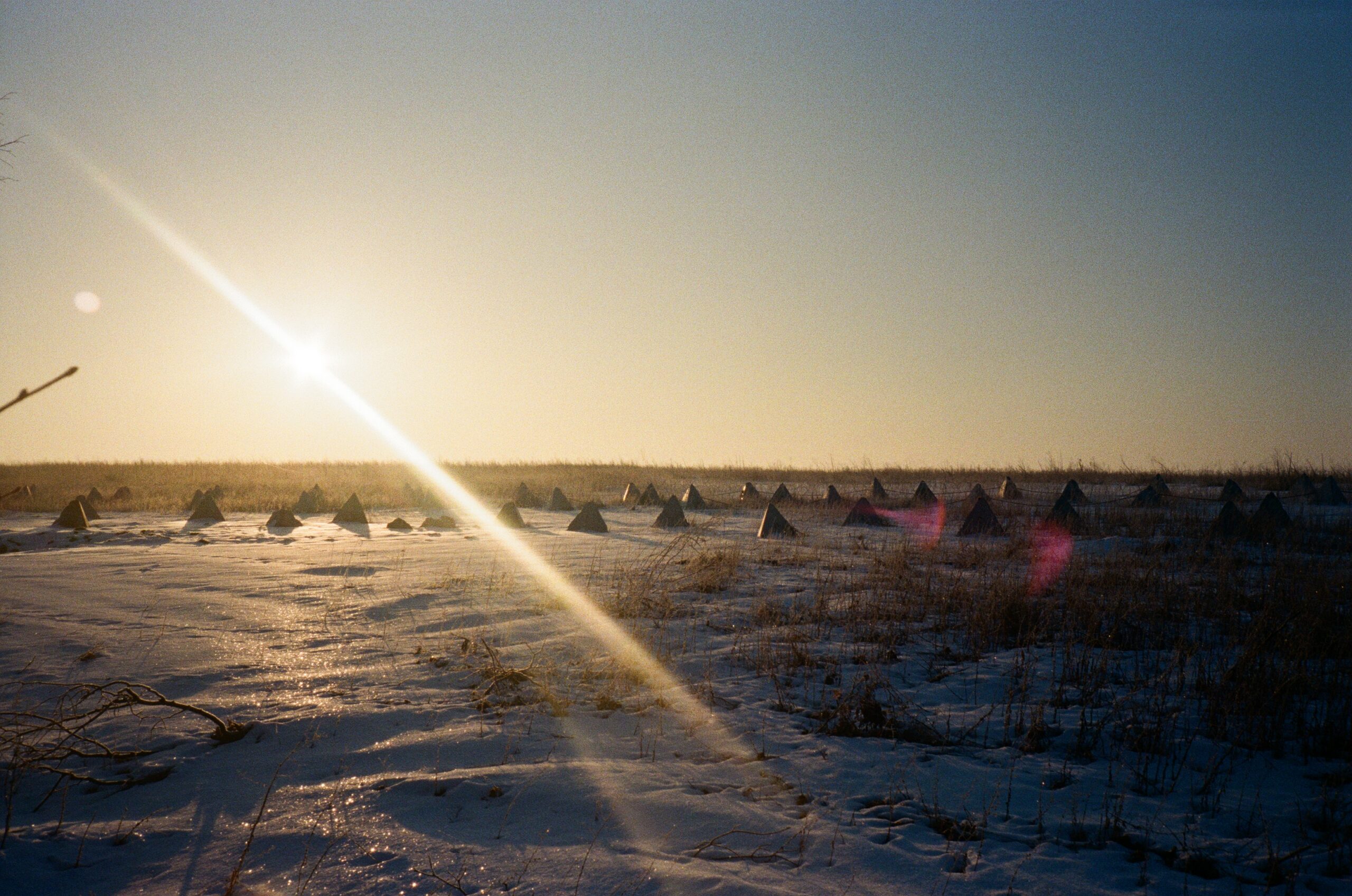
February 2025. In my head, I called this photo “On the Edge.” These are dragon’s teeth, engineering barrier lines of defense. Just 1.5 kilometers away, at the end of this field, is the occupiers’ forward position. It was cool to walk out there sometimes and look east. Now I realize how much the war has changed with the expansion of the kill zone. You can’t just stroll around like that anymore, the way we did two years ago.
Not a very successful shot, but over time I started to like it more and more. Because here, it’s written all over my face: “What am I doing here?”. The morning was beautiful and frosty. I remember grabbing that mast, and it would freeze right to your hands. It was incredibly cold: some record-breaking temperatures—minus 30 or 35 degrees.
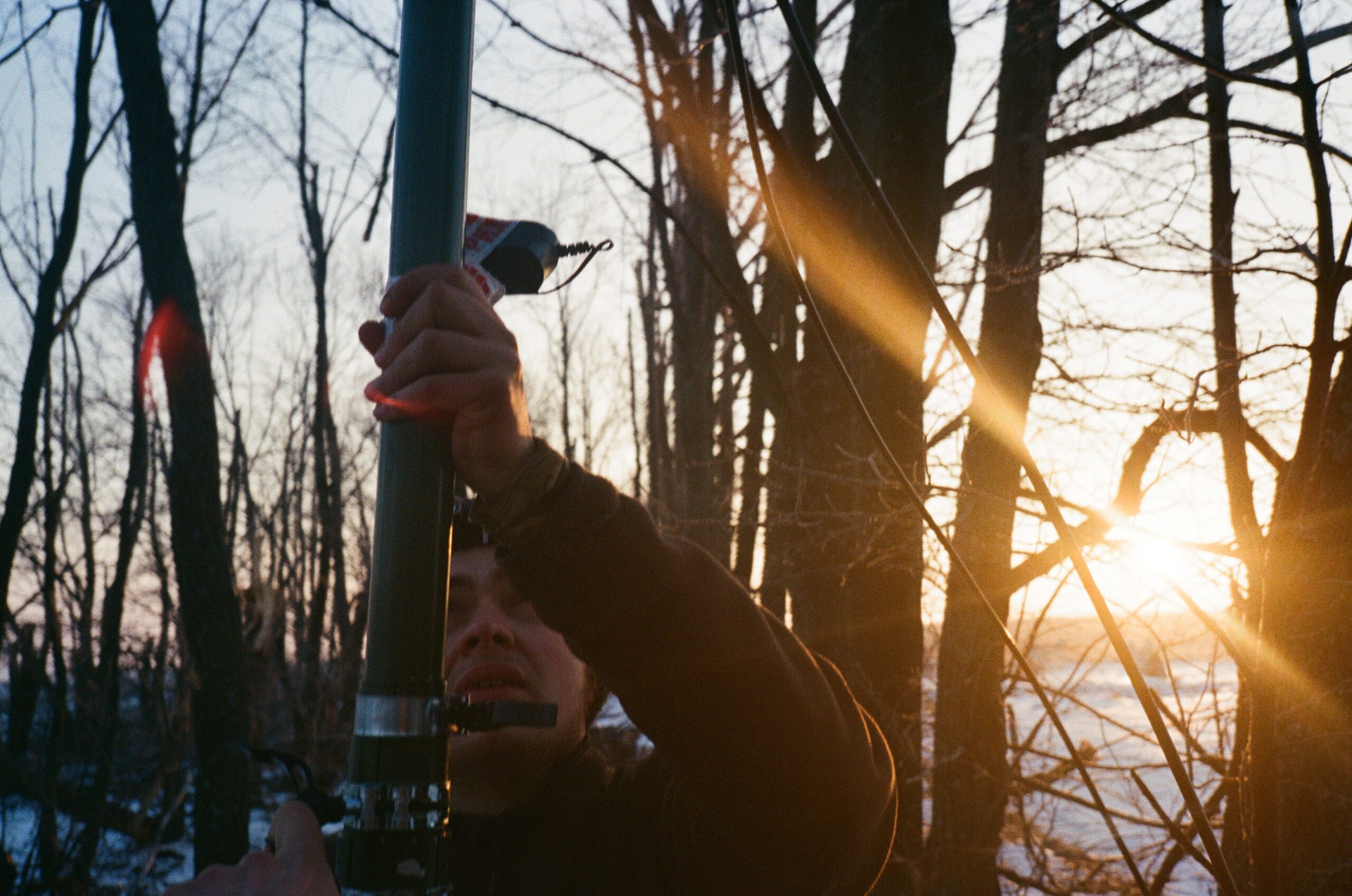
Not a very successful shot, but over time I started to like it more and more. Because here, it’s written all over my face: “What am I doing here?”. The morning was beautiful and frosty. I remember grabbing that mast, and it would freeze right to your hands. It was incredibly cold: some record-breaking temperatures—minus 30 or 35 degrees.
October 2025. These were our first flights after training on the “Vampire” drones. Back then, I was the navigator-photographer, and Red was the main pilot.
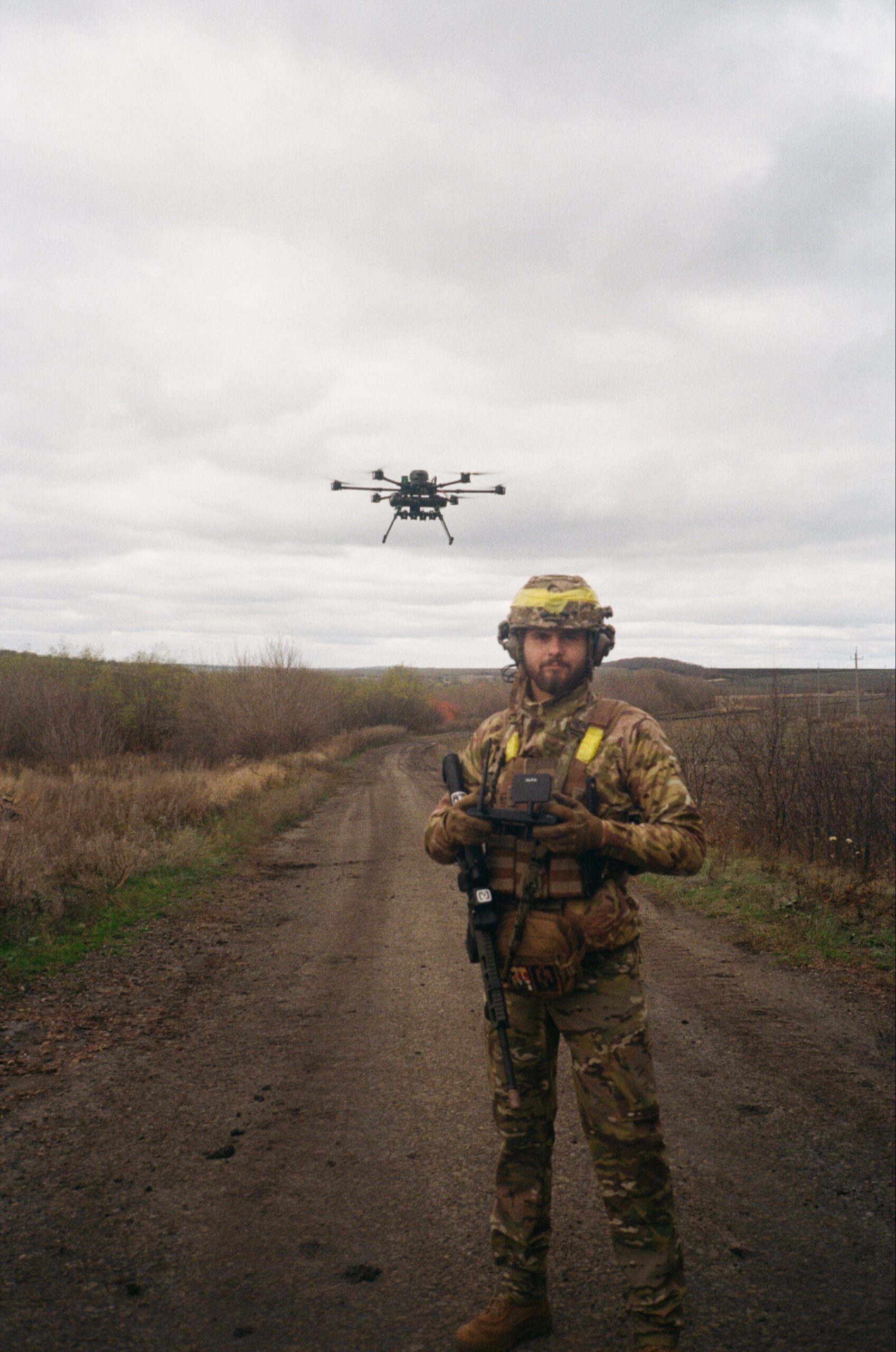
October 2025. These were our first flights after training on the “Vampire” drones. Back then, I was the navigator-photographer, and Red was the main pilot.
Taking photos before a mission is considered bad luck. That’s why all photos were taken only after work. But on this day, my first commander on the “big birds” ordered us to take a photo. He is in the center; his call sign is Suleiman. The crew was called “Kara z Nebes” (Punishment from Heaven)—a great name, I liked it. I would say he is very lenient, but he has his own rules and strict principles. There have to be boundaries, but they get adjusted a bit because he saw we were rookies and gave us a lot of pointers. He is one of the first heavy-shot operators in Ukraine. Suleiman is awesome; I wish there were more guys like him in the army.
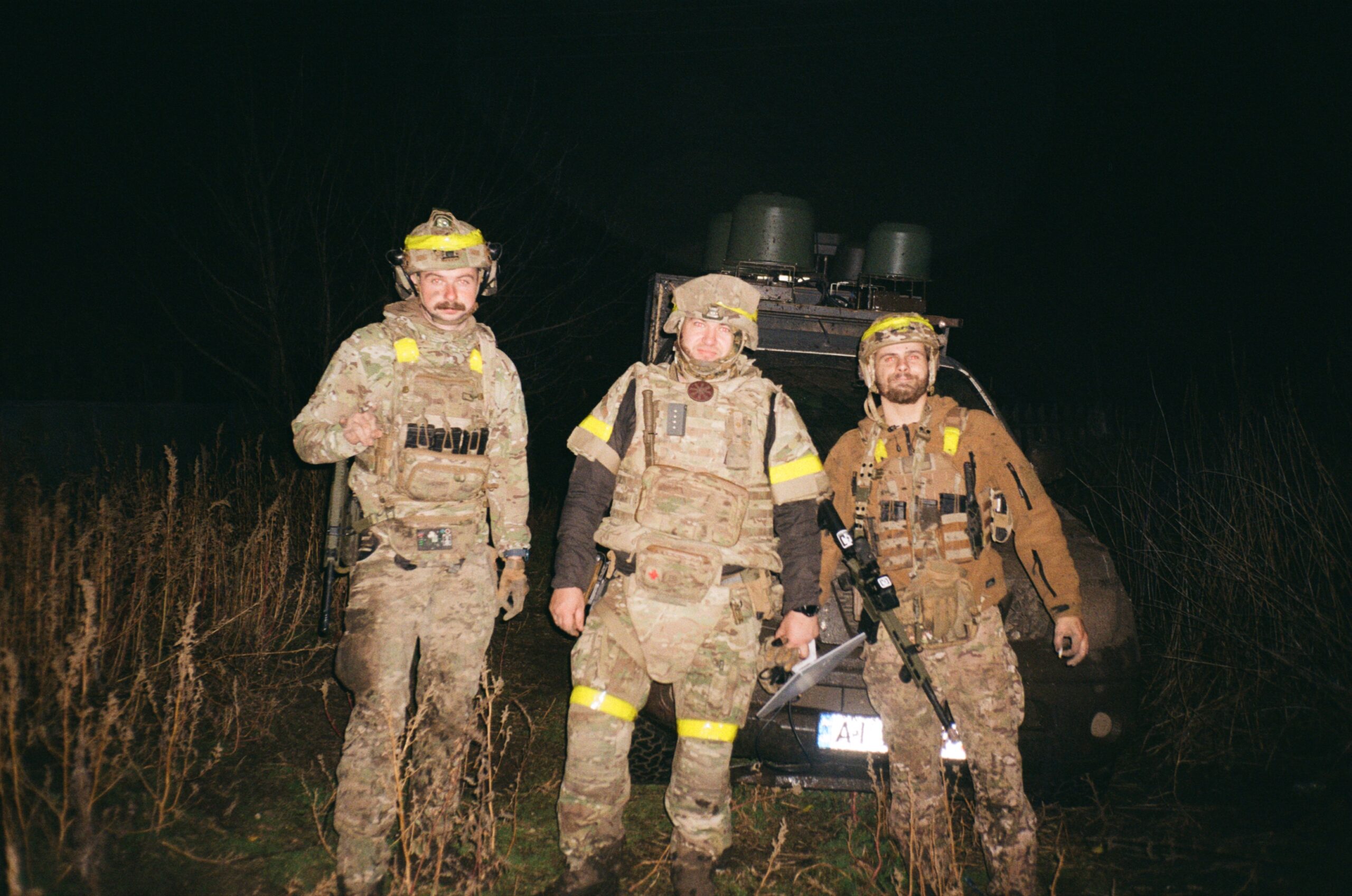
Taking photos before a mission is considered bad luck. That’s why all photos were taken only after work. But on this day, my first commander on the “big birds” ordered us to take a photo. He is in the center; his call sign is Suleiman. The crew was called “Kara z Nebes” (Punishment from Heaven)—a great name, I liked it. I would say he is very lenient, but he has his own rules and strict principles. There have to be boundaries, but they get adjusted a bit because he saw we were rookies and gave us a lot of pointers. He is one of the first heavy-shot operators in Ukraine. Suleiman is awesome; I wish there were more guys like him in the army.
This is Red and me. My right arm and both legs are almost knee-deep in mud. We were bringing ammunition and humanitarian aid to the UGV (Unmanned Ground Vehicle / NRK). The UGV then transported it to the pilots’ positions, and the pilots passed it on to the infantry. So this chain had three stages, and we were the first.
It was really funny because guys were driving past us, floating by like ships, waving—but nobody wanted to help us. Eventually, we managed to call our guys, and a ZIL truck arrived: it hooked us up and just pulled us out like a feather. They said we weren’t the first ones to get stuck here, but we were the first to do it in a car like ours.
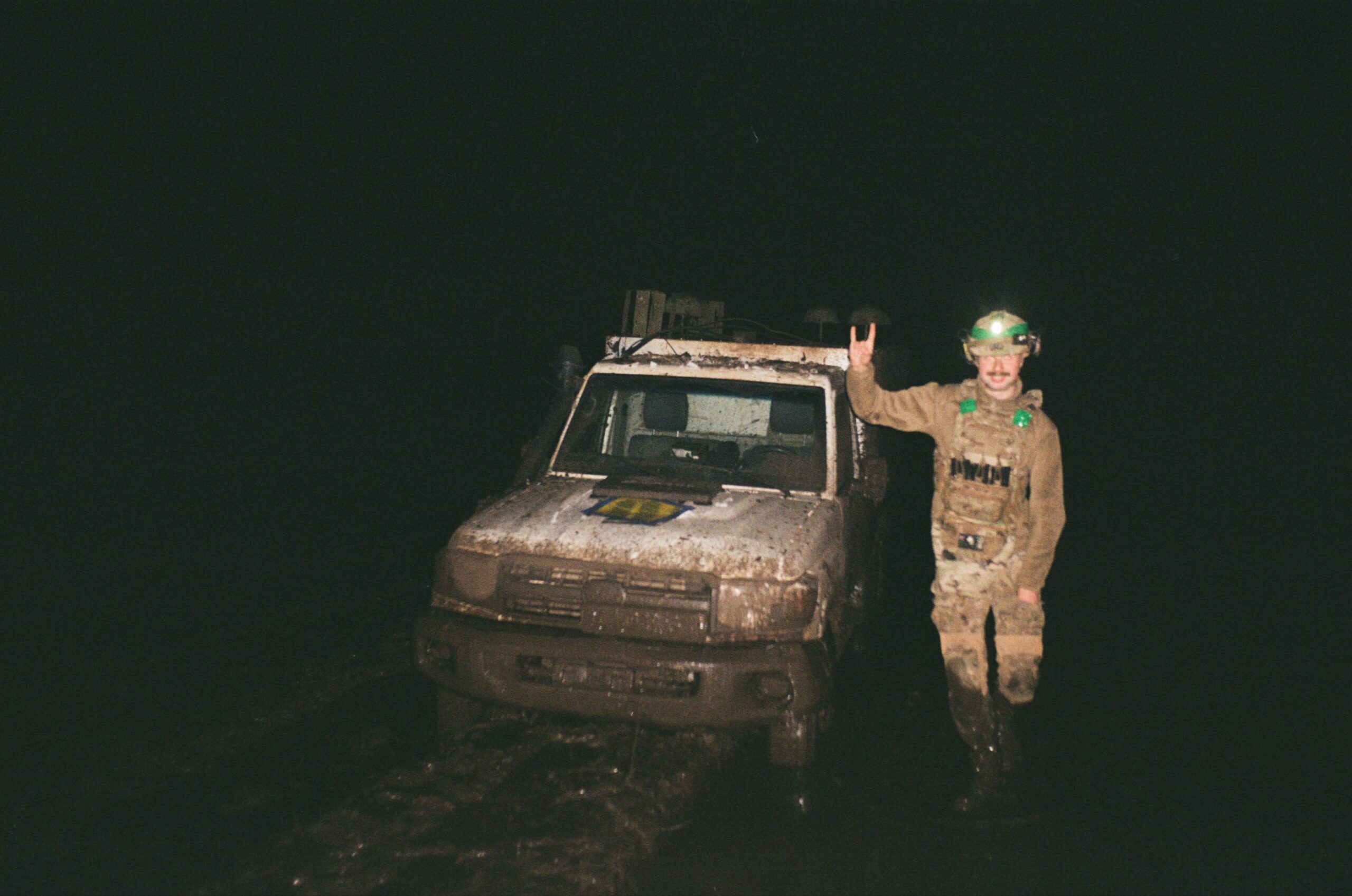
This is Red and me. My right arm and both legs are almost knee-deep in mud. We were bringing ammunition and humanitarian aid to the UGV (Unmanned Ground Vehicle / NRK). The UGV then transported it to the pilots’ positions, and the pilots passed it on to the infantry. So this chain had three stages, and we were the first.
It was really funny because guys were driving past us, floating by like ships, waving—but nobody wanted to help us. Eventually, we managed to call our guys, and a ZIL truck arrived: it hooked us up and just pulled us out like a feather. They said we weren’t the first ones to get stuck here, but we were the first to do it in a car like ours.
Next are photos from my current work doing remote operations (na vidtyazhtsi). We are working every single night now, practically without days off, but I am in a city where there are many civilians and children playing. I go to the gym, and nobody would even guess what it is we do.
On one hand, it’s a good change because it gives me a chance to take care of my health, and my sleep has gotten better. But on the other hand, it feels a bit awkward when thinking about the guys who don’t have this luxury. You need to go out into the field from time to time just to clear your head.
Right now, what keeps me going is activity and a steady daily routine. Yes, even routine can be constructive when you plan it yourself. When my service conditions allow me to go out for runs and pump iron in the gym, I take advantage of it while I can.
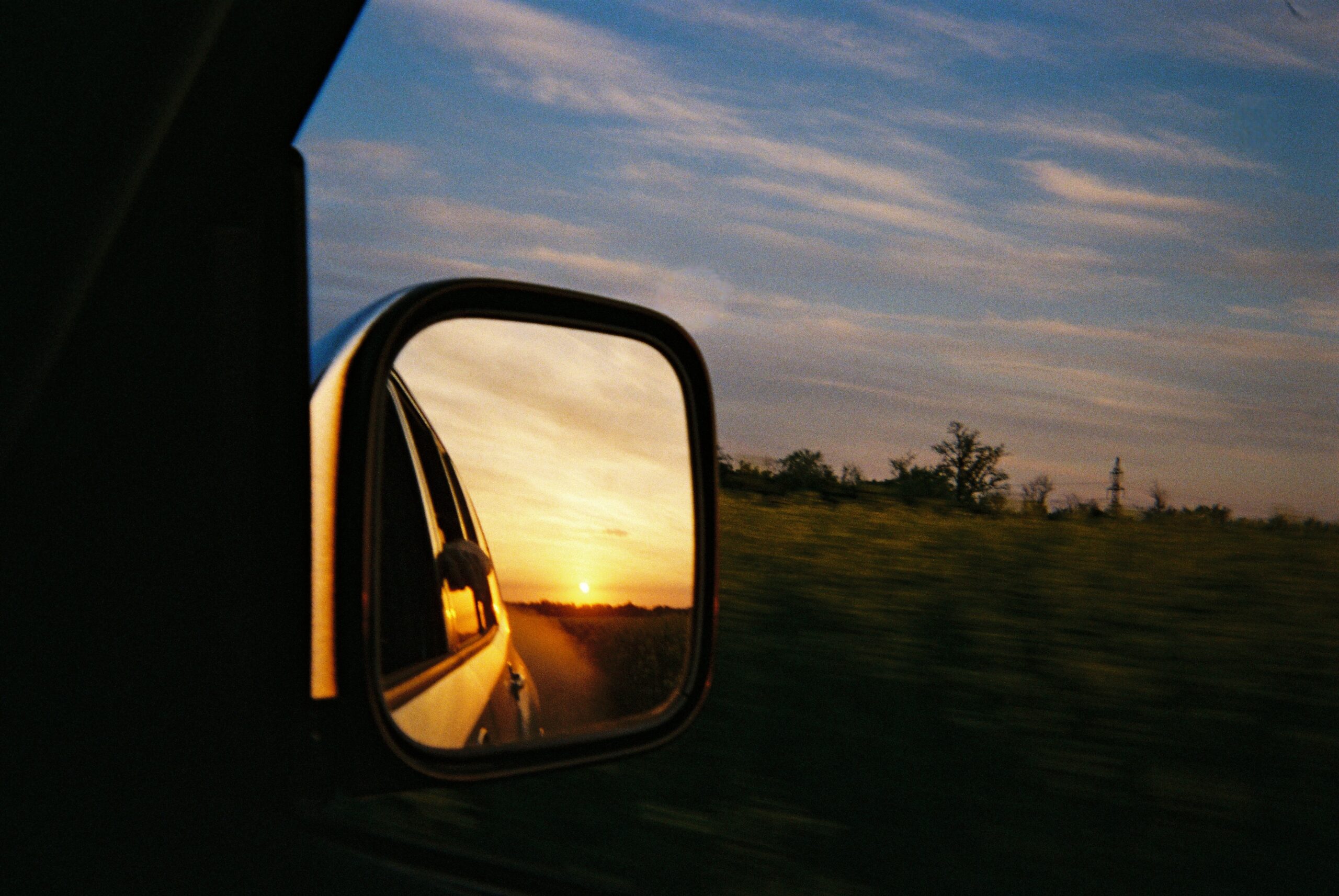
Right now, what keeps me going is activity and a steady daily routine. Yes, even routine can be constructive when you plan it yourself. When my service conditions allow me to go out for runs and pump iron in the gym, I take advantage of it while I can.
The guys in the photo became my friends here. We worked together the most, so I wanted to take a picture of them as a keepsake from this rotation.
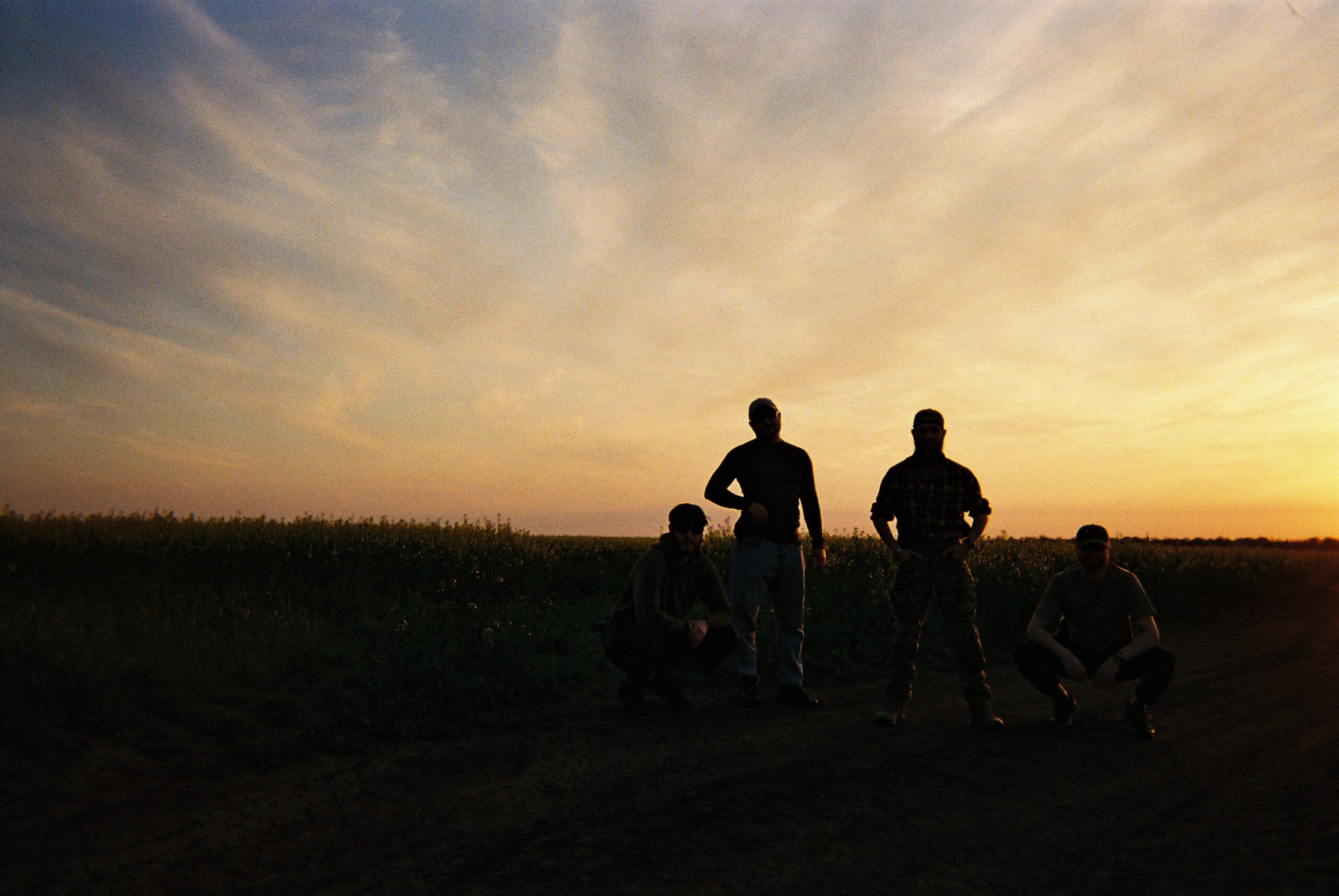
The guys in the photo became my friends here. We worked together the most, so I wanted to take a picture of them as a keepsake from this rotation.
This is Texas; he and I actually joined at pretty much the same time. His crew was hit by an FPV drone in the Kupyansk direction. After being wounded, he said he didn’t want to go out on combat missions anymore and transitioned into a clerk role. It’s a highly in-demand job that few people want to do, but he stepped up.
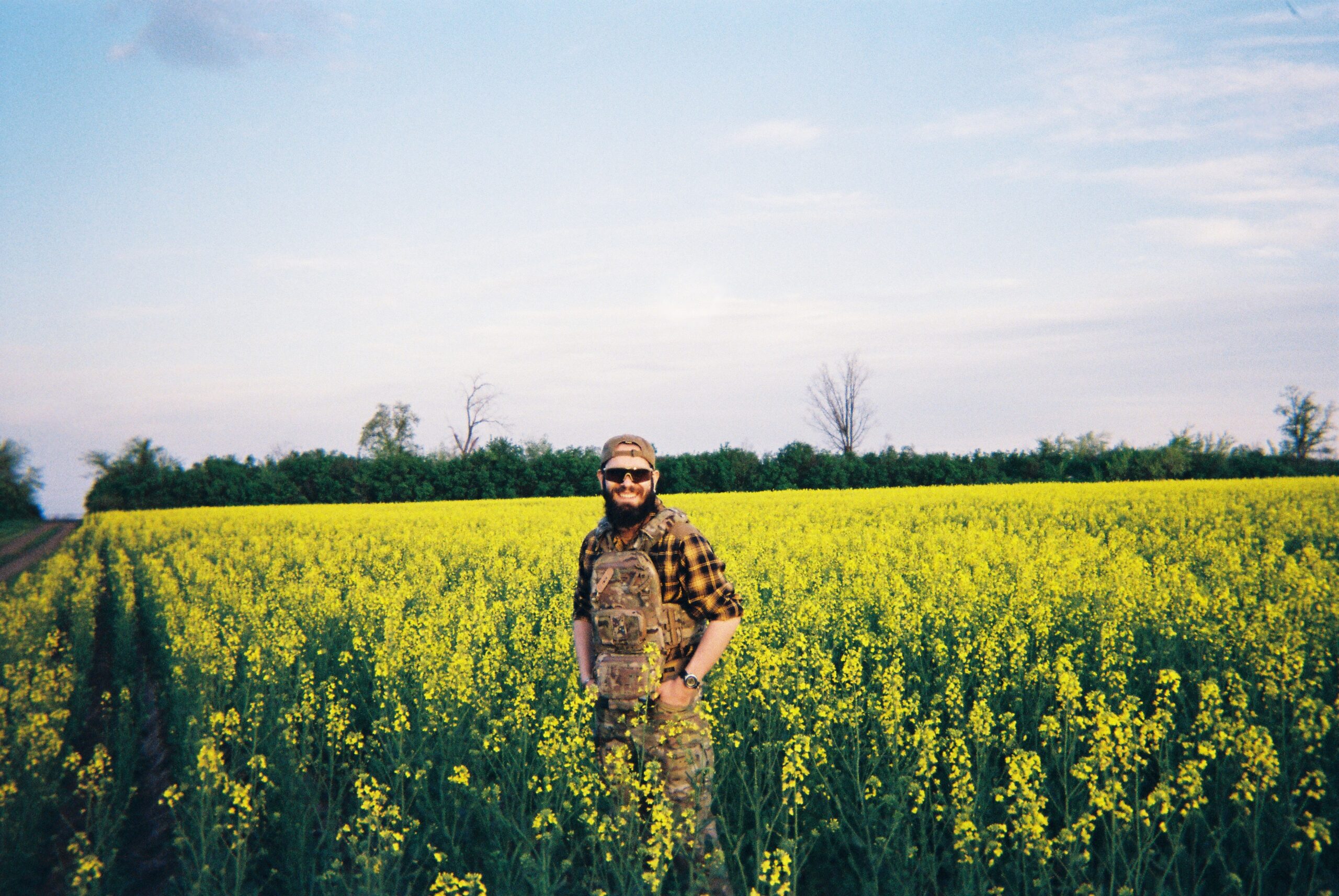
This is Texas; he and I actually joined at pretty much the same time. His crew was hit by an FPV drone in the Kupyansk direction. After being wounded, he said he didn’t want to go out on combat missions anymore and transitioned into a clerk role. It’s a highly in-demand job that few people want to do, but he stepped up.
This was as we were walking, and some guy drove past on a motorcycle with a sidecar, with a girl with him against the backdrop of the sunset. The fields of Dobropillia.
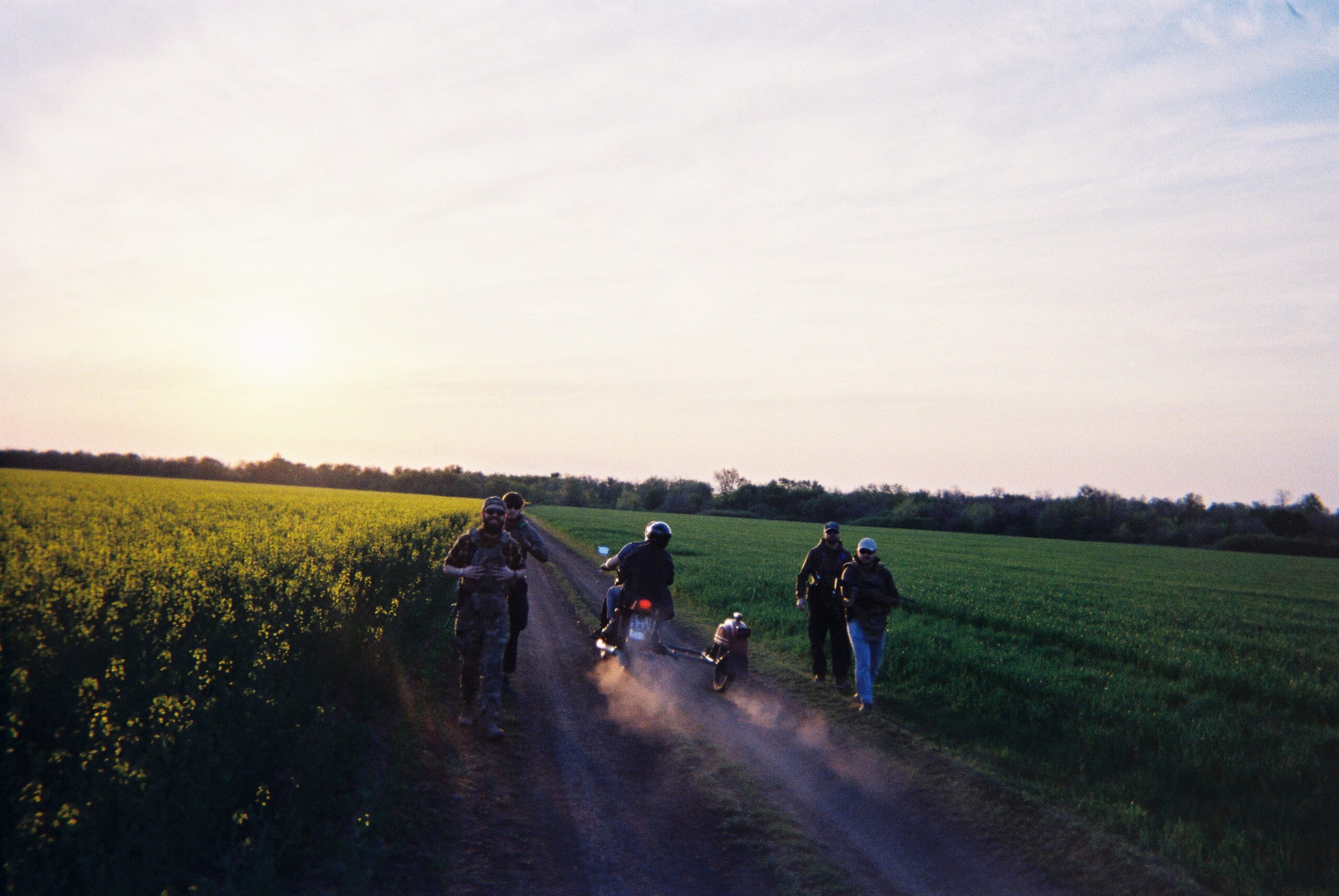
This was as we were walking, and some guy drove past on a motorcycle with a sidecar, with a girl with him against the backdrop of the sunset. The fields of Dobropillia.
Zabiv is the best heavy-shot pilot. He has been through so much. His journey started way back in the Serebryansky Forest.
In the next photo is his partner, Jerry. They were in our unit’s very first crew to arrive in Dobropillia. They really bore the brunt of the rotation handover.
We were moving in to relieve the Air Assault Forces (DShV), and the area hadn’t been cleared yet. The aerial reconnaissance guys—from units that are supposed to hold the second line of defense—essentially had to serve as frontline troops.
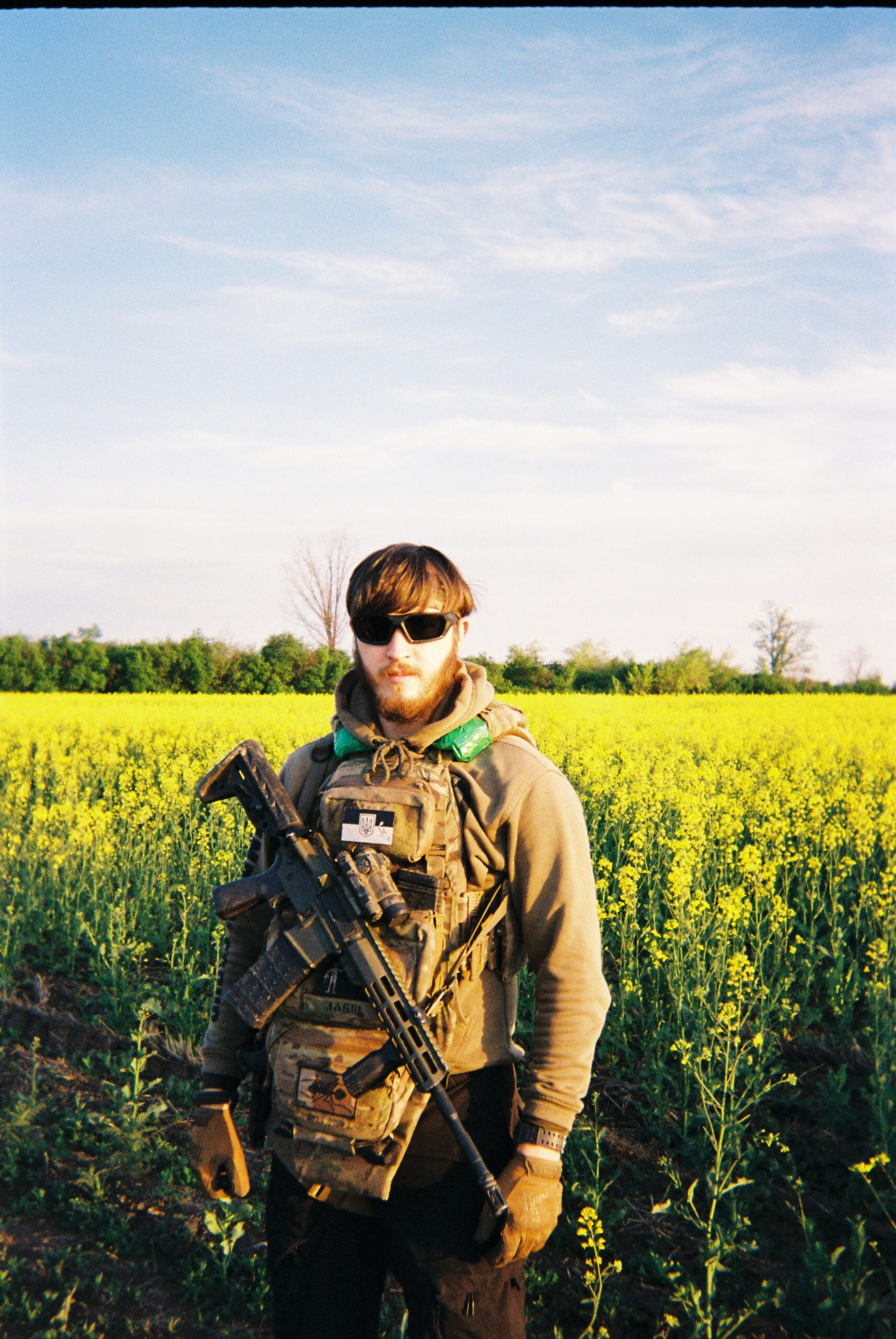
Zabiv is the best heavy-shot pilot. He has been through so much. His journey started way back in the Serebryansky Forest.
In the next photo is his partner, Jerry. They were in our unit’s very first crew to arrive in Dobropillia. They really bore the brunt of the rotation handover.
We were moving in to relieve the Air Assault Forces (DShV), and the area hadn’t been cleared yet. The aerial reconnaissance guys—from units that are supposed to hold the second line of defense—essentially had to serve as frontline troops.
Where do you look for inspiration, motivation, desire, passion? What keeps you going?
I am motivated by a steady thirst for revenge. You can and should reshape that within yourself into a constructive source of energy. That is what matters over the long haul.
It inspires me when people write saying they want to support our unit, often completely unexpected people. It somehow brings back faith and a sense of community.
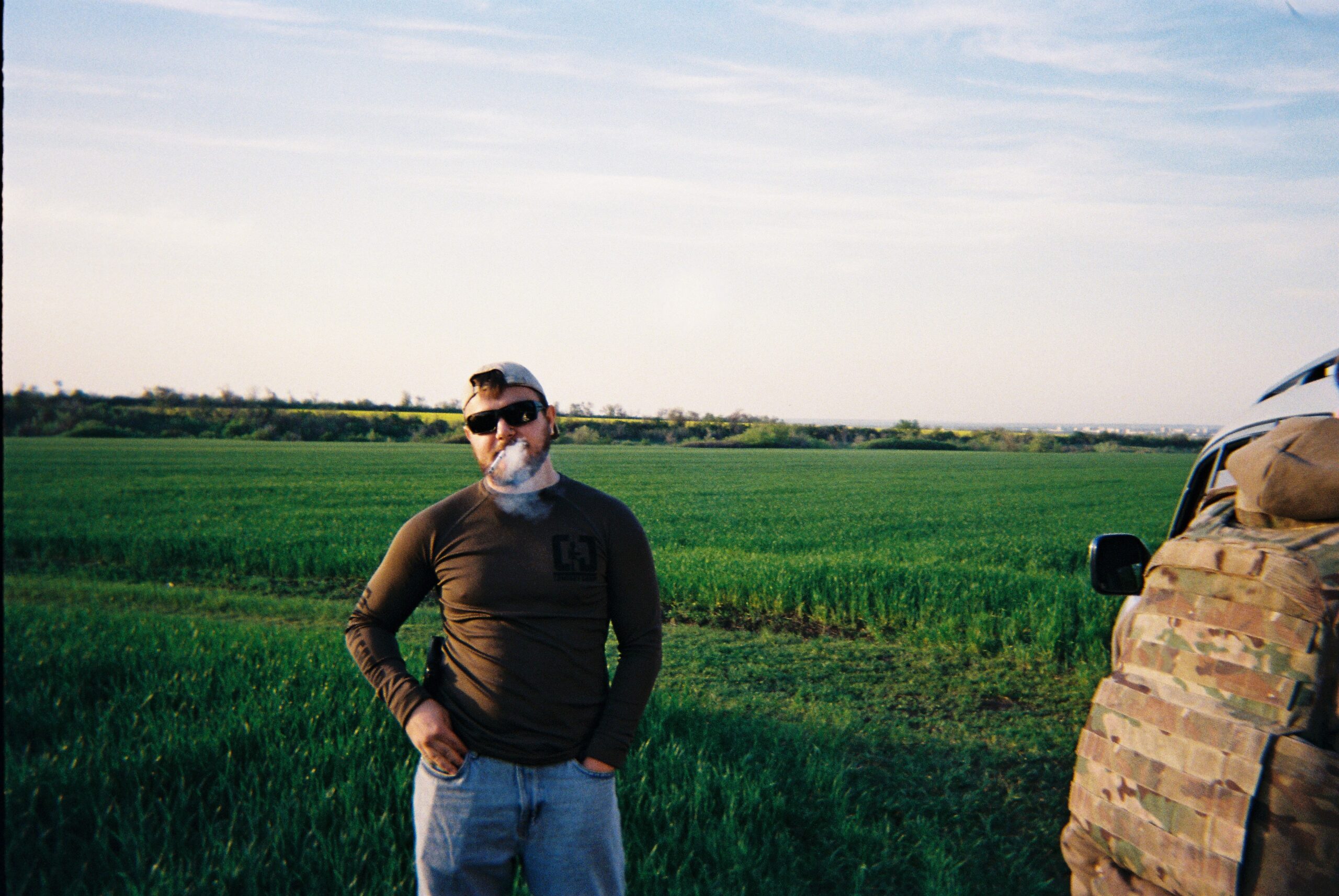
Where do you look for inspiration, motivation, desire, passion? What keeps you going?
I am motivated by a steady thirst for revenge. You can and should reshape that within yourself into a constructive source of energy. That is what matters over the long haul.
It inspires me when people write saying they want to support our unit, often completely unexpected people. It somehow brings back faith and a sense of community.
What sets your generation apart from others? Or how are you the same as your predecessors and successors?
I am not one to blame our predecessors. They gave us exactly as much as we deserved—both as children and as a nation. There is much I don’t understand, and I didn’t participate in the events of a century ago, but I study history, I am a co-creator of the present, and, I hope, a witness to a future where we have overcome laziness and discord and realized that the freedom of each individual lies within the unity of all.
I also think our generation has managed to defeat the inferiority complex that was forced upon our parents. That is cool. But when it comes to schadenfreude, we are all the same. I don’t know where this malice and joy comes from inside all of us when someone makes a mistake, fails to meet expectations, or, worst of all, publicly falls face-first into the mud. This petty, disgusting “jackal pack” pile-on (shakaliache turne) that we subject each other to is infuriating. It makes you not want to create anything in a society like this. We need to focus our attention on what unites us.
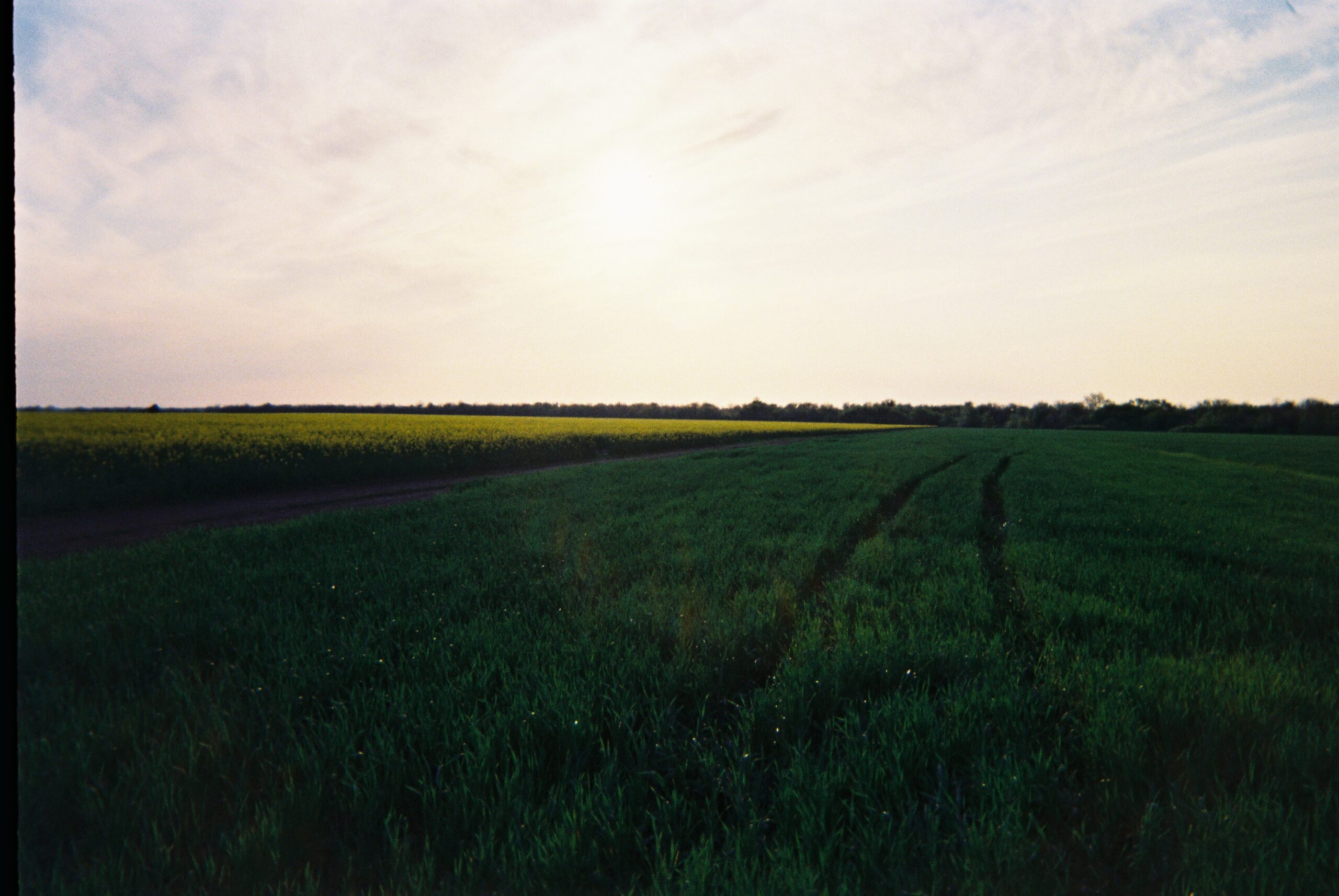
What sets your generation apart from others? Or how are you the same as your predecessors and successors?
I am not one to blame our predecessors. They gave us exactly as much as we deserved—both as children and as a nation. There is much I don’t understand, and I didn’t participate in the events of a century ago, but I study history, I am a co-creator of the present, and, I hope, a witness to a future where we have overcome laziness and discord and realized that the freedom of each individual lies within the unity of all.
I also think our generation has managed to defeat the inferiority complex that was forced upon our parents. That is cool. But when it comes to schadenfreude, we are all the same. I don’t know where this malice and joy comes from inside all of us when someone makes a mistake, fails to meet expectations, or, worst of all, publicly falls face-first into the mud. This petty, disgusting “jackal pack” pile-on (shakaliache turne) that we subject each other to is infuriating. It makes you not want to create anything in a society like this. We need to focus our attention on what unites us.
What do you think about when you take these photos on film?
What do you think about when you take these photos on film?
“Here is yet another day of our youth, burning away right before our eyes. And it is so cool that we are witnessing it together. I need to print these photos out. To add them as visuals for stories to tell the grandkids. Hopefully, my own.”
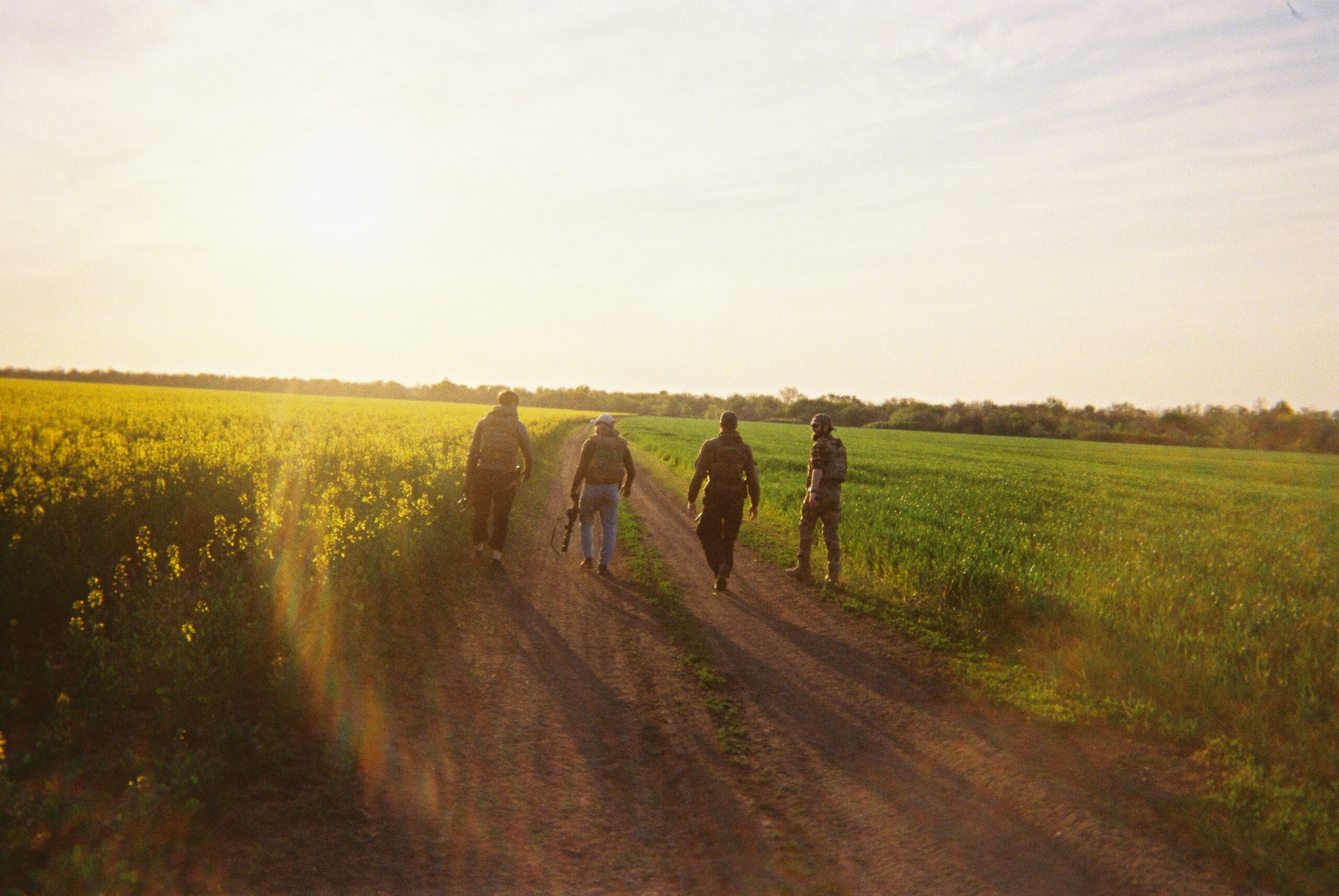
Here is yet another day of our youth, burning away right before our eyes. And it is so cool that we are witnessing it together. I need to print these photos out. To add them as visuals for stories to tell the grandkids. Hopefully, my own.
Our little room where we work from. Sviat, the guy with the tattoos, is standing on the left, and Zabiv is on the right. Out of everyone on this shift, Sviat has killed the most occupiers. I need to ask him exactly how many, but I think it’s around 200. He’s been fighting since the ATO days and used to be with the “Aidar” battalion. He likes to work alone and takes a long time to let people get close to him, but we’ve warmed up to each other a bit by now—he even wanted to take some photos.
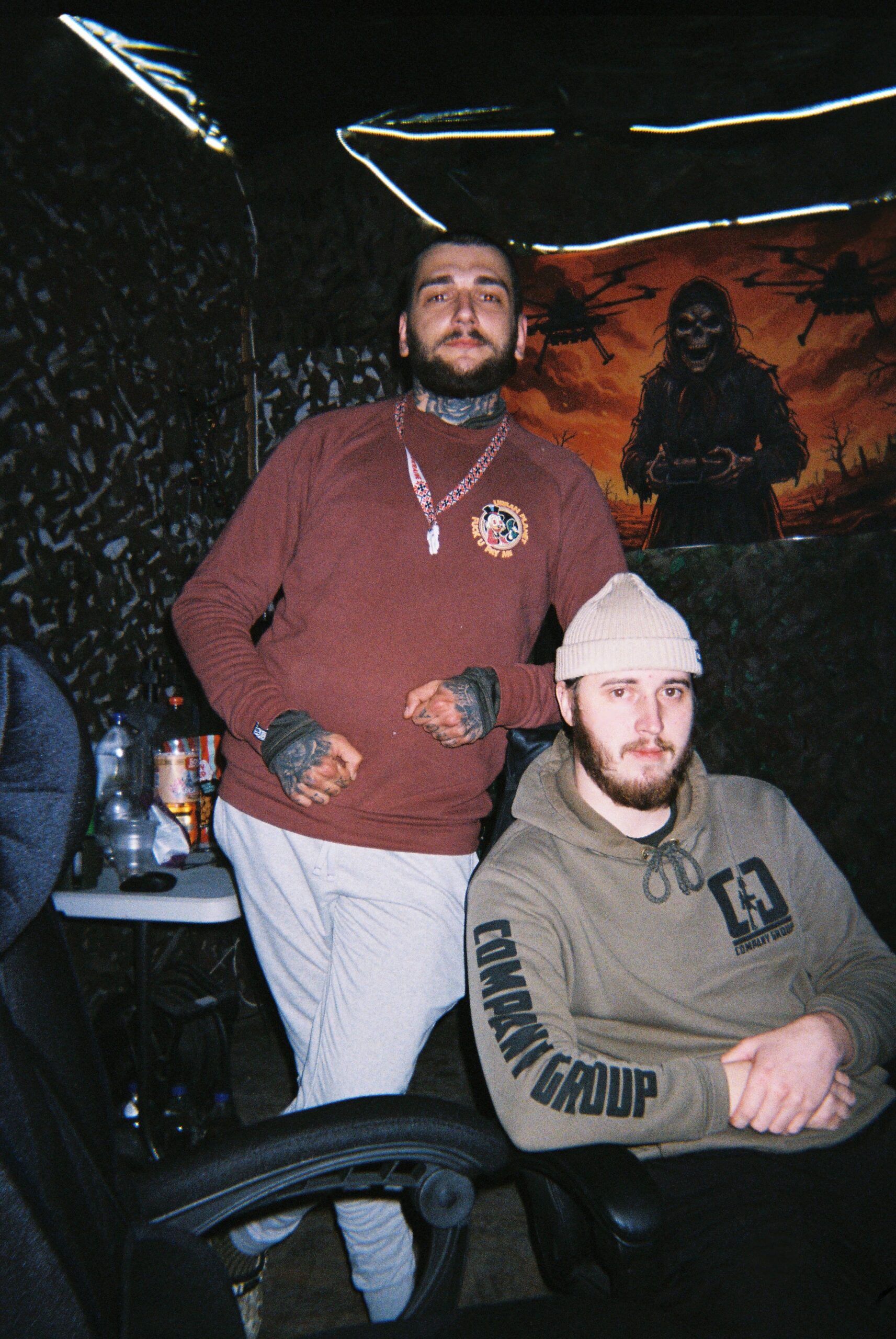
Our little room where we work from. Sviat, the guy with the tattoos, is standing on the left, and Zabiv is on the right. Out of everyone on this shift, Sviat has killed the most occupiers. I need to ask him exactly how many, but I think it’s around 200. He’s been fighting since the ATO days and used to be with the “Aidar” battalion. He likes to work alone and takes a long time to let people get close to him, but we’ve warmed up to each other a bit by now—he even wanted to take some photos.
This is Bohdan. He is my third cousin, but we are like brothers; he’s also from Yaremche. He transferred to a rear-line position and is currently on deployment near the Dnipro. This is quite close to me, so I took a day off to go visit. We hadn’t seen each other for almost a year, and I came to see Bodia on this island. It turned out he has a boat there and goes fishing. We spent the whole day out on the Dnipro River. We boated, talked, laughed, reminisced, and made plans. In short, it was just really great to spend time with someone close to me.
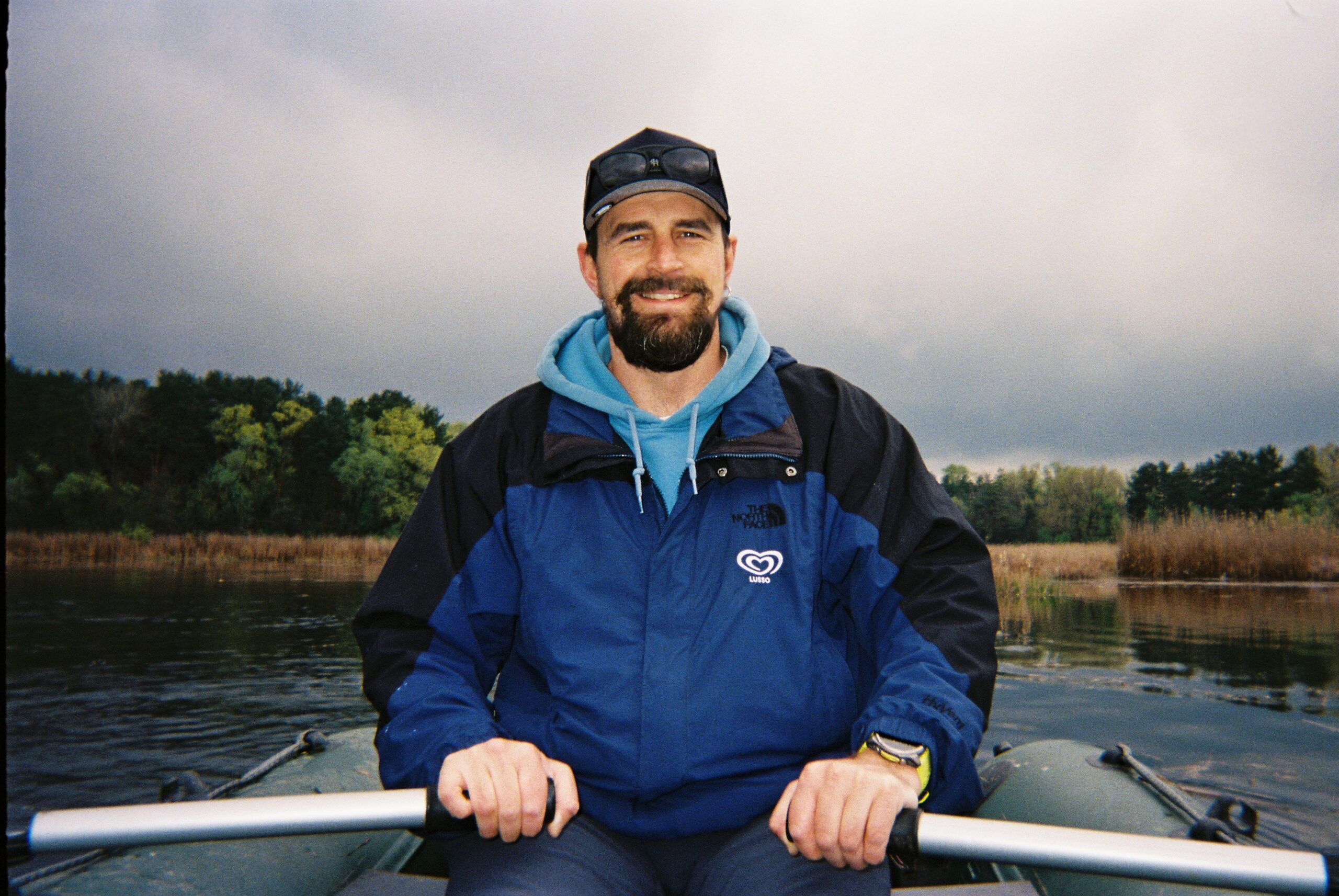
This is Bohdan. He is my third cousin, but we are like brothers; he’s also from Yaremche. He transferred to a rear-line position and is currently on deployment near the Dnipro. This is quite close to me, so I took a day off to go visit. We hadn’t seen each other for almost a year, and I came to see Bodia on this island. It turned out he has a boat there and goes fishing. We spent the whole day out on the Dnipro River. We boated, talked, laughed, reminisced, and made plans. In short, it was just really great to spend time with someone close to me.
How do you cope with the terrible and the beautiful in the life that surrounds you?
Everything that happens to me has a single origin. To me, the beautiful and the horrific are fruits of the same tree. The challenge lies in the choice—how I perceive what is happening to me. To put it more locally, what helps me hold on is the memory of home and my native mountains, where I must return safe and sound. In any case, that was the only condition under which they let me go.
When I tell my family how my days are going, I joke that only the coordinates and the wind direction change, though even the wind seems to always point east. An underrated, terrifying thing in war is this routine. It devours everything, especially the excitement for the work and the thirst for growth. It turns the most proactive people into those who just go along with the majority, and the fierce into the indifferent. The only thing routine is afraid of is friendship. Once you find them—your people—it becomes much easier. Weeks in a tree line fly by like days, that’s a proven fact!
This is Semchyk. He was in the crew with Texas when they got hit at a crossing, and he lost his leg. The third guy from their crew—Kurt—was killed back then. Sem now has an iron leg. Not long ago, his daughter was born, his second child. He has returned to his job in IT, where he used to work. The guy works incredibly hard to stay positive. He came to visit us because we hadn’t seen each other since we visited him after his injury in September 2025.
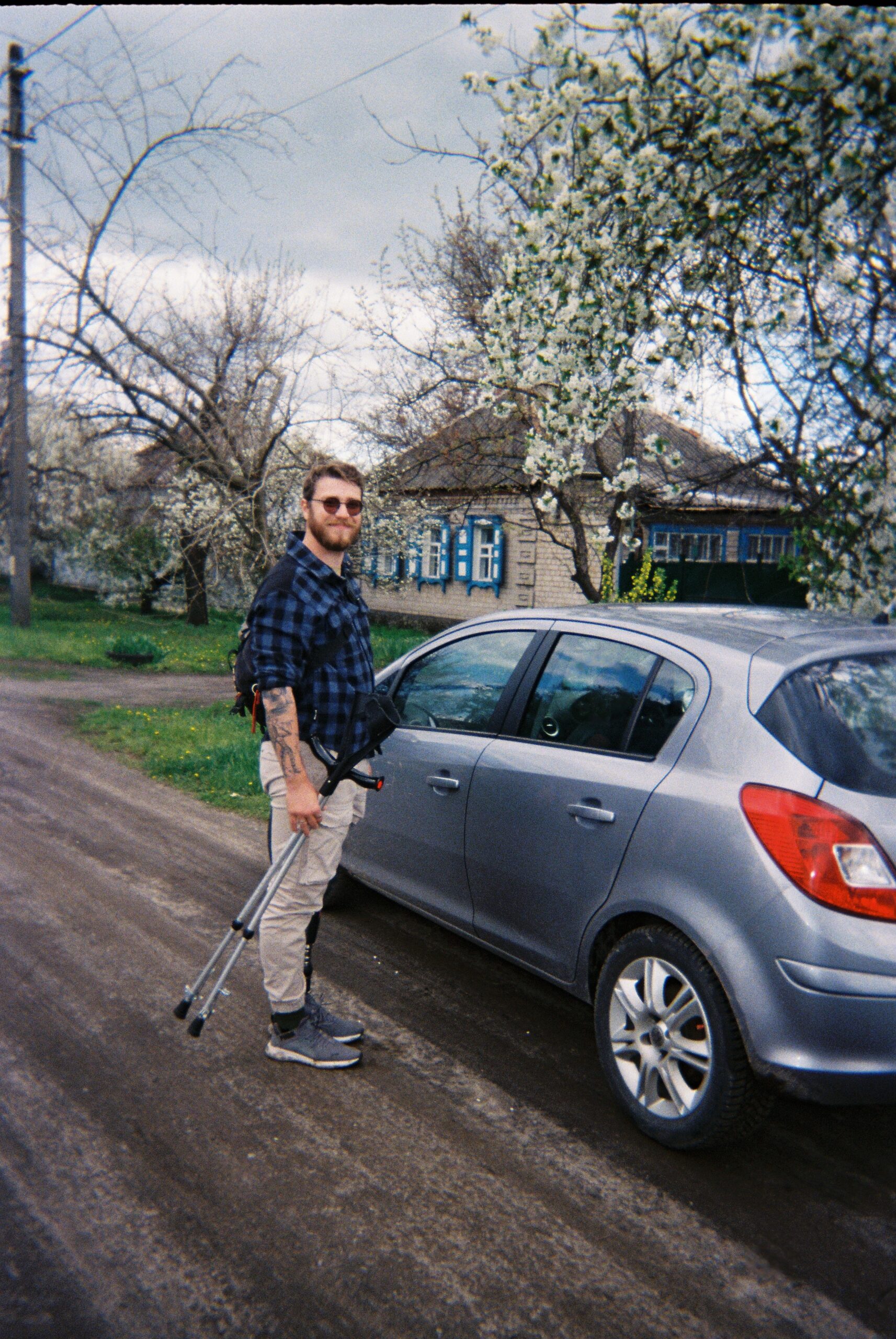
This is Semchyk. He was in the crew with Texas when they got hit at a crossing, and he lost his leg. The third guy from their crew—Kurt—was killed back then. Sem now has an iron leg. Not long ago, his daughter was born, his second child. He has returned to his job in IT, where he used to work. The guy works incredibly hard to stay positive. He came to visit us because we hadn’t seen each other since we visited him after his injury in September 2025.
This is all of us together: Khrystyna—Texas’s fiancée, Texas, Sem, who is showing off the capybara on his prosthetic leg, Zabiv, and me.
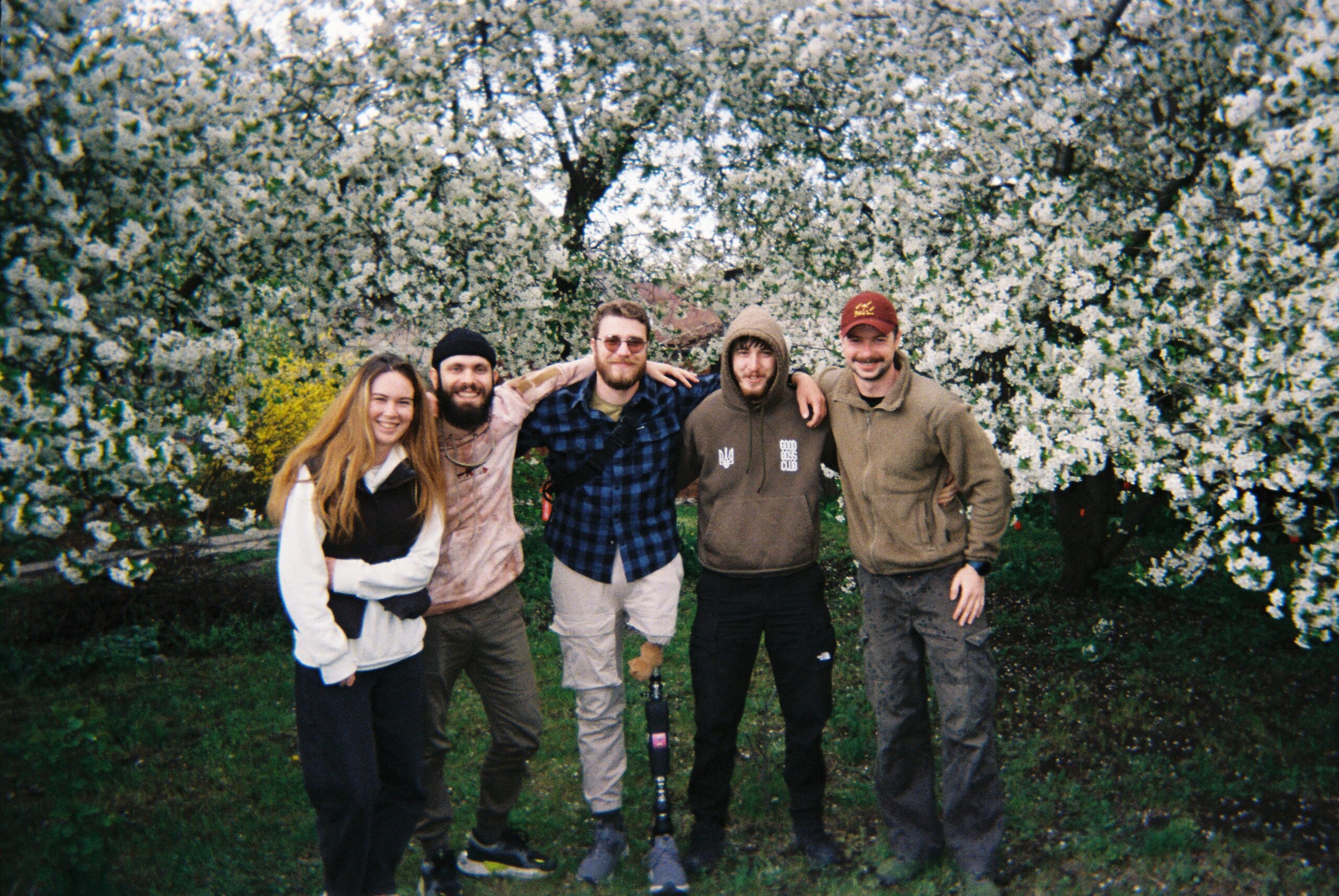
This is all of us together: Khrystyna—Texas’s fiancée, Texas, Sem, who is showing off the capybara on his prosthetic leg, Zabiv, and me.
What will you tell your grandkids when you’re old?
I’m not planning for grandkids of my own right now, but I’ll tell other people’s kids to take care of their knees and not to eat too much sugar. But in all seriousness, I will tell them about the guys and girls who remained forever young in the war. They are the most honorable among us, and they absolutely deserve to have their stories heard.
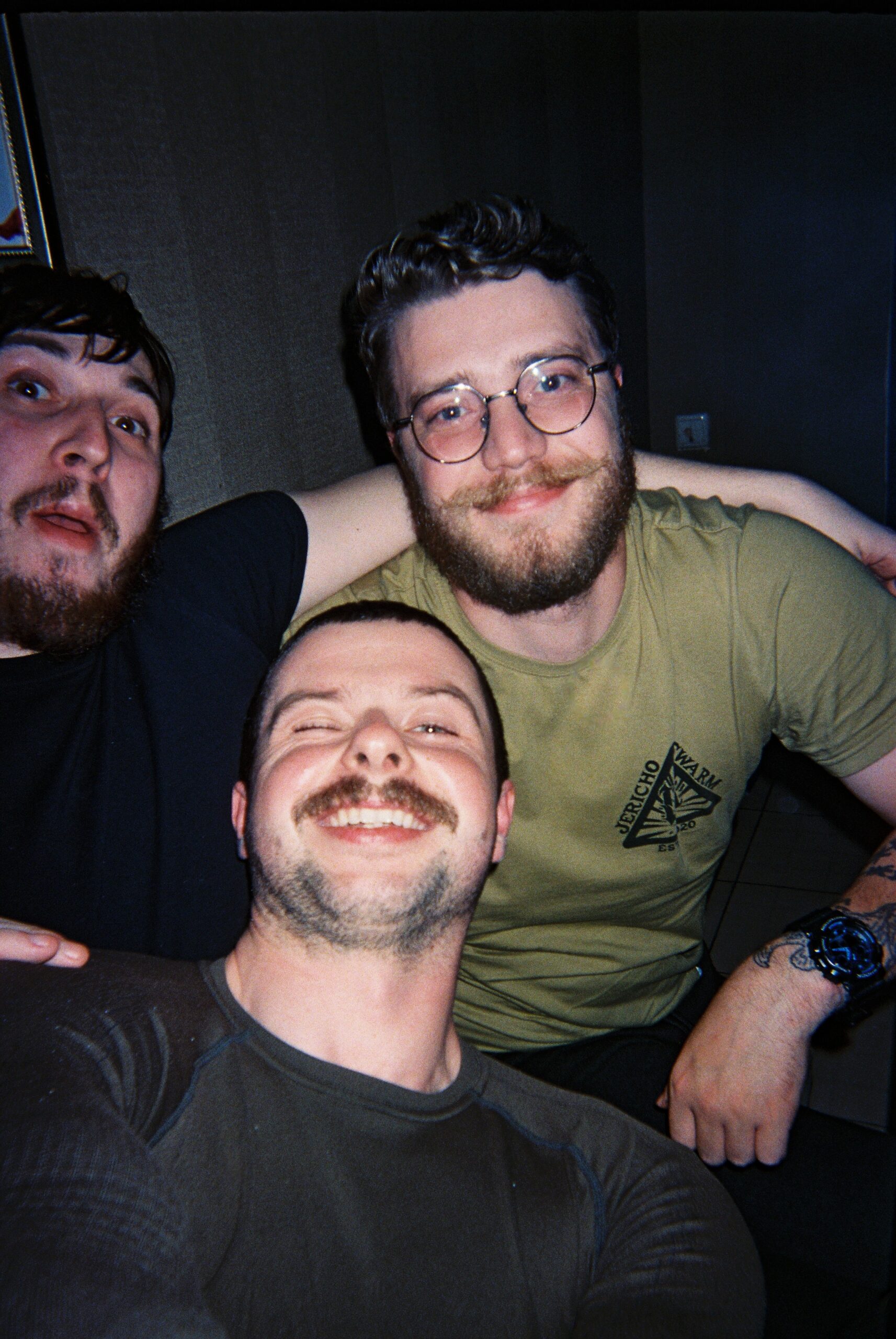
What will you tell your grandkids when you’re old?
I’m not planning for grandkids of my own right now, but I’ll tell other people’s kids to take care of their knees and not to eat too much sugar. But in all seriousness, I will tell them about the guys and girls who remained forever young in the war. They are the most honorable among us, and they absolutely deserve to have their stories heard.
What kind of people are around you? What do you feel toward them?
Very different people. And I guess that’s the best part. I love it when several regions of Ukraine gather in one space, and everyone has their own style of joking, their own dialect, words, and inflections. Honestly, you could listen to the dialogues at the control posts in the dead of night like a podcast.
Jokes aside, you must have trust and confidence in everyone you go out on a mission with—you need to know that they won’t let you down in a moment of tension. It has been said a thousand times, but it hasn’t stopped being true: a friend is proven in a dugout.
What kind of people are around you? What do you feel toward them?
Very different people. And I guess that’s the best part. I love it when several regions of Ukraine gather in one space, and everyone has their own style of joking, their own dialect, words, and inflections. Honestly, you could listen to the dialogues at the control posts in the dead of night like a podcast.
Jokes aside, you must have trust and confidence in everyone you go out on a mission with—you need to know that they won’t let you down in a moment of tension. It has been said a thousand times, but it hasn’t stopped being true: a friend is proven in a dugout.
The team behind this story:
Photos and stories — Bohdan Cherleniuk
Interview and text — Olya Shakhnyk
Editing — Iryna Kravets
Coordination — Maryna Pertsovych
