

Even in civilian life, Khrystyna volunteered constantly: she joined BUR (Building Ukraine Together), studied at the Ukrainian Leadership Academy (ULA), and collaborated with various NGOs. As a teenager, she imagined working at the Ministry of Social Policy, shaping social initiatives. The army was never in her plans.
However, in 2022, Khrystyna joined a volunteer unit, and later moved to the “Udchnyky” (Lucky Ones), a volunteer unit within a specialized drone aviation branch. Today, she serves in a unit of the Armed Forces of Ukraine.
This is a very heartfelt photo for me. We took it in Yunakivka, Sumy region. On the right is my brother-in-arms, Baks. He was one of the brightest and most adventurous people I have ever known. Throughout his short life, he proved himself to be an incredibly dignified and brave warrior.
On the left is Pavlo. He is still serving. Back then, we were on duty at the position when the guys arrived and brought supplies. I remember that week was tough—we couldn’t wash properly, and overall, things were bleak. Then they showed up looking so sharp, smelling fresh, bringing a ton of things.
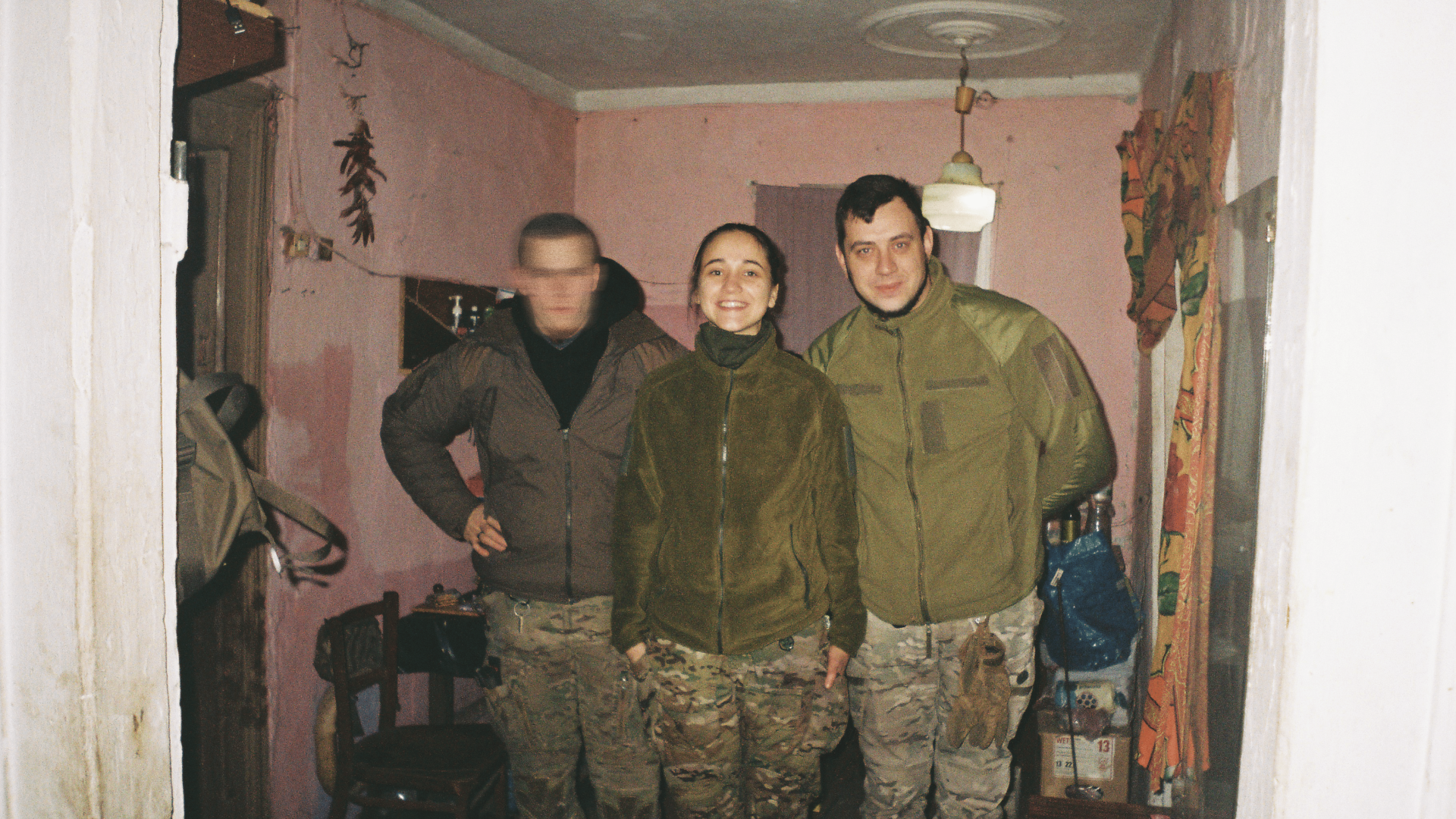
This is a very heartfelt photo for me. We took it in Yunakivka, Sumy region. On the right is my brother-in-arms, Baks. He was one of the brightest and most adventurous people I have ever known. Throughout his short life, he proved himself to be an incredibly dignified and brave warrior.
On the left is Pavlo. He is still serving. Back then, we were on duty at the position when the guys arrived and brought supplies. I remember that week was tough—we couldn’t wash properly, and overall, things were bleak. Then they showed up looking so sharp, smelling fresh, bringing a ton of things.
This is that same house in Yunakivka. It holds a very poignant story: it belonged to our brother-in-arms, Batia, who was stationed with us. His home had become a military position. At the time, I was living in his son’s bedroom.
It was then that I clearly realized this is exactly what I am fighting for: so that my home in Vinnytsia region doesn’t become a position for anyone, and so that the homes of my brothers and sisters-in-arms cease to be positions. Sometime after we left, something struck the house—it was completely destroyed.
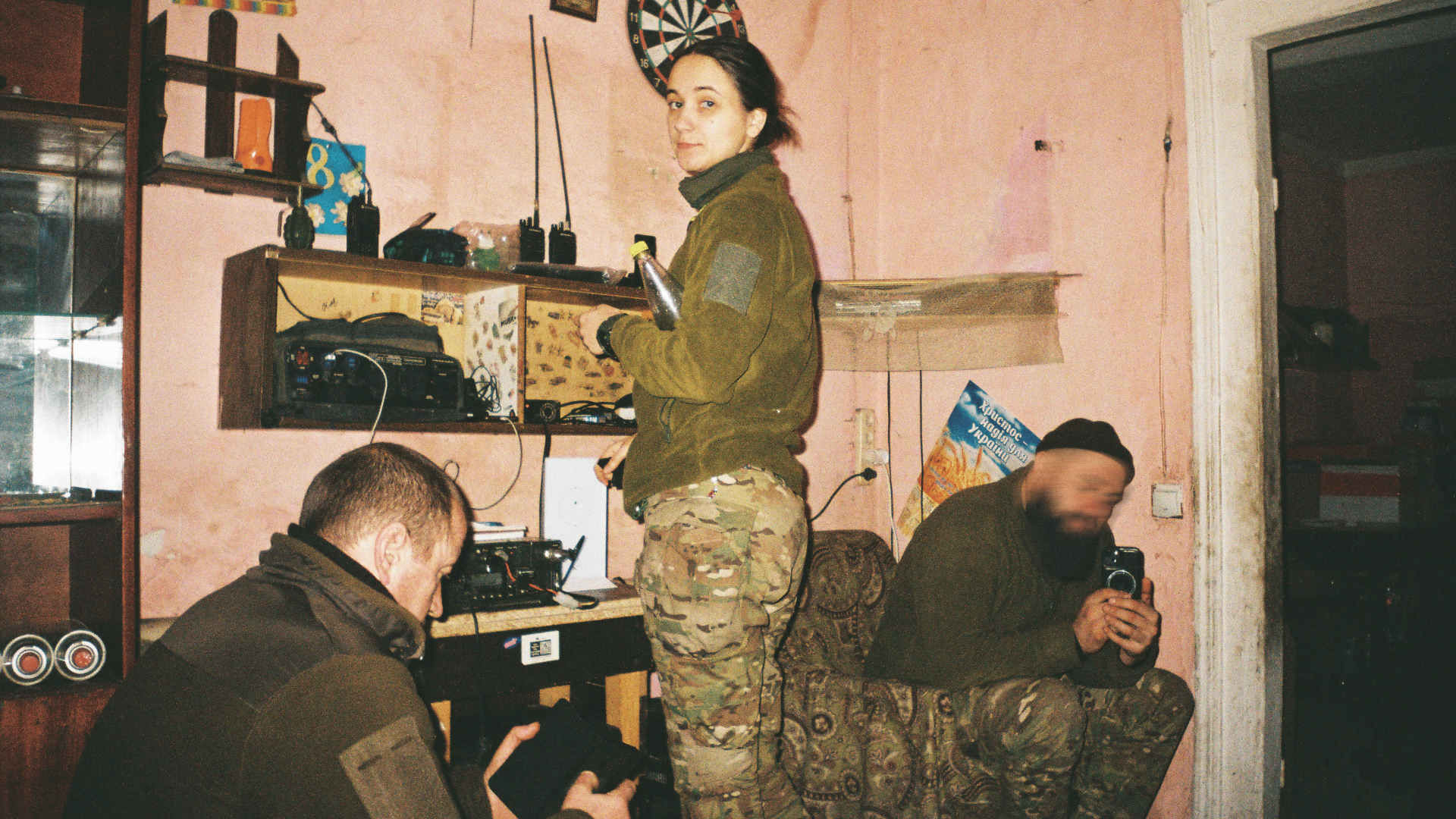
This is that same house in Yunakivka. It holds a very poignant story: it belonged to our brother-in-arms, Batia, who was stationed with us. His home had become a military position. At the time, I was living in his son’s bedroom.
It was then that I clearly realized this is exactly what I am fighting for: so that my home in Vinnytsia region doesn’t become a position for anyone, and so that the homes of my brothers and sisters-in-arms cease to be positions. Sometime after we left, something struck the house—it was completely destroyed.
How do you cope with all the terrible and beautiful things surrounding you in life?
I go to psychotherapy and read books—especially about the Ukrainian liberation struggles, the Holodomor, the UNR (Ukrainian People’s Republic), and Cossack times. Anything that reminds me that I am in a privileged position: I have a state, I have something concrete to fight for. Previous generations fought and gave their lives, health, and futures just for the idea of a state. Faith and an idea—that was all. And, of course, my friends and family: I have 10 people in my phone whom I can call at any moment, and they are my anchor and my reminder of why I do this.
This is us near a shopping mall in Sumy. It’s hard to see clearly, but my brother-in-arms—callsign Skos—and I are already in our body armor. Usually, when driving to a duty post, we traveled without armor until reaching a certain point where it became dangerous, stopped near a settlement to gear up, and then drove on. That was 2024. Back then, you could still do that.
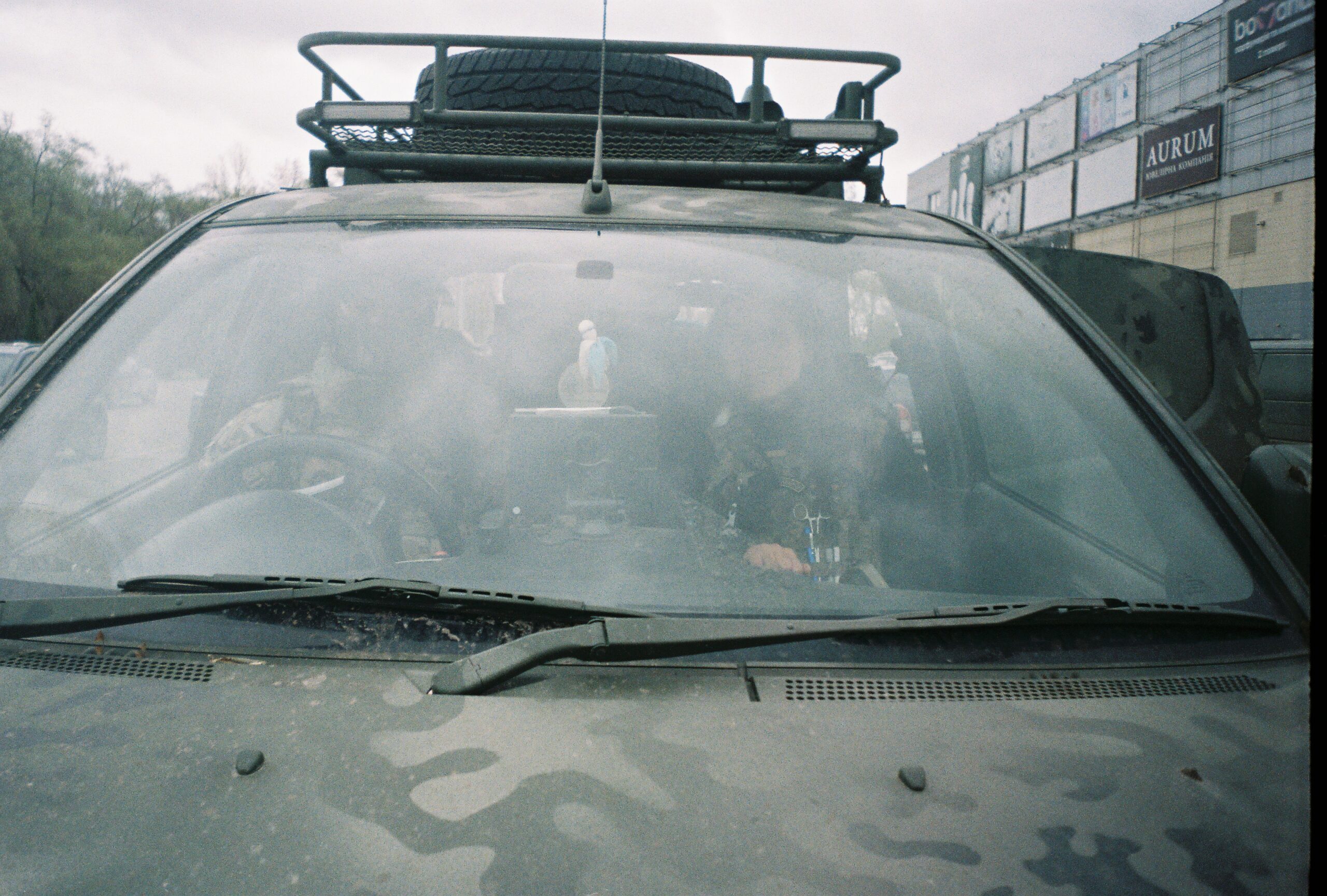
This is us near a shopping mall in Sumy. It’s hard to see clearly, but my brother-in-arms—callsign Skos—and I are already in our body armor. Usually, when driving to a duty post, we traveled without armor until reaching a certain point where it became dangerous, stopped near a settlement to gear up, and then drove on. That was 2024. Back then, you could still do that.
This is Olya. We were conducting a tactical medicine training together in an abandoned building, and at one point, I noticed strange graffiti on the walls, including the word “любов” (love). I thought: that’s about us.
Olya is my role model, my inspiration, and an example to follow. She is a fantastic woman. She had lived abroad since she was a teenager. When the war started in 2014, she volunteered and provided extensive support to the military. In 2022, she returned to Ukraine. Eventually, she began deploying with the Hospitallers and joined my crew. Olya is an exceptionally professional, strong, and incredible woman.
The moment we arrived at any stabilization point, she would immediately introduce herself to the doctors we brought the wounded to, ask about their needs, and two days later, twenty thousand packages filled with gear would arrive for them at the post office. Another time, we were at a position and had to evacuate quickly because it had become too dangerous, but a pregnant dog remained behind. I told her, “Bro, I love you immensely, but our vehicle is packed with gear, meds, and people.” Olya replied, “I’m not leaving without her.” She picked up Pulya (Bullet)—that’s what we named the dog—and held her in her lap the entire way. The vehicle was packed with me, the driver, the duty officer, Olya with the dog, and someone else. Yet we got Pulya out. Olya found homes for all the puppies and a wonderful human for Pulya. Olya has an immense heart. I don’t think I’ve ever met people as empathetic and brave as her.
That is why the word “love” defines her.
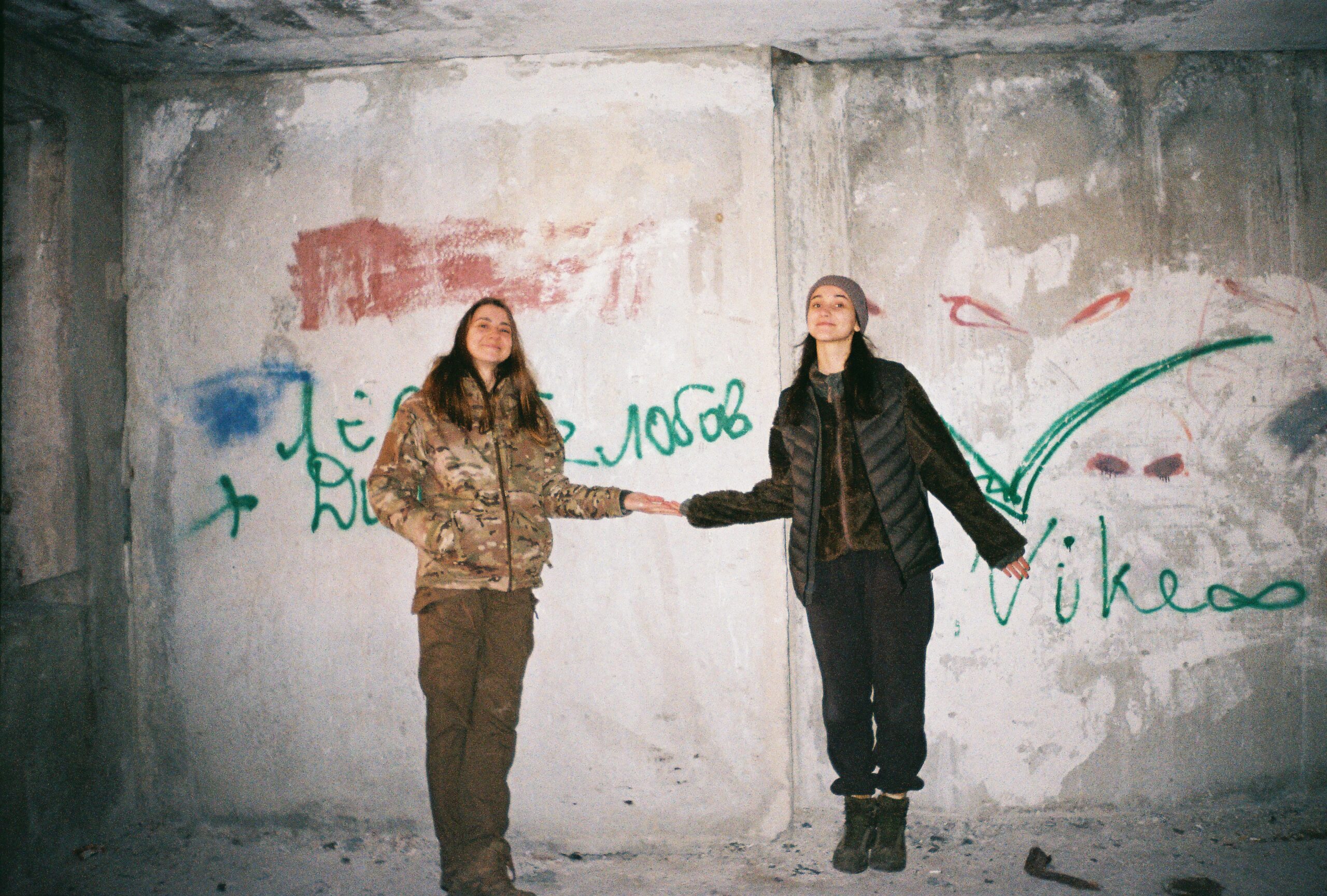
This is Olya. We were conducting a tactical medicine training together in an abandoned building, and at one point, I noticed strange graffiti on the walls, including the word “любов” (love). I thought: that’s about us.
Olya is my role model, my inspiration, and an example to follow. She is a fantastic woman. She had lived abroad since she was a teenager. When the war started in 2014, she volunteered and provided extensive support to the military. In 2022, she returned to Ukraine. Eventually, she began deploying with the Hospitallers and joined my crew. Olya is an exceptionally professional, strong, and incredible woman.
The moment we arrived at any stabilization point, she would immediately introduce herself to the doctors we brought the wounded to, ask about their needs, and two days later, twenty thousand packages filled with gear would arrive for them at the post office. Another time, we were at a position and had to evacuate quickly because it had become too dangerous, but a pregnant dog remained behind. I told her, “Bro, I love you immensely, but our vehicle is packed with gear, meds, and people.” Olya replied, “I’m not leaving without her.” She picked up Pulya (Bullet)—that’s what we named the dog—and held her in her lap the entire way. The vehicle was packed with me, the driver, the duty officer, Olya with the dog, and someone else. Yet we got Pulya out. Olya found homes for all the puppies and a wonderful human for Pulya. Olya has an immense heart. I don’t think I’ve ever met people as empathetic and brave as her.
That is why the word “love” defines her.
We usually deployed for two weeks at a time, and even then, we rotated rather than staying at the positions non-stop. But that particular time, we spent an entire month on site. It was a house without a basement: incoming strikes were constant, and artillery was stationed right next to us. You couldn’t step outside—except for a quick dash to the toilet, as drones were constantly buzzing overhead. Working out was practically impossible, too, so I stretched like this. This was my typical state when working on an evacuation crew: sitting on a cot waiting for the wounded, reading a book, and trying to survive.
The book in the photo is The Boy Who Was Raised as a Dog, about child psychology. In civilian life—during my university years—I worked with children in care institutions. Perhaps in the future, if everything turns out well, I will return to that field. I always tried to hold onto a connection with my professional interests, even if just through literature.
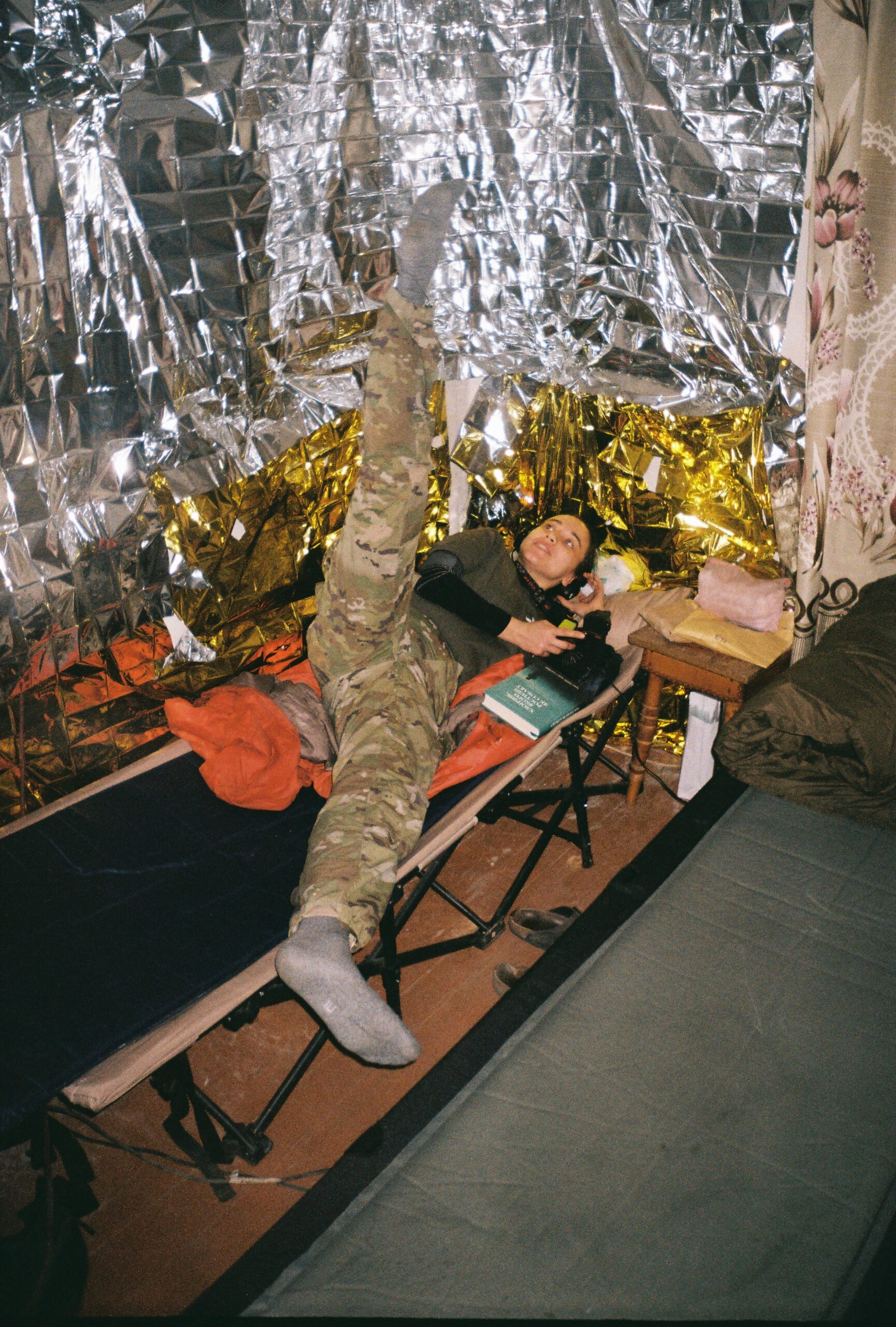
We usually deployed for two weeks at a time, and even then, we rotated rather than staying at the positions non-stop. But that particular time, we spent an entire month on site. It was a house without a basement: incoming strikes were constant, and artillery was stationed right next to us. You couldn’t step outside—except for a quick dash to the toilet, as drones were constantly buzzing overhead. Working out was practically impossible, too, so I stretched like this. This was my typical state when working on an evacuation crew: sitting on a cot waiting for the wounded, reading a book, and trying to survive.
The book in the photo is The Boy Who Was Raised as a Dog, about child psychology. In civilian life—during my university years—I worked with children in care institutions. Perhaps in the future, if everything turns out well, I will return to that field. I always tried to hold onto a connection with my professional interests, even if just through literature.
Where do you find inspiration and motivation? What keeps you going?
I’ll probably end up sitting around telling my future grandkids: “Your grandma almost burned in a tree line.” I think I have a lot of stories that will be worth hearing. I’ll be that fierce grandma Khrystia: taking them to military drills, bringing them into Plast (scouting). I want them to understand the price their family paid for this country. I’ll be the kind of grandmother who constantly tells the stories of her friends so that their memory lives on.
This is Myslyvets (Hunter). At one point, he became like a father to me. Olya, Myslyvets, and I were all in the same crew. We were like a tight-knit family. I look back on that time with warmth and love.
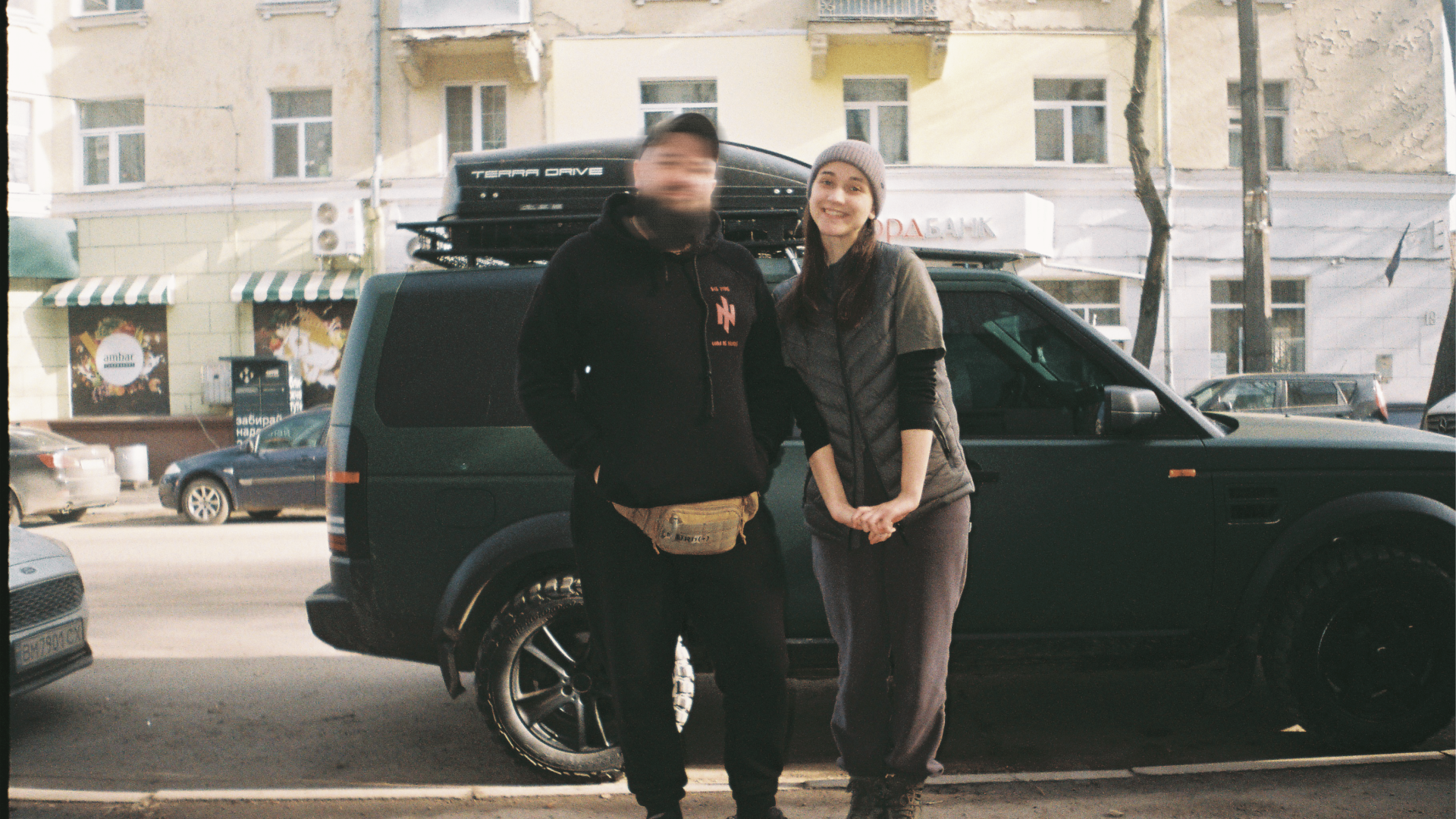
This is Myslyvets (Hunter). At one point, he became like a father to me. Olya, Myslyvets, and I were all in the same crew. We were like a tight-knit family. I look back on that time with warmth and love.
This photo was taken in the Sumy region. I was the commander of the crew stationed there, and next to me is the commander of the crew that arrived to relieve us.
Back then, I thought the more patches I slapped onto my kit, the less chance I had of dying. It was a form of magical thinking. Now I realize they are compromising visual markers; attaching a pink toy to body armor or wearing a bright blue carabiner isn’t the best idea for camouflage. But back then, it felt so meaningful.
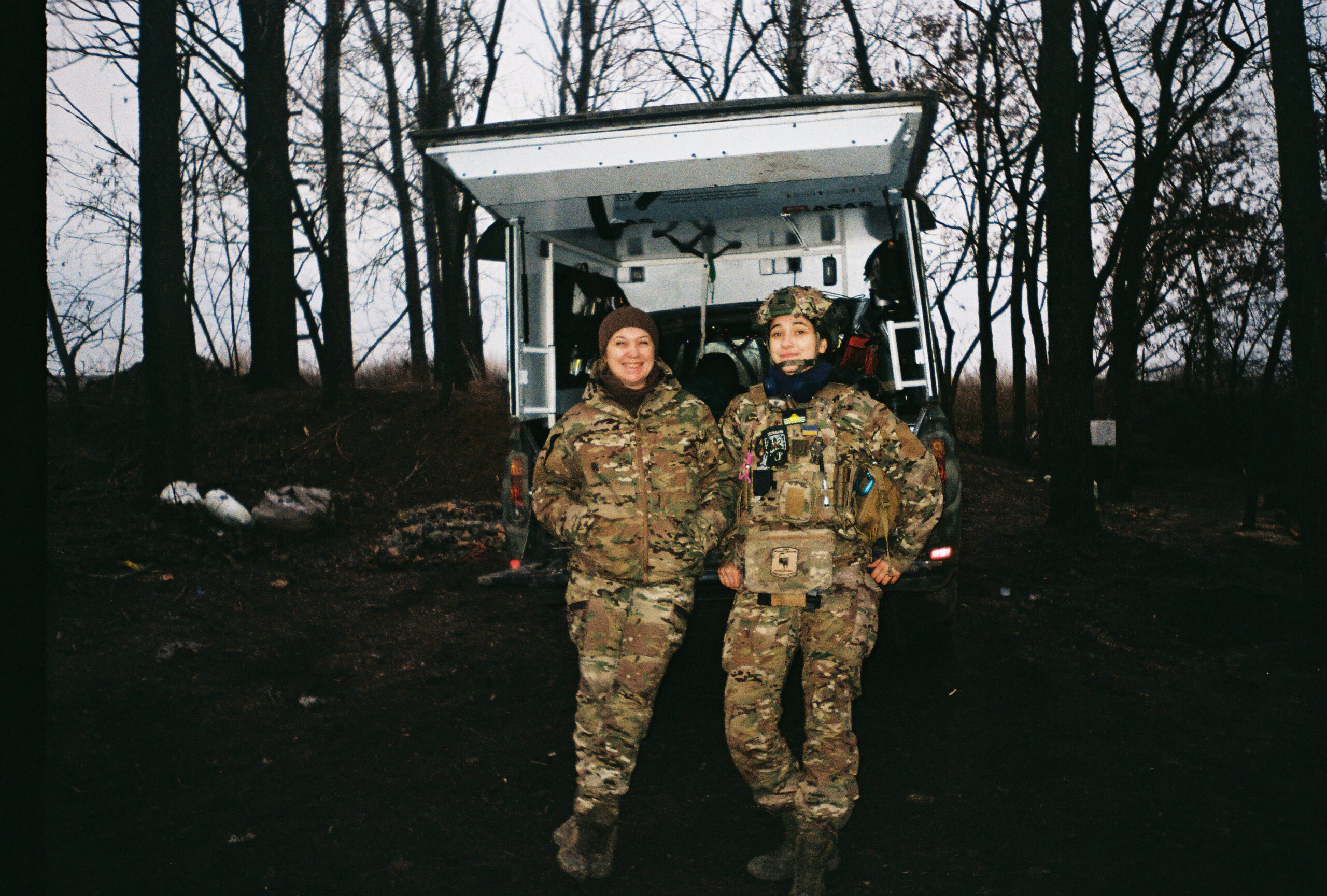
This photo was taken in the Sumy region. I was the commander of the crew stationed there, and next to me is the commander of the crew that arrived to relieve us.
Back then, I thought the more patches I slapped onto my kit, the less chance I had of dying. It was a form of magical thinking. Now I realize they are compromising visual markers; attaching a pink toy to body armor or wearing a bright blue carabiner isn’t the best idea for camouflage. But back then, it felt so meaningful.
This is Olya sorting through a pile of gear she had collected for the stabilization point where we brought casualties. It was late evening; we had just returned from a position. I remember there was a bottle of ultrasound gel in the bag that burst everywhere. I just sat there, looked at the mess, and thought, “Oh, man.”
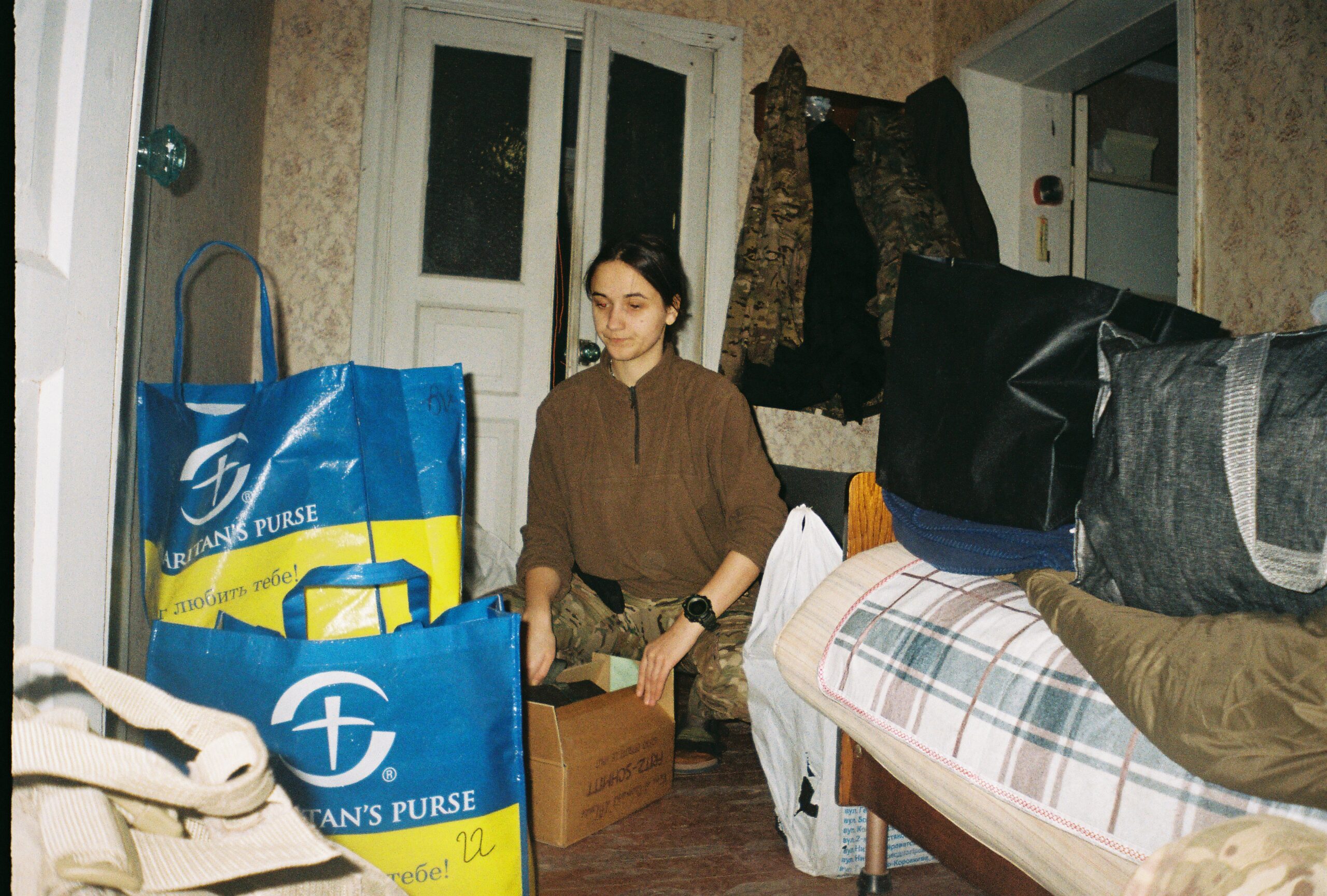
This is Olya sorting through a pile of gear she had collected for the stabilization point where we brought casualties. It was late evening; we had just returned from a position. I remember there was a bottle of ultrasound gel in the bag that burst everywhere. I just sat there, looked at the mess, and thought, “Oh, man.”
Is there love and friendship in war?
I have very close friends who remained in civilian life. We stay in touch; they are active and consistently support the military. I also have very close friends serving across different branches of the Defense Forces. So I know for certain that friendship exists—deep and extraordinary. One of my closest friends today is someone with whom I worked in the same crew for several months. That is a whole different dimension of friendship, because you know you can trust them with your life. In civilian life, I can trust friends with my life too, but there were never circumstances to test it. Here, we carried out missions where my survival depended directly on her skills, and hers on mine.
Is there love and friendship in war?
I have very close friends who remained in civilian life. We stay in touch; they are active and consistently support the military. I also have very close friends serving across different branches of the Defense Forces. So I know for certain that friendship exists—deep and extraordinary. One of my closest friends today is someone with whom I worked in the same crew for several months. That is a whole different dimension of friendship, because you know you can trust them with your life. In civilian life, I can trust friends with my life too, but there were never circumstances to test it. Here, we carried out missions where my survival depended directly on her skills, and hers on mine.
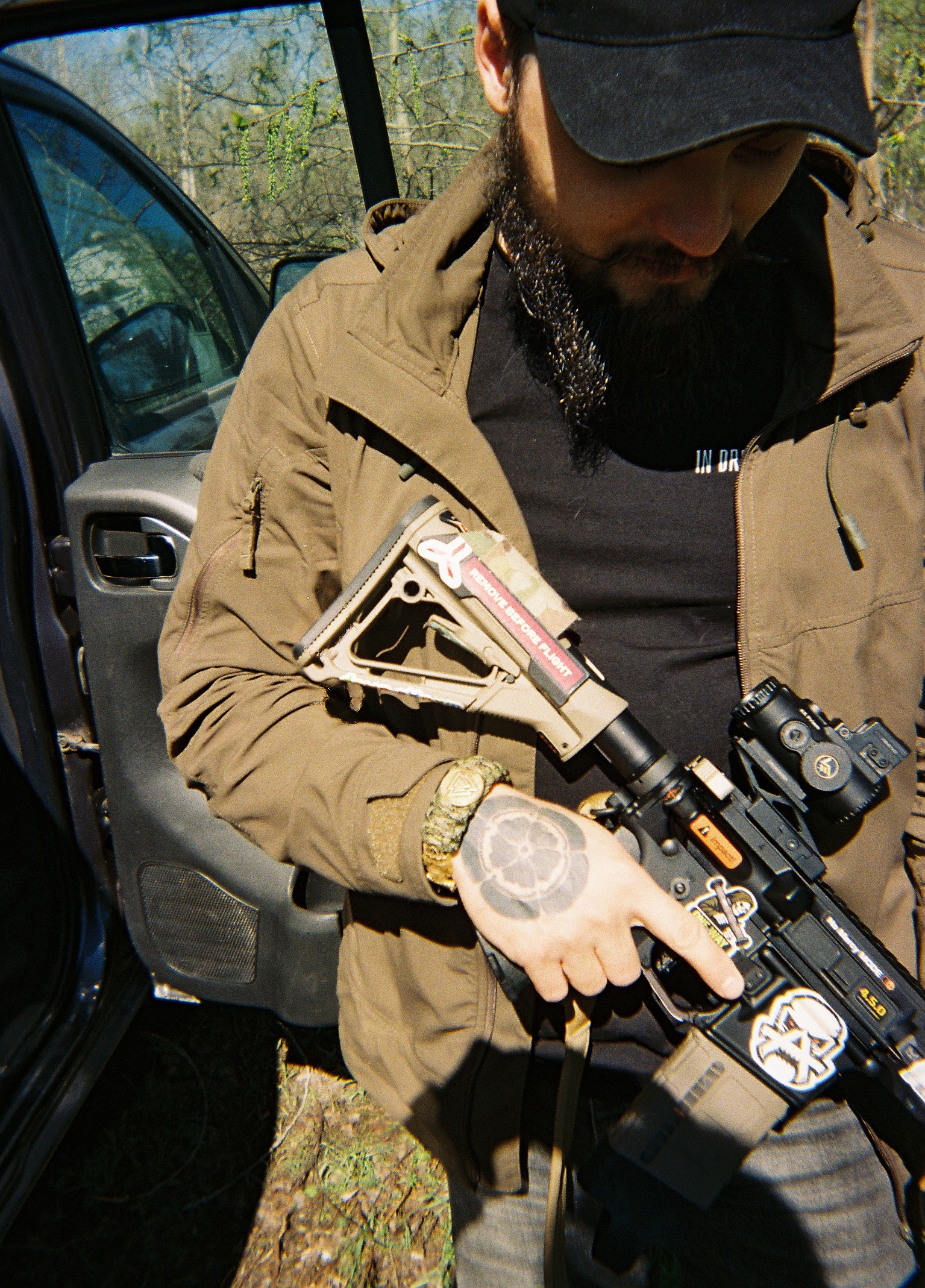
This is my brother-in-arms. I once told him the phrase, “It’s tough to live, a pity to die.” He said, “Damn, I actually have that sticker on my rifle.” He was heading out to the training range, and I took a photo of him with his weapon.
This is my brother-in-arms. I once told him the phrase, “It’s tough to live, a pity to die.” He said, “Damn, I actually have that sticker on my rifle.” He was heading out to the training range, and I took a photo of him with his weapon.
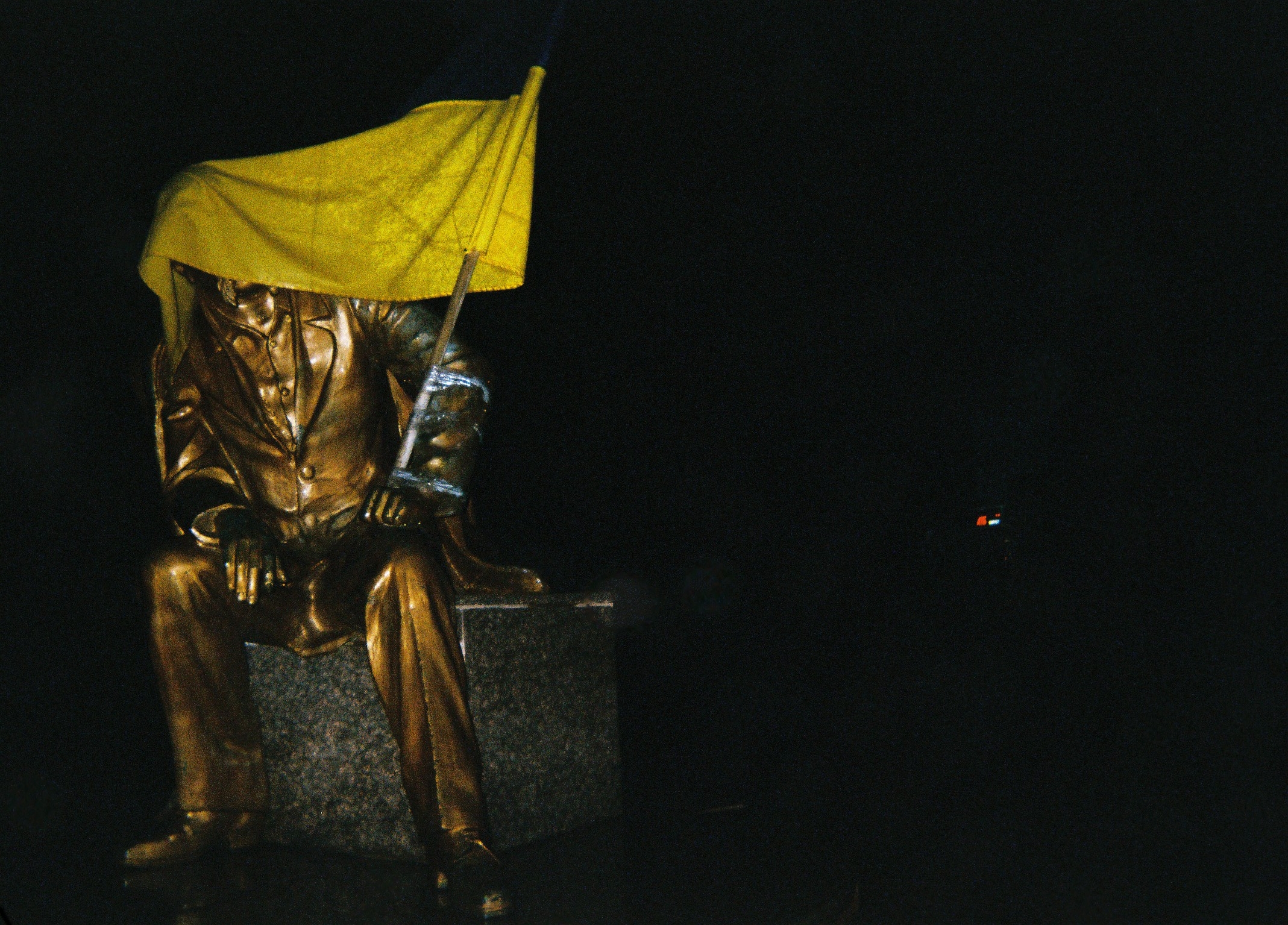
This is a monument to Taras Shevchenko in a liberated town. Someone had taped a Ukrainian flag to Shevchenko’s hand with duct tape. It was raining at the time, and the flag was draped across his face.
This is a monument to Taras Shevchenko in a liberated town. Someone had taped a Ukrainian flag to Shevchenko’s hand with duct tape. It was raining at the time, and the flag was draped across his face.
How did you imagine your youth when you were growing up?
Definitely not like this. I have been volunteering since my teenage years; we were always organizing and launching cool initiatives. I always pictured myself entering the Ministry of Social Policy, reforming policy, and driving change on a macro level. I wanted change, and I wanted to create it with my own hands. I imagined myself as a businesswoman in a sharp blazer, running between meetings, resolving issues, lobbying for ideas. The army was never in the picture—I am a deeply sensitive, caring, empathetic person. The military as a rigid structure, and war in general, is tough on me.
How did you imagine your youth when you were growing up?
Definitely not like this. I have been volunteering since my teenage years; we were always organizing and launching cool initiatives. I always pictured myself entering the Ministry of Social Policy, reforming policy, and driving change on a macro level. I wanted change, and I wanted to create it with my own hands. I imagined myself as a businesswoman in a sharp blazer, running between meetings, resolving issues, lobbying for ideas. The army was never in the picture—I am a deeply sensitive, caring, empathetic person. The military as a rigid structure, and war in general, is tough on me.
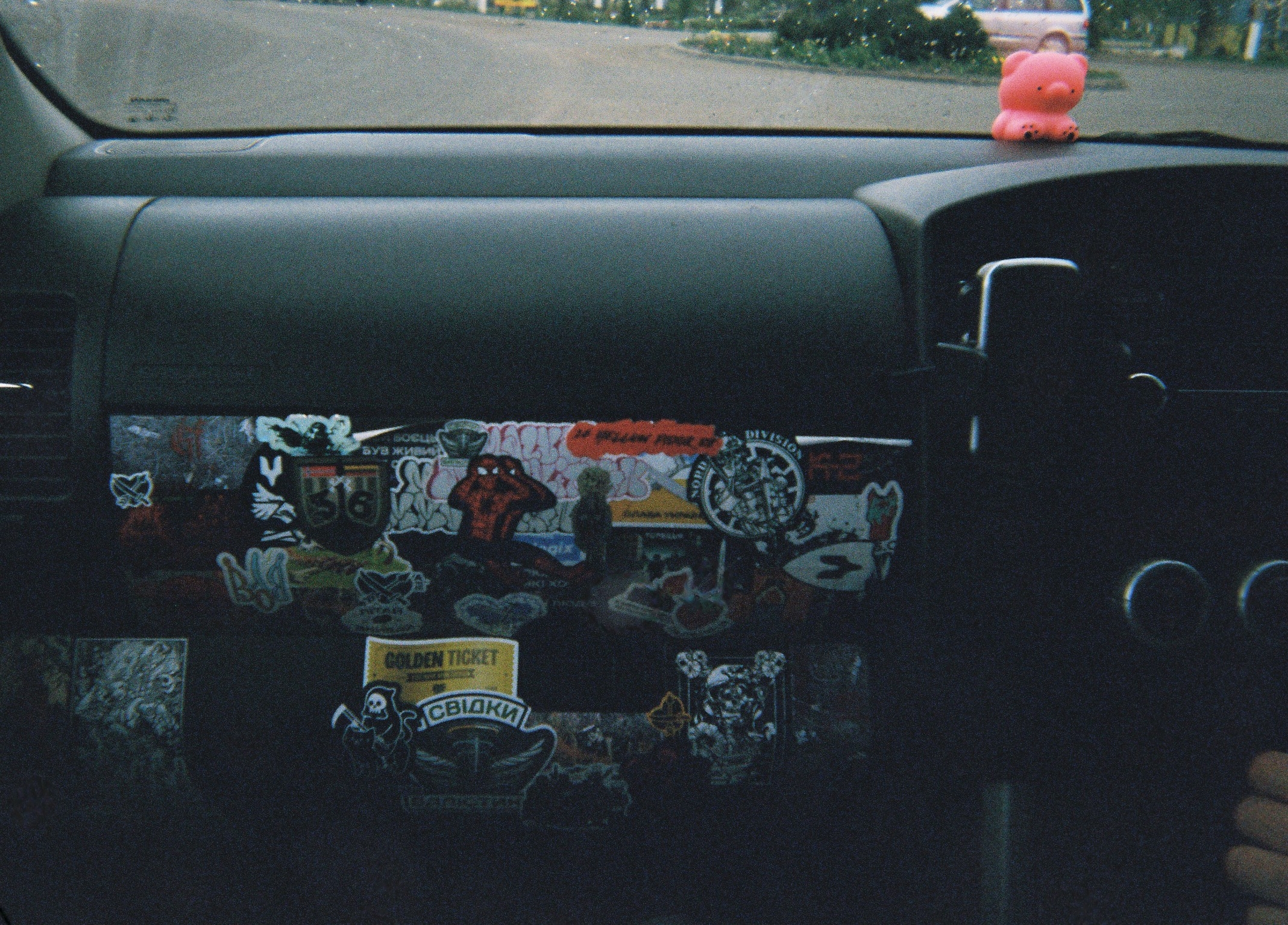
Almost every military vehicle is covered in stickers. I just wanted to capture that, because you spend most of your time inside a vehicle.
In civilian life, I was constantly volunteering: BUR, ULA, various NGOs. I used to wear NGO merch all the time; now I’m surrounded by people wearing merch from arms manufacturers.
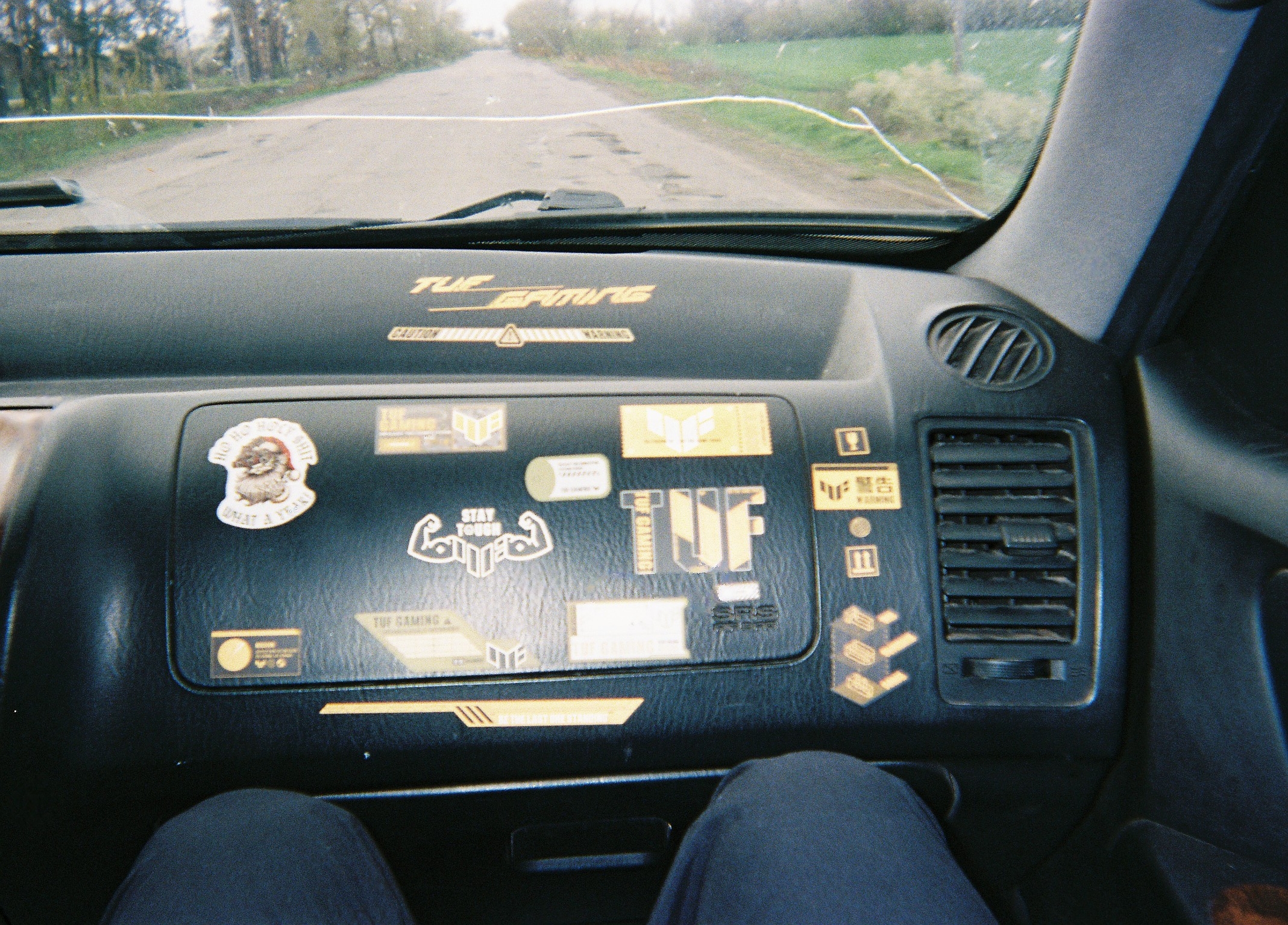
Almost every military vehicle is covered in stickers. I just wanted to capture that, because you spend most of your time inside a vehicle.
In civilian life, I was constantly volunteering: BUR, ULA, various NGOs. I used to wear NGO merch all the time; now I’m surrounded by people wearing merch from arms manufacturers.
These are empty ammo crates. And this is just a fraction. In reality, these crates represent about a month of operations for a few strike systems—or maybe just a week during high-intensity fighting.
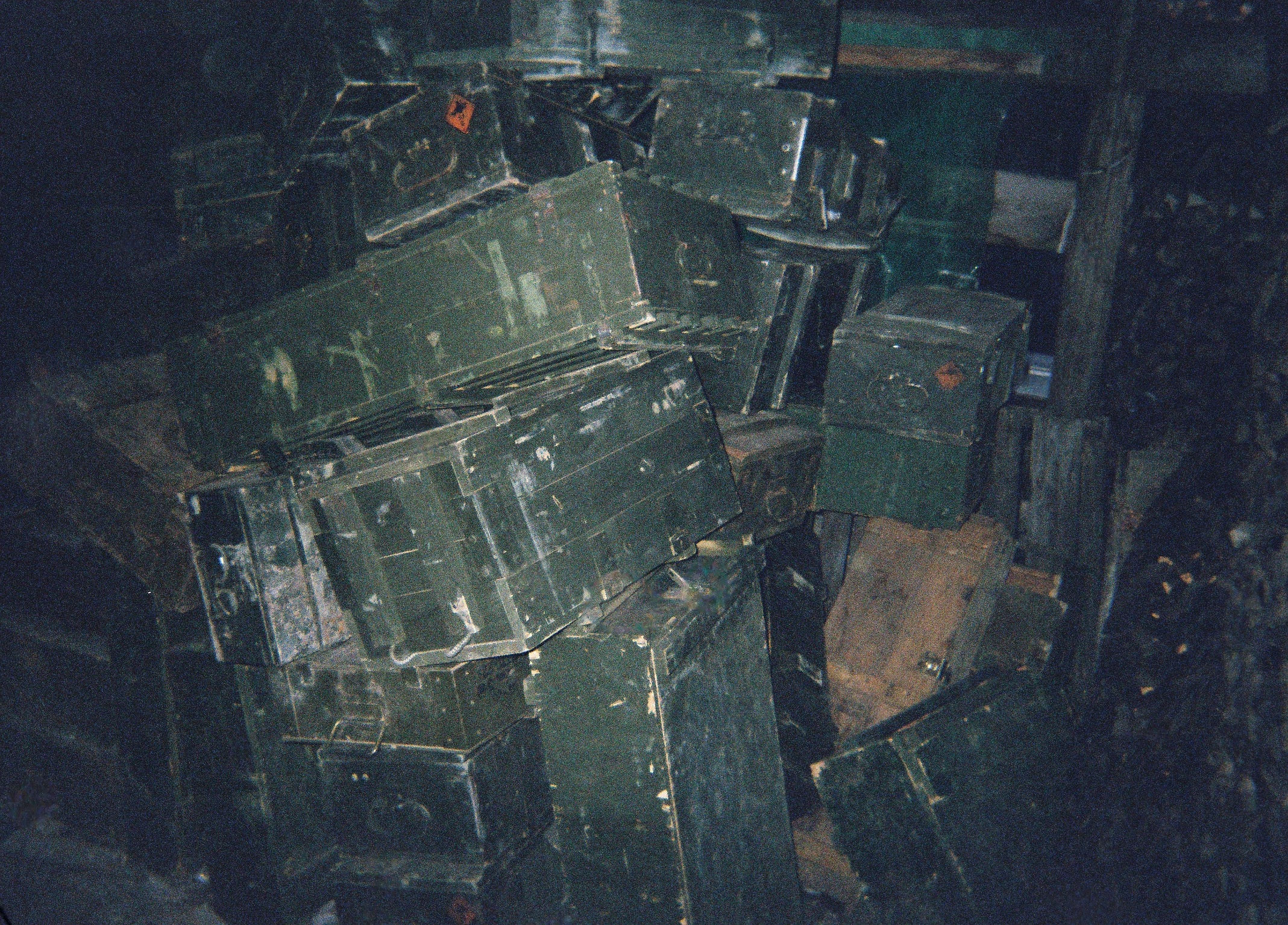
These are empty ammo crates. And this is just a fraction. In reality, these crates represent about a month of operations for a few strike systems—or maybe just a week during high-intensity fighting.
These are road signs in a liberated city. I believe the holes are from shrapnel. These signs stood near a building struck by a Shahed drone. I remember thinking: a “Children” sign, a 40 km/h speed limit—and the entire thing shredded by shrapnel.
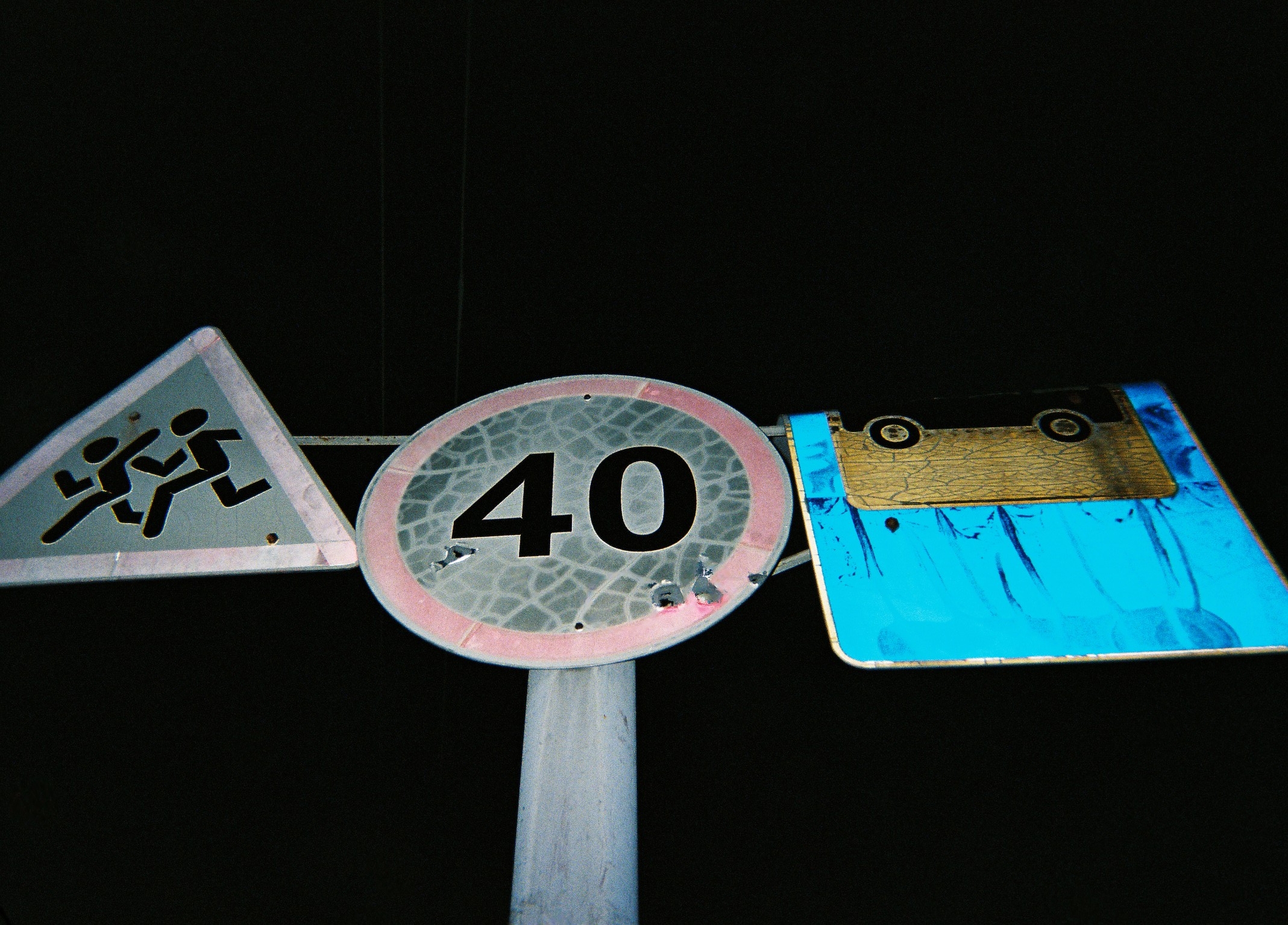
These are road signs in a liberated city. I believe the holes are from shrapnel. These signs stood near a building struck by a Shahed drone. I remember thinking: a “Children” sign, a 40 km/h speed limit—and the entire thing shredded by shrapnel.
My personal space is a bed and a sleeping pad next to it, since I share a small house with four other people. Someone had given me flowers, and I wanted them close by so I could look at them constantly. My first-aid kit is also right here, always within arm’s reach so I can treat myself if necessary.
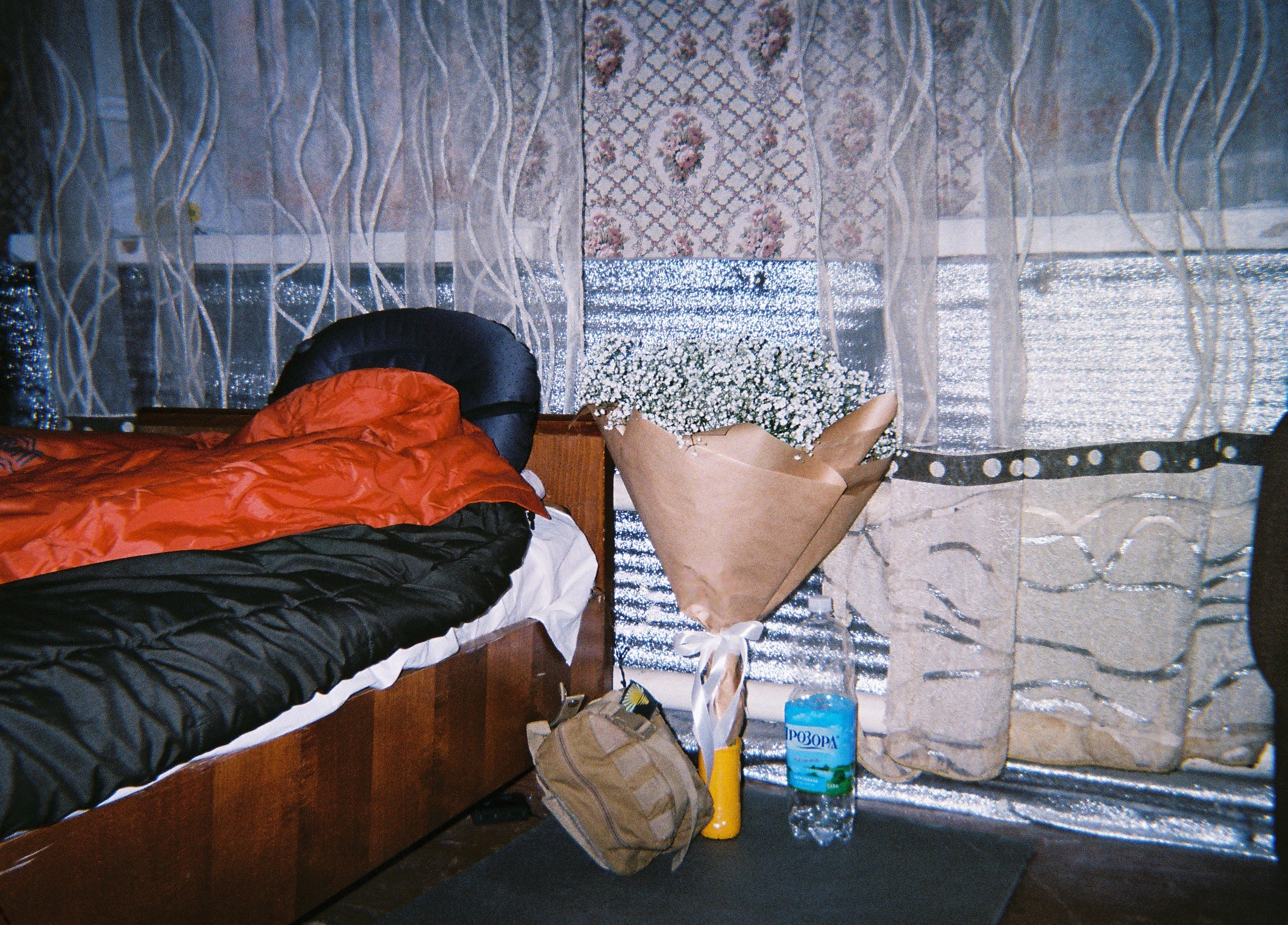
My personal space is a bed and a sleeping pad next to it, since I share a small house with four other people. Someone had given me flowers, and I wanted them close by so I could look at them constantly. My first-aid kit is also right here, always within arm’s reach so I can treat myself if necessary.
Where do you find inspiration and motivation? What keeps you going?
My experience as a combat medic and my memories are vital to me, because everything I did was for the infantry. The stories of those men and older veterans who showed kindness to me while in terrible physical condition—that is my foundation and inspiration. I know giving up is not an option. Right now, I work with drones and I understand: if we don’t eliminate the Russians, the infantryman has little chance of walking away alive. I serve out of deep love for my compatriots who are doing far harder work than I am.
Credits:
Photos and stories — Khrystyna Osadcha
Interview and text — Iryna Kravets
Editor — Iryna Kravets
Coordinator — Maryna Pertsovych
